U.S. and Japan Agree to Assemble AMRAAM Missiles in Japan as Tokyo Tracks a New Chinese Naval Formation
Japan's defense minister announced a final assembly and inspection plant for the F-35's main air-to-air missile and a deal to share data to boost SM-3 interceptor output. The Pentagon's readout did not mention either.
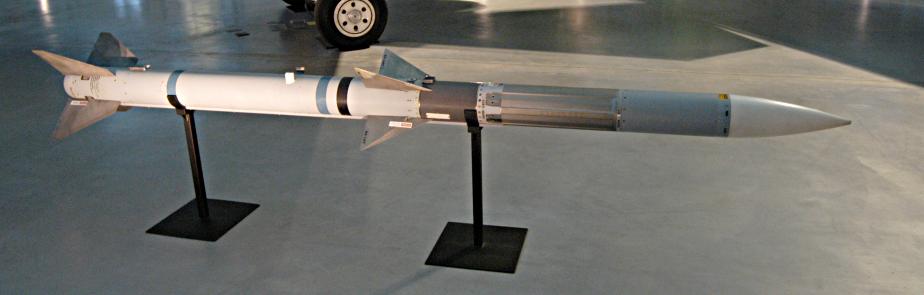
The United States and Japan have agreed to build a facility in Japan for the final assembly and inspection of the Advanced Medium-Range Air-to-Air Missile, Japanese Defense Minister Shinjiro Koizumi announced, the latest step by the two allies amid concern over China's growing assertiveness in Asia, NPR reported.
Koizumi announced the agreement at a news conference Wednesday night in Cebu, in the central Philippines, after meeting U.S. Defense Secretary Pete Hegseth on the sidelines of the annual meeting of Southeast Asian defense ministers and their partners. "We finally reached an agreement on the establishment of a final assembly and inspection facility in Japan for the AMRAAM air-to-air missile, which is essential for the F-35," Koizumi said, according to a translation cited by Air & Space Forces Magazine. "This is a groundbreaking agreement that will not only ensure the acquisition of equipment needed by both Japan and the United States, but will also strengthen Japan's defense industry base."
The missile, known as AMRAAM or AIM-120, is made by RTX subsidiary Raytheon and has been the U.S. military's main air-to-air weapon since the first deliveries in 1988, Air & Space Forces reported. The F-35, which Japan also flies, depends on it. Koizumi said the work is part of a joint effort called "Operation Supercharge." He also said the two countries agreed to share technical information needed to increase production of the Standard Missile-3 Block IIA, a ship-based interceptor for ballistic missiles that the U.S. and Japan developed jointly, Breaking Defense reported.
Koizumi did not name the Japanese company that will assemble the missile, give a timeline for opening the plant, or say how many missiles it would produce, according to Breaking Defense.
The Pentagon's account was more general. A readout of the Hegseth-Koizumi meeting did not mention AMRAAM or SM-3, but said Hegseth "welcomed Japan's efforts to strengthen its defense industrial capacity, and both leaders committed to continue close coordination on critical munitions production," both Breaking Defense and Air & Space Forces reported. RTX referred questions to the Defense Department, and a Pentagon spokesperson did not respond to Breaking Defense by its deadline.
The deal took more than two years. Air & Space Forces reported that the effort began in July 2024 under both ministers' predecessors and was slowed by Japan's postwar constitutional limits on exporting lethal weapons and co-producing offensive arms, and by the safeguards needed for the missile's classified guidance systems.
It lands as the Pentagon tries to sharply raise output. In late September the Pentagon and RTX announced a five-year AMRAAM production contract, with two option years, worth up to $20.7 billion, Air & Space Forces reported; a February framework calls for RTX to raise production to at least 1,900 missiles a year. As recently as fiscal 2022, the Air Force asked for 186 AMRAAMs and the Navy none. Demand has climbed with the wars in Ukraine and the Middle East, Breaking Defense noted. "We are accelerating output to record levels to deliver this critical capability for the U.S. services and more than 40 allied nations," an RTX spokesman told the magazine.
Koizumi said he "shared a sense of crisis … regarding the increasingly severe regional situation" with Hegseth, NPR reported. On Thursday he raised China's naval activity in southwestern Japan, saying three Chinese destroyers and a coast guard ship together crossed the Osumi Strait south of Kyushu this week and headed into the Pacific, the first such formation his ministry had spotted. He cited it as "an example illustrating the challenging security environment in the region."
Hegseth, in a separate meeting with ASEAN defense ministers hosted by Philippine Defense Secretary Gilberto Teodoro Jr., described the U.S. approach as "strong, quiet and clear." "Strong enough to deter coercion and aggression, quiet enough to avoid needless escalation or public theatrics to let our actions speak for themselves," he said, according to NPR. Neither he nor Koizumi named China. Hegseth has assured the Philippines, Washington's oldest treaty ally in Asia, of robust deterrence against Chinese actions in the South China Sea, which Beijing claims almost entirely, NPR reported. Australian Defense Minister Richard Marles told the AP in Cebu that Chinese assertiveness in the South China Sea "doesn't deter us" from "asserting the rules-based order." Australia protested last year after a Chinese J-16 fighter released flares and passed within 30 meters of an Australian P-8 surveillance jet over the disputed waters, NPR reported.
Still unknown: the Japanese contractor, the plant's opening date and output, and how much the SM-3 data sharing will raise production.
Sources
- NPR/AP: US and Japan agree to establish a Japanese facility for joint missile production (Oct. 29) (opens in a new tab)
- Breaking Defense: US, Japan reach agreements for AMRAAM assembly, SM-3 production boost (Oct. 2026) (opens in a new tab)
- Air & Space Forces Magazine: US and Japan Finalize Agreement for AMRAAM Facility (opens in a new tab)