Only 279 Showed Up: China's Plenum Communique Lists 34 Officials Disciplined, 16 From the Military, and Sets the 2027 Party Congress
Xinhua's official text shows 162 full and 117 alternate Central Committee members attended, the first time under Xi Jinping that attendance fell below 300. The last remaining general on the Central Military Commission besides Xi joins the Politburo.
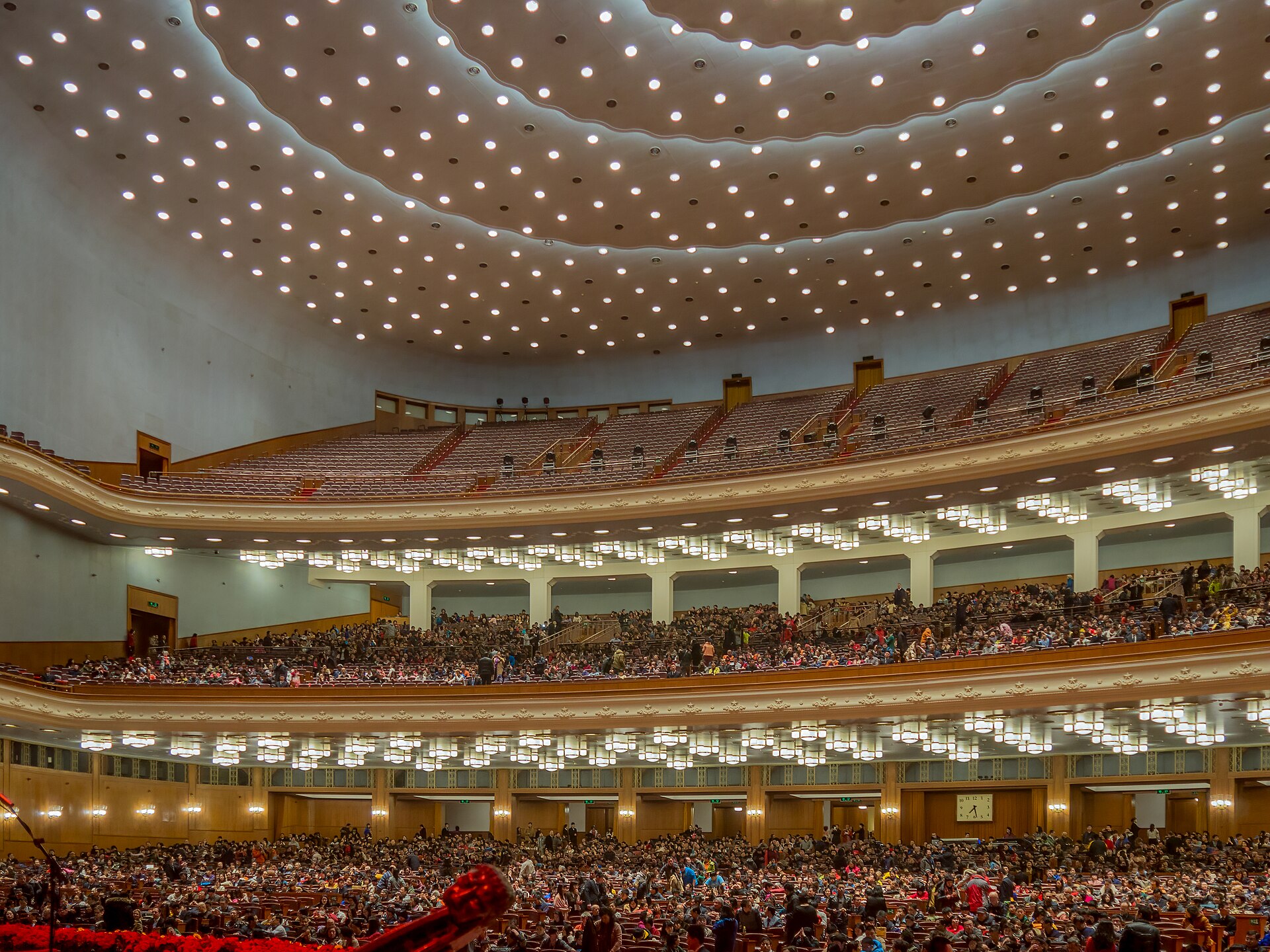
China's Communist Party closed a four-day meeting of its Central Committee in Beijing on Thursday with a communique that, read line by line, documents one of the largest purges of senior officials in the party's modern history.
The communique of the Fifth Plenary Session of the 20th Central Committee, published in English by the state news agency Xinhua, says the session ran Oct. 26 to 29. It states that "a total of 162 members and 117 alternate members of the Central Committee attended the session," a total of 279. The BBC reported that 315 attended the fourth plenum in October 2025 and 364 attended the third in July 2024, and that this is the first time in Xi Jinping's 14 years as leader that attendance fell below 300. The current Central Committee began its term in 2022 with more than 370 members, according to the BBC.
Neil Thomas, a senior fellow at the Asia Society Policy Institute who studies Chinese politics, calculated an attendance rate of 74 percent, the lowest since the era of Mao Zedong, NPR reported.
The communique names the people removed. It says the plenum deliberated and adopted reports from the Central Commission for Discipline Inspection on 18 officials, including former Xinjiang party chief Ma Xingrui and former diplomat Liu Jianchao, and reports from the Central Military Commission on 16 military officers, beginning with former top generals Zhang Youxia and Liu Zhenli. It then confirms the Politburo's earlier decisions to expel 33 of those 34 from the party and to remove one, Li Yunze, from his party position. The BBC, counting the same list, reported that 33 members were expelled, a record, and that 16 of them are from the military. The communique describes the cases only as "grave violations of discipline and the law," language the BBC noted has become routine under Xi's anti-corruption campaign.
The BBC reported that the expulsions bring the total removed under Xi's third term to a record 51, compared with five and 35 in his first and second terms, though it did not specify the basis of that count. It also reported that the party's anti-corruption watchdog said 680,000 people across the party apparatus were disciplined in the first nine months of this year.
To fill the gaps, the communique says that "empty seats on the Central Committee were filled by alternate members" and lists 10 names.
The only promotion in the text is one line: "Zhang Shengmin was elected member of the Political Bureau of the Central Committee." Zhang, a general, is vice chairman of the Central Military Commission and deputy secretary of its discipline inspection commission, NPR reported. After the purges, the commission that controls the armed forces has just two members, Xi as chairman and Zhang as vice chairman, according to the BBC and NPR. NPR noted that the purges had left the Politburo without any representative of the People's Liberation Army, and the BBC reported Zhang's elevation brings the 24-seat Politburo back to 22 members.
The meeting's main business was a resolution on "persevering with full and rigorous Party self-governance." The communique says that "profound changes in global, national, and Party conditions" have made the party's tasks "even more arduous" and pose "formidable challenges" to its governance and the quality of its membership. It calls for stronger oversight, a "responsibility system" under which those who fail at self-supervision "are strictly held to account," and loyalty around "the Party Central Committee with Comrade Xi Jinping at its core."
It also sets the calendar: the party "will convene its 21st National Congress in Beijing in the second half of 2027." Analysts widely expect Xi to secure a fourth five-year term as party leader there, NPR and the BBC reported. No leader but Mao has served that long.
Analysts quoted by the BBC read the purge as being about loyalty as much as graft. "The campaign will continue and expand depending on how secure Xi feels rather than any real issue with corruption," said Chong Ja Ian, a non-resident scholar with Carnegie China. "Xi has few qualms about removing people he promoted. That he does so at will with little opposition underscores how unassailable his position is at the moment." Thomas and two colleagues at the Asia Society wrote that the culling of the military leadership "raises serious questions about organisational leadership and combat readiness."
Zhang Fuhai of the party's disciplinary commission told a briefing Friday that more than two million people have been disciplined since 2012 for what the party calls "pointless formalities, bureaucratism, hedonism and extravagance," the BBC reported.
Unanswered by the communique: what specific conduct led to each expulsion, and who will fill the five empty seats on the Central Military Commission.
Sources
- Xinhua: Communique of the Fifth Plenary Session of the 20th Central Committee of the Communist Party of China (Oct. 29) (opens in a new tab)
- BBC: Record number of purges as Xi emphasises 'party discipline' (Oct. 30) (opens in a new tab)
- NPR: China elevates a military general to the Politburo (Oct. 29) (opens in a new tab)