The Supreme Court Took Hours, Not Days, to Refuse Separating 20,000 California Ballots. A UCLA Review Found 42% of the Names Were Not Even on the Voter Rolls
The one-line order carried no noted dissents and did not ask California to respond. Three lower-court judges, two of them Trump appointees, had already found the federal list unreliable or the remedy unworkable.
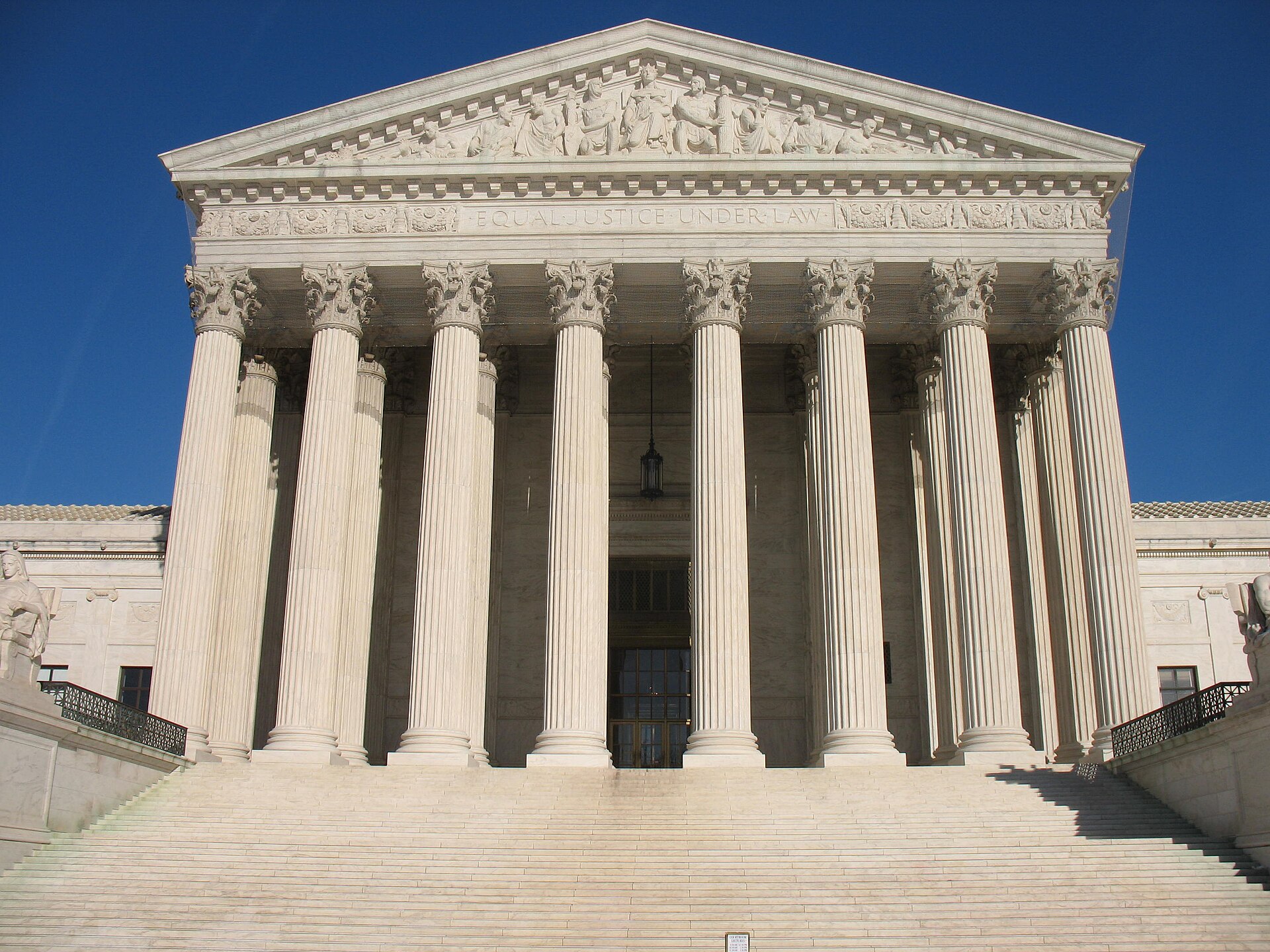
The Supreme Court on Monday evening denied the Justice Department's emergency request to force California to set aside mail ballots from about 20,000 people the Trump administration identified as likely noncitizens, in a one-line, unsigned order with no noted dissents, according to CBS News, SCOTUSblog, NPR and USA Today.
The court acted only on the government's request for emergency relief and did not ask California election officials to respond before ruling, CBS reported. SCOTUSblog reported that the order was released to reporters shortly before 6 p.m., hours after the administration filed its request Monday morning. Election Day is Tuesday.
<h3>What the government asked for</h3>
In a 19-page filing, Solicitor General D. John Sauer asked the justices to require California to keep the ballots separate until the voters' citizenship could be verified. 'Once California commingles the challenged ballots with lawful ones,' Sauer wrote, 'there is no way to get the challenged ballots back,' according to SCOTUSblog.
Sauer argued that because federal law bars noncitizens from voting in federal elections, 'it follows that any ballot cast by an alien is unlawful,' and that the government's injury would 'continue to mount' through Nov. 10, California's deadline for receiving mail ballots. He contended California would not suffer 'undue hardship' because its own election laws 'contemplate the segregation of challenged ballots,' SCOTUSblog reported.
The filing went first to Justice Elena Kagan, who handles emergency appeals from the 9th Circuit; she referred it to the full court, according to SCOTUSblog.
<h3>How the lower courts ruled</h3>
On Oct. 28, U.S. District Judge David Carter, a Clinton appointee, rejected the government's request for a temporary restraining order, saying the administration's process for identifying alleged noncitizens was 'rife with uncertainty and errors,' CBS reported. NPR reported that Carter referred to 'a broad, ongoing pattern of attempted election interference by federal officials.'
On Friday, a divided 9th Circuit panel also refused emergency relief. 'There is a material risk that granting the United States its requested relief would result in disenfranchisement and could jeopardize the County's entire election,' wrote Judges Mark Bennett, a Trump appointee, and Gabriel Sanchez, a Biden appointee, according to NPR. They cited the Purcell principle against changing election rules on the eve of an election, the Constitution's grant of election authority to the states, and the National Voter Registration Act's bar on systematic removals within 90 days of a federal election. Judge Patrick Bumatay, also a Trump appointee, dissented.
<h3>The list itself</h3>
The number of ballots actually at stake is likely much smaller than 20,000, NPR reported, because county officials found that many people on the Justice Department's list did not have active registrations and were not mailed ballots.
Over the weekend, data scientists at UCLA's Voting Rights Project, granted access to the list through a court order in a separate lawsuit, found that 42 percent of the names did not appear on California's current voter roll, and found naturalized citizens on the list, according to NPR.
The administration told state and Los Angeles County officials last month that there were more than 20,000 suspected noncitizens on its rolls and has since sent letters to all 58 California counties, CBS reported. California has more than 23 million registered voters, and more than 6 million mail ballots had been returned.
The administration's description of these voters is an allegation. No court has found that any of the people on the list is a noncitizen. Noncitizen voting in federal elections is illegal, and Reuters has reported that available evidence shows it is exceedingly rare.
<h3>A second ruling the same day</h3>
Separately on Monday, U.S. District Judge Tanya Chutkan in Washington temporarily barred the Justice Department and the Department of Homeland Security from sending states lists of voters the administration says may be noncitizens, and from asking officials to set aside those ballots, according to Democracy Docket and Reuters. That order is covered in a separate Boston Uncut report.
<h3>What the order does not decide</h3>
The Supreme Court's denial is a refusal to intervene on an emergency basis. It does not resolve the government's underlying lawsuit against California and Los Angeles County Registrar-Recorder Dean Logan, and it is not a ruling on any individual voter's citizenship. USA Today described the request as a rare attempt by a president to involve the federal government in the administration of elections, and noted that the Constitution assigns that responsibility to states and Congress.
Sources
- CBS News: Supreme Court rejects Trump's effort to force California to separate mail ballots (Nov. 2) (opens in a new tab)
- SCOTUSblog: Supreme Court declines Trump administration's request to intervene in California ballot dispute (opens in a new tab)
- NPR: Supreme Court rejects DOJ push to separate California ballots (Nov. 2) (opens in a new tab)
- USA Today: Supreme Court rejects Trump attempt to set aside some CA ballots (Nov. 2) (opens in a new tab)