Thirty Seconds: The NTSB's Timeline From 'Manageable' Ice to a Mayday on the Learjet That Killed Nine in Palm Beach County
The crew reported light clear ice and moderate turbulence at 35,000 feet, asked to climb to 37,000, and less than half a minute later reported an overspeed descent. Investigators say they have evidence of breakup before impact.
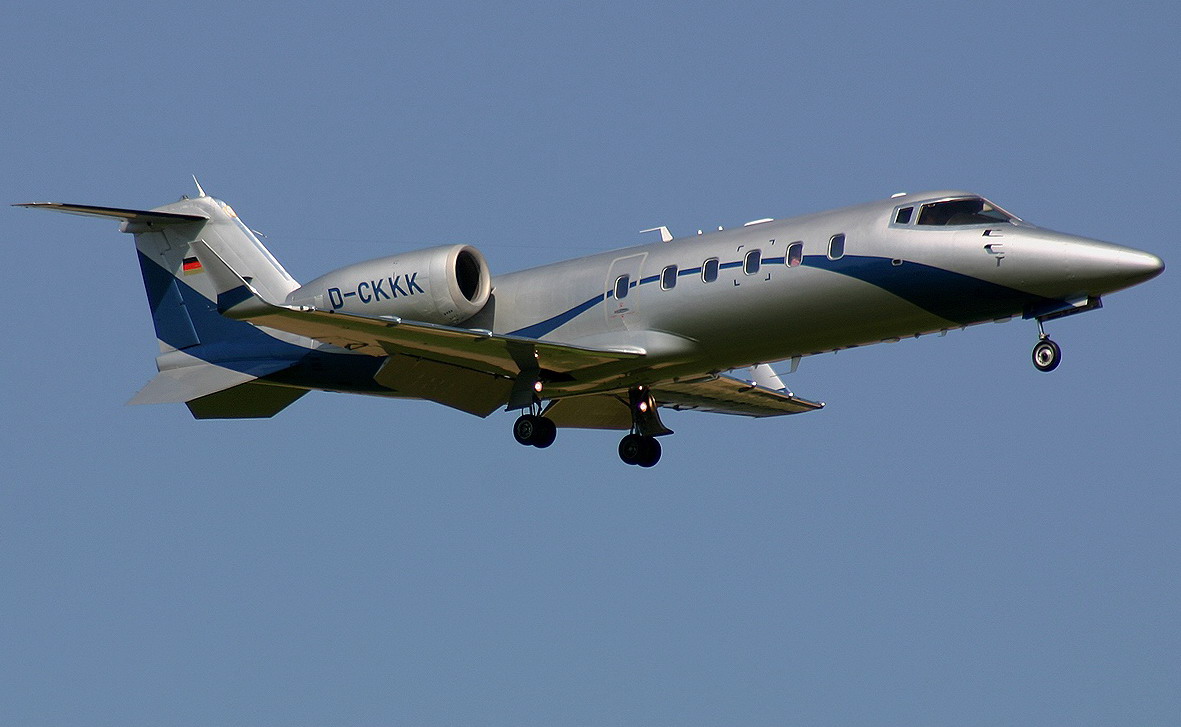
The crew of a Learjet 60 that crashed in Palm Beach County, Fla., on Sunday, killing all nine people aboard, reported light clear ice and moderate turbulence shortly before the jet entered an overspeed condition and began descending rapidly, National Transportation Safety Board officials said Monday, according to CBS12, Aviation Week and AVweb.
The jet, operated by Aurora Aviation, doing business as Upper Jets, departed Austin-Bergstrom International Airport at about 10:37 a.m. Sunday bound for North Eleuthera in the Bahamas with two crew members and seven passengers, NTSB board member Tom Chapman said, according to CBS12. The flight was operating under Part 135, the federal rules for charter and on-demand operations, AVweb reported. The NTSB lists the investigation as ERA27MA026, with an event date of Nov. 1 and a location of Lake Worth Beach.
The co-pilot was identified as 20-year-old Nathalia Filgueiras of Boca Raton, CBS12 reported.
<h3>The timeline, as the NTSB described it</h3>
At about 12:47 p.m., flying at 35,000 feet, the crew told Miami air traffic controllers they were encountering 'light, clear ice, which was manageable, and also moderate turbulence,' with altitude deviations of about 700 feet, Chapman said, according to Aviation Week. The crew reported an outside air temperature of minus 47 degrees Celsius, or minus 53 degrees Fahrenheit.
'Very soon after, the crew transmitted, "We are picking up ice, requesting to climb to 37,000 ft. if able," which was approved by FAA air traffic control,' Chapman said. 'Less than 30 sec. later, a transmission from the airplane announced a descent, followed by a mayday call.'
At about 12:48 p.m., a transmission from the aircraft said, 'We are in an overspeed condition descending,' with the rest unintelligible, Chapman said. Later communications described a rapid descent and gave an altitude callout.
Air traffic control audio captured by LiveATC.net shows the crew first reporting a descent rate of 10,000 feet per minute, increasing to 20,000 feet per minute, and ADS-B Exchange data show the jet descending 27,000 feet in one minute before the data cut off, Aviation Week reported. Those figures come from third-party tracking and audio sites, not from the NTSB.
<h3>Evidence of breakup</h3>
'We do have some evidence that there was some breakup of the aircraft before impact,' Chapman said. 'We're still seeking to determine that,' according to AVweb. Investigators have not yet identified the debris recovered or determined whether any parts, including part of the tail, separated before impact, CBS12 reported.
Dashcam video of the impact appears to show the T-tail jet missing its horizontal stabilizer, Aviation Week reported, but it is not known whether loss of the tail caused the crash or the structure failed during the high-speed plunge.
The debris field measures about half a mile by four-tenths of a mile and includes ball fields, businesses and homes, investigator-in-charge Timothy Monville said. One person on the ground, a man in a vehicle leaving the area, suffered a leg injury, Monville said, according to CBS12.
<h3>Open questions</h3>
'The weather conditions are a major focus of the investigation,' Chapman said. There was heavy rain and scattered thunderstorms in the area at the time, Aviation Week reported. 'What we have to determine is what the weather conditions were like at altitude.'
Investigators have not determined whether the jet entered an active thunderstorm, AVweb reported, and are reviewing whether a turn toward Freeport was directed by air traffic control or initiated by the crew.
They are also trying to determine whether a cockpit voice recorder was aboard. Maintenance records indicate one was installed, but officials do not yet know whether it remained on the aircraft or can be recovered, CBS12 reported. The crash left a crater in the roadway, and water in the crater is complicating access to the wreckage.
An aviation attorney, Pablo Rojas of Podhurst Orseck, told NBC 6 South Florida that investigators could examine whether the de-icing system played a role. 'If icing is not controlled, it can lead to a stall in the aircraft,' he said. That is an outside expert's general explanation, not an NTSB finding.
<h3>What the NTSB does not do at the scene</h3>
Chapman cautioned that the investigation is in its early stages and declined to speculate on a cause. The NTSB does not determine probable cause at the scene, and its investigation will continue after on-site work is complete, CBS12 reported. A preliminary report typically follows within weeks; a final probable-cause determination can take a year or more.
Details about all of the passengers had not been released by the NTSB at the time of Monday's briefing, AVweb reported.
Sources
- CBS12: NTSB: Learjet crew reported ice, turbulence before deadly Greenacres crash (Nov. 2) (opens in a new tab)
- Aviation Week: Icing, Turbulence Possible Factors In Fatal Learjet 60 Crash (opens in a new tab)
- AVweb: NTSB: Possible In-Flight Breakup in Learjet Accident (opens in a new tab)
- NTSB: Investigation ERA27MA026 (opens in a new tab)
- NBC 6 South Florida: Aviation expert points to de-icing, autopilot systems (opens in a new tab)