Serbia's Student List Winners Demand Police, Intelligence and Judicial Chiefs Step Down; State TV Director Quits
Days after ousting Aleksandar Vučić's party, the movement born of the 2024 Novi Sad canopy collapse wants dismissals before evidence can be destroyed. Acting President Ana Brnabić calls it "revolutionary justice."
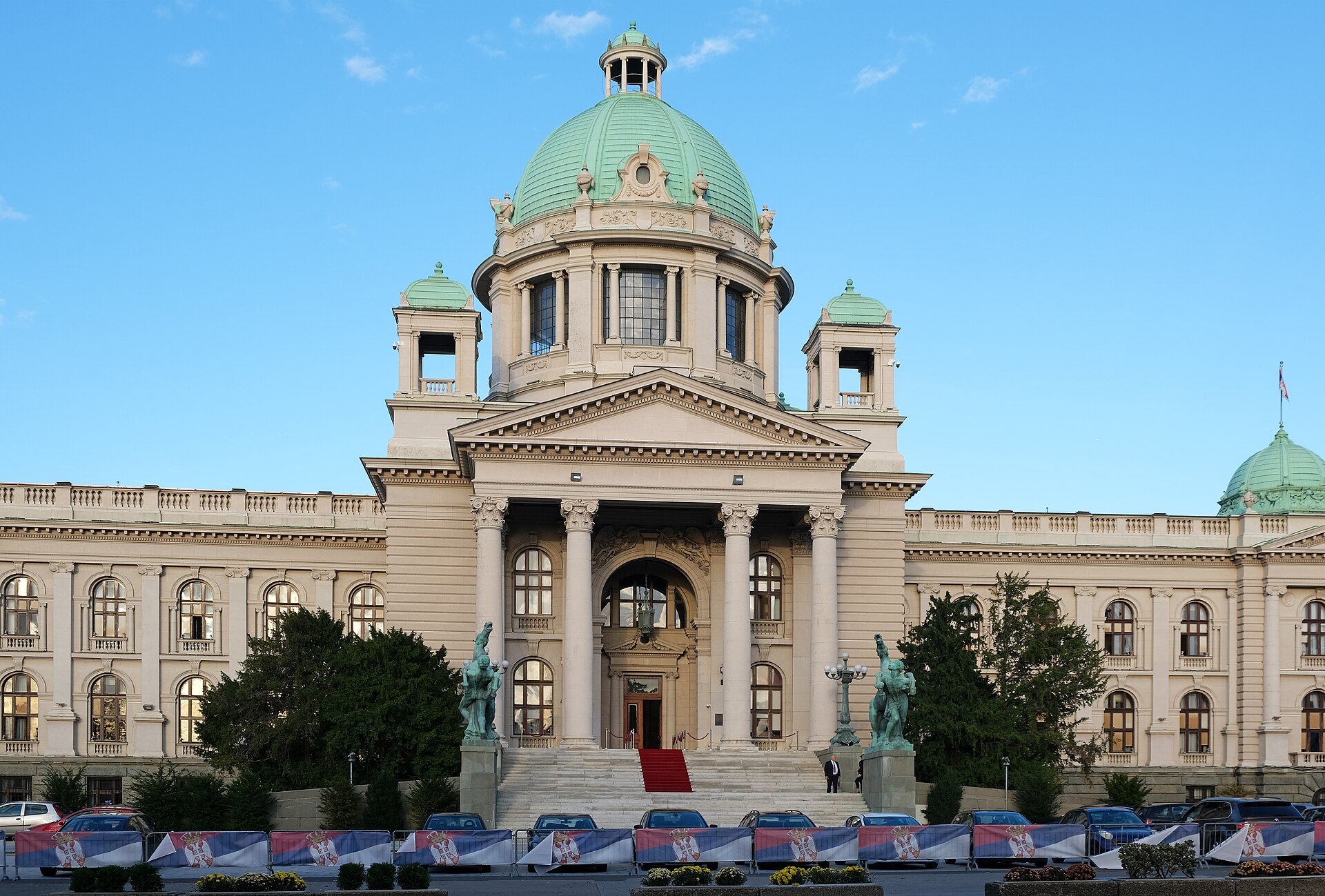
Serbia's victorious student-led movement on Thursday demanded that top figures in the police, the intelligence service and the judiciary step down, days after defeating former President Aleksandar Vučić's party in parliamentary elections, the BBC reported.
Standing in Pioneers' Park, opposite parliament, newly elected members of the Student List called for the immediate dismissal of all police officers who had broken the law, singling out the heads of the police, the BIA security agency and the anti-terror unit. The handover of power will take weeks, and the movement is concerned that evidence of possible wrongdoing could be destroyed in the meantime, the BBC reported.
The BBC noted that European countries rarely vote to reset their political systems overnight, and that Serbians have handed the job to novice politicians. Days earlier, the same park had been a tent camp filled with Vučić loyalists outside his office. It was dismantled within hours of his admitting defeat Sunday night, and volunteers moved in Monday morning to clean up. "This is just the first wave of spring cleaning, the new ones are coming now - we are very excited but ready to do it too," said Marija Milovanović, 25, as she scrubbed a bench.
The movement grew out of protests after the collapse of a railway station canopy in Novi Sad, Serbia's second-largest city, killed 16 people in November 2024. Its goal was to bring those responsible to justice and investigate corruption claims blamed for the disaster. Its Student Plan promises to "halt the plunder, return stolen goods to the state budget, and invest directly in education and the economy," according to the BBC.
The changes have started at the state broadcaster RTS, whose director, Manja Grčić, has stepped down. Newly elected MP Mirjana Nikolić said citizens have a right to truthful information and that RTS had served the government's interests for years. The new MPs also want to replace Vladimir Lučić, head of Telekom Srbija.
Acting President Ana Brnabić, a Vučić loyalist, accused the winners of choosing "revolutionary justice, not rule of law," and of aiming to shut down "all of the media they dislike," the BBC reported.
Dejan Šoškić, an economist who was central bank governor from 2010 to 2012 and is among the best-known new MPs, argued for speed. "In the first six months, I would like to see the media scene liberated, fighting against corruption on the way, the institutions operating as prescribed by laws and a lustration law introduced," he said, meaning a ban on public office for members of the Vučić government or party found to have violated Serbians' rights. Strahinja Subotić of the Belgrade-based European Policy Centre warned such a purge will take time and that the new administration will have to "build bridges to the segments that have been operating well in the past."
The 141 winning candidates, among them professors, artists, athletes and as many as 12 doctors and surgeons, were chosen by students through a lengthy, secretive process, the BBC reported, and the list has no obvious leader. Radomir Saičić, a University of Belgrade organic chemistry professor elected on the list, told the BBC the MPs will follow the students' 1,200-page plan: "Parliament is making decisions, but since this change was led by students' efforts, we would highly value their opinion and work closely with them."
Abroad, the EU quickly welcomed the result and promised support for rule-of-law, media and anti-corruption reforms. But the students' manifesto gives EU integration a minor place, calling the bloc Serbia's "most important economic partner," the BBC reported. Serbia is a candidate for EU membership, but its bid has long been on the back burner while its Western Balkan neighbors press ahead. Serbia has not sanctioned Russia since its 2022 full-scale invasion of Ukraine and gets preferential gas prices, and Vladimir Putin endorsed Vučić. Šoškić signaled no rush to change that: "Serbia had its own experience with sanctions in the 1990s and we know that they mostly harm ordinary people and do not affect policies of a state," he said, referring to UN sanctions during the wars in the former Yugoslavia. The new government's first focus is likely to be domestic reform, the BBC reported.
The clock is short: presidential elections are due in December. Vučić is barred from a third term but promised his Serbian Progressive Party would fight back: "We will beat them much faster than they can even imagine."
Next: the formal transfer of power, whether the security chiefs resign, and who the movement backs for president.