Question 7 Is a Coin Flip, and Boston Voted 69% Yes on a Lot-Size Law That Doesn't Apply to Boston
A 7-point early lead for the starter-homes measure evaporated overnight. City results show where the yes vote came from, and the town-by-town count will decide it.
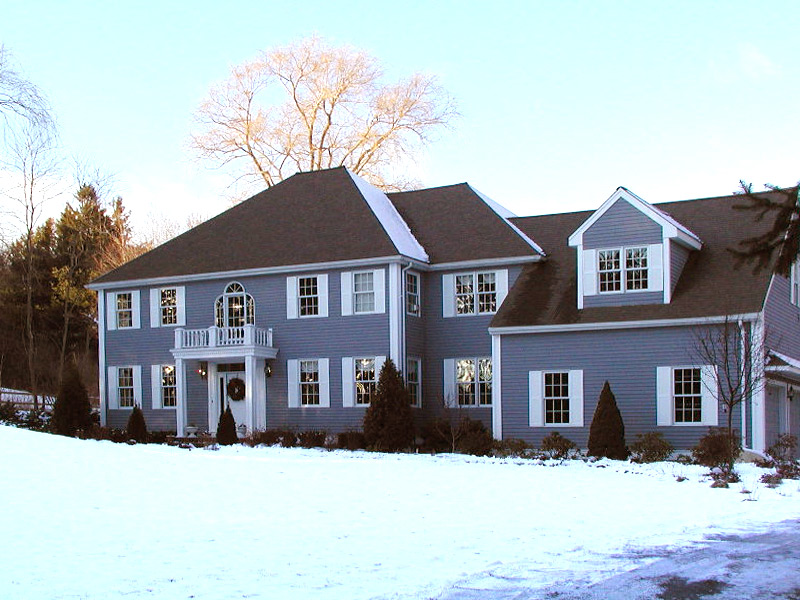
The statewide ballot question that would let builders put single-family homes on smaller lots was still uncalled Wednesday morning, with yes and no essentially tied, according to an Associated Press-based results tracker. Boston, which the measure would not cover, voted for it by more than 2 to 1, according to the city's unofficial results.
Where the count stands
Question 7 stood at 50.0 percent yes and 50.0 percent no as of the tracker's 4:58 a.m. update, with about 80 percent of the expected vote counted, according to Exa's AP-based results page. The yes side's lead shrank from 7.3 points when 26 percent of the vote was in to zero at 80 percent. In the final update before dawn, 40,648 more votes were counted, 43 percent of them yes and 57 percent no.
At midnight, with just over 47 percent counted, the measure led 51.5 percent to 48.5 percent, Boston.com reported.
The trend line matters: the later-reporting votes broke against the measure. If that pattern holds in the remaining 20 percent of the vote, the question could fail; if the remaining ballots come disproportionately from places that favored it, it could pass narrowly. No outlet had projected a winner as of Wednesday morning.
What it would do
Question 7 would amend the state Zoning Act, Chapter 40A, to allow a single-family home on any residentially zoned lot of at least 5,000 square feet with at least 50 feet of street frontage, as long as it is connected to public water and sewer, according to Boston.com and the Secretary of the Commonwealth's voter guide. Municipalities could keep certain dimensional requirements, and the rule covers only single-family homes, not townhouses or multifamily buildings, The Boston Globe reported.
Many cities and towns now require far larger lots, often as large as 2 acres, the Globe reported. A property owner with an acre could, in some cases, build four homes under the new standard.
The Boston paradox
The measure applies to every Massachusetts municipality except Boston, which is not governed by Chapter 40A, Boston.com reported.
Boston voters backed it anyway. The city's unofficial results, updated at 3:46 a.m., show 119,998 yes votes and 53,286 no votes, or 69.25 percent yes. Boston cast 185,569 ballots in all.
That means Boston alone gave the yes side a margin of about 66,700 votes on a rule that will not change any lot in the city. Statewide, the measure's fate rests on the suburbs and towns where the zoning change would actually apply.
Who backed it and who opposed it
Gov. Maura Healey and Boston Mayor Michelle Wu supported the measure, the Globe reported. Three committees backed it, Legalize Starter Homes, Abundant Housing Massachusetts and Democratic Socialists For a Fair Massachusetts, along with regional chambers of commerce and The New York Times editorial board, according to Boston.com.
The Massachusetts Municipal Association was the only major opponent, though it did not run a formal campaign, the Globe reported. Its executive director, Adam Chapdelaine, told a legislative hearing that "zoning decisions are inherently local" and that a "one-size-fits-all" state policy would remove residents and officials from decision-making, according to Boston.com.
A Suffolk University/Boston Globe poll released last month found 41 percent support and 41 percent opposition, the Globe reported.
How many homes?
The campaign estimated the change would add 2,200 to 5,700 net new homes a year. Tufts University's Center for State Policy Analysis put the figure at 350 to 1,200 a year, the Globe reported; Boston.com described the Tufts estimate as roughly 750 homes a year, a 15 percent increase in single-family construction.
Builders told the Globe that in places such as Newton and Needham, the measure could lead to two $1.5 million homes where a builder would otherwise put one $3 million to $4 million house. Farther out, where many lots are zoned for a full acre, smaller homes could perhaps sell for $1 million or less.
West Roxbury voter Bill Tuttle, 79, a retired city planner, told the Globe he voted yes. "There's enough things in there to protect local municipalities," he said.
What happens next
If it passes, Question 7 would take effect 30 days after the election is certified because it specifies no other date, WCVB reported. Final official results come only after certification by the Secretary of the Commonwealth, and a result this close could also be subject to a recount request.
Sources
- Exa Election Library: 2026 Massachusetts Question 7 results (AP data) (opens in a new tab)
- Boston.com: Election results, how Mass. voted on this year's 9 ballot questions (opens in a new tab)
- City of Boston: Unofficial Election Results (Nov. 4, 3:46 a.m.) (opens in a new tab)
- The Boston Globe: Voters weigh in on bid to boost starter homes in Mass. (opens in a new tab)
- Secretary of the Commonwealth: 2026 Information for Voters, Question 7 (opens in a new tab)
- WCVB: Massachusetts 2026 ballot question results (opens in a new tab)