The Nine-Question Scorecard: Top-Two Primaries Fail, Same-Day Registration Passes, Marijuana and Gun Laws Survive, and Two Still Hang
Most of the record-tying ballot has been decided. Here is what passed, what failed, when each change takes effect, and how Boston voted compared with the state.
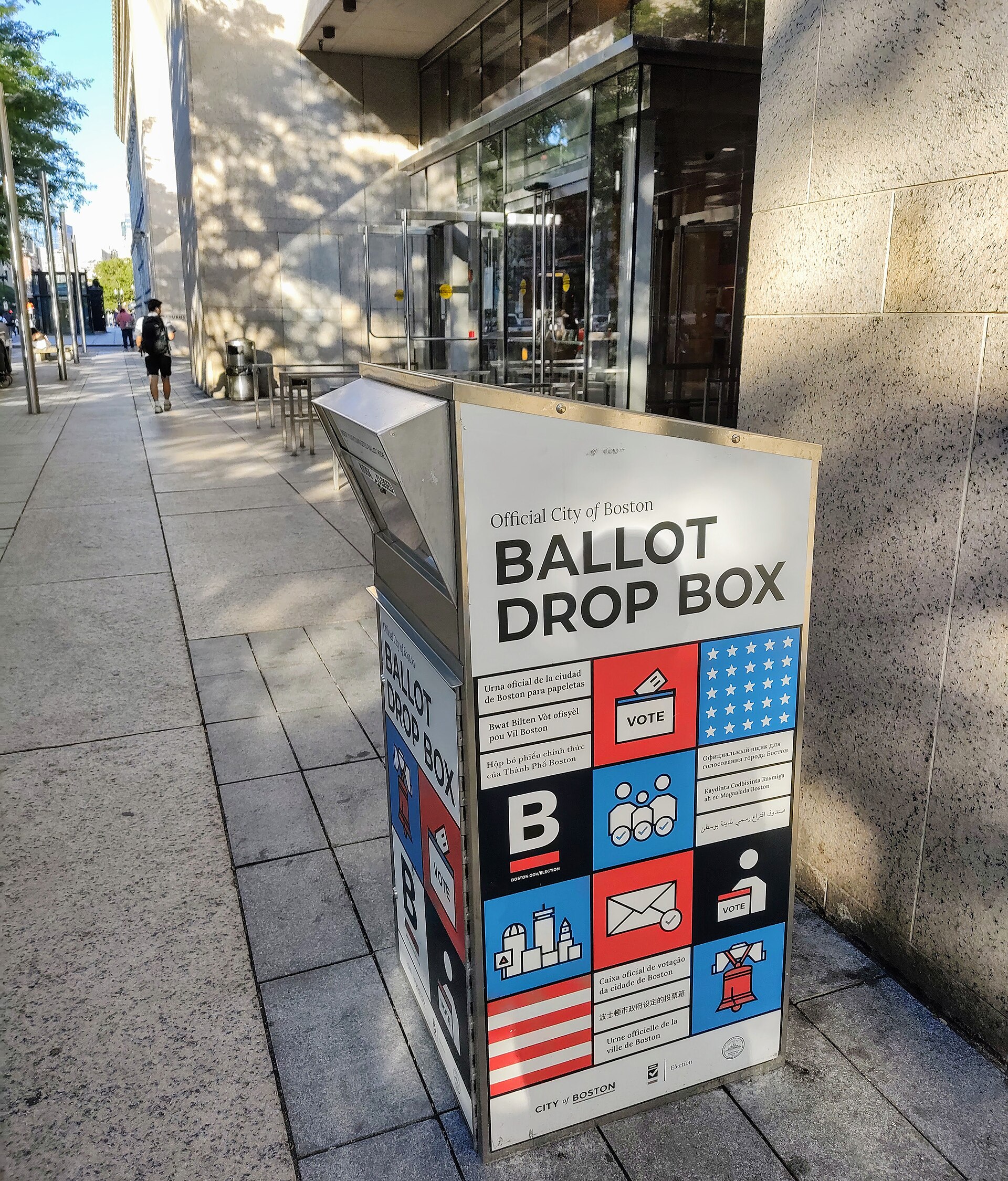
Massachusetts voters faced nine statewide ballot questions on Tuesday, tying the record set in 1994, 1976 and 1972, according to WCVB. By Wednesday morning, the Associated Press had called most of them. Questions 1 and 7 are covered in separate stories; here is where the rest stand.
Question 3: Top-two primaries rejected
Voters rejected Question 3, which would have replaced party primaries with a single all-party primary in which the top two finishers advanced to November regardless of party, WBUR reported. The AP called the race early Wednesday. With 80 percent of the vote counted, there were 1,155,311 no votes to 732,074 yes votes, according to CBS Boston's AP results.
The measure was filed by Harvard professor and former gubernatorial candidate Danielle Allen. "Many elections are over before most of us ever cast a ballot," she wrote in the state voter guide, noting that "two-thirds of the legislature is running unopposed." Vanessa Snow wrote for the no side that it "would limit voter choice by allowing only two candidates to advance to November." The yes campaign said afterward, "The people of Massachusetts want real choices in November and elected officials who have to work to earn all of our votes. That frustration doesn't go away tonight," according to WBUR.
In Boston, 63.28 percent voted no, according to the city's unofficial results.
Question 4: Same-day registration passes
The AP called Question 4 for yes, with 1,216,660 votes (56.9 percent) to 920,817 (43.1 percent) at 80 percent counted, CBS Boston reported. The measure, introduced by Secretary of State William Galvin and nine other officials, will let voters register and vote on Election Day beginning Jan. 1, 2028, Boston.com reported. The state Republican Party opposed it. Boston voted 73.51 percent yes. Opponents argued it would strain poll workers on Election Day.
Question 2: Public defenders can unionize
The AP projected that Question 2 passed, allowing employees of the Committee for Public Counsel Services to bargain collectively; it had more than 64 percent with just over half the vote counted, Boston.com reported. CPCS employees tried to unionize at least three times, as far back as 1979 and as recently as 2015. It takes effect 30 days after certification, WCVB reported. Boston voted 77.87 percent yes.
Question 6: Nature for All Fund
Question 6 appeared on track to pass, with nearly 62 percent support with about 39 percent counted at midnight, Boston.com reported. Starting July 1, 2027, the fund would receive half the state sales tax collected on sporting goods, recreational vehicles and golf courses, rising to all of it after July 1, 2028. Boston voted 68.36 percent yes.
Question 8: Marijuana repeal fails
Ten years after legalizing recreational marijuana, voters rejected a bid to repeal the 2016 law, WCVB reported. CBS Boston's AP results showed 1,279,917 no votes to 407,807 yes votes at 80 percent counted. Boston voted 78.70 percent no.
Question 9: 2024 gun law upheld
Voters kept Chapter 135, the 2024 gun law that expanded the definition of an assault weapon, cracked down on ghost guns and created a public firearms data dashboard, WCVB reported. "This victory belongs to the people of Massachusetts," said Ruth Zakarin, chair of Yes on 9 for a Safe Massachusetts, according to Boston.com. Boston voted 80.79 percent yes.
Question 5: Still uncalled
Question 5, which would change how the state calculates its tax-revenue cap under Chapter 62F and include millionaires' tax revenue, was too early to call late Tuesday, Boston.com reported, and CBS Boston's results page did not list a winner as of 6:12 a.m. Wednesday. Tufts' Center for State Policy Analysis estimated it would produce two to four times as many refunds, roughly $200 to $250 a year. The SEIU and Massachusetts Teachers Association opposed it. Boston voted 59.41 percent no.
When the changes take effect
Questions 1, 5 and 6 specify Jan. 1, 2027; Questions 3, 4 and 8 specify Jan. 1, 2028; and Questions 2 and 7 would take effect 30 days after certification, WCVB reported. The Legislature can amend voter-approved laws, as it did with the 2016 marijuana law.
What is not known
All figures are unofficial. The Secretary of the Commonwealth certifies results in the coming weeks, and Questions 5 and 7 remained uncalled as of Wednesday morning.
Sources
- WBUR: Massachusetts voters reject Question 3 (opens in a new tab)
- CBS Boston: Massachusetts 2026 election results (AP data, updated Nov. 4, 6:12 a.m.) (opens in a new tab)
- Boston.com: Election results, how Mass. voted on this year's 9 ballot questions (opens in a new tab)
- WCVB: Massachusetts 2026 ballot question results (opens in a new tab)
- City of Boston: Unofficial Election Results (opens in a new tab)