Voters Opened the Legislature's Records by a Landslide. A Closed-Door Bill Could Rewrite the Result Before It Takes Effect
Question 1 passed with about 86% early in the count and takes effect Jan. 1. House and Senate negotiators are writing their own version, and Democratic supermajorities can override a veto.

Massachusetts voters approved Question 1 on Tuesday, ending the Legislature's and the governor's exemption from the state public records law, by one of the widest margins of any question on the ballot. The Associated Press projected it would pass around 11:40 p.m., with 86 percent voting yes and nearly 46 percent of the vote counted, Boston.com reported.
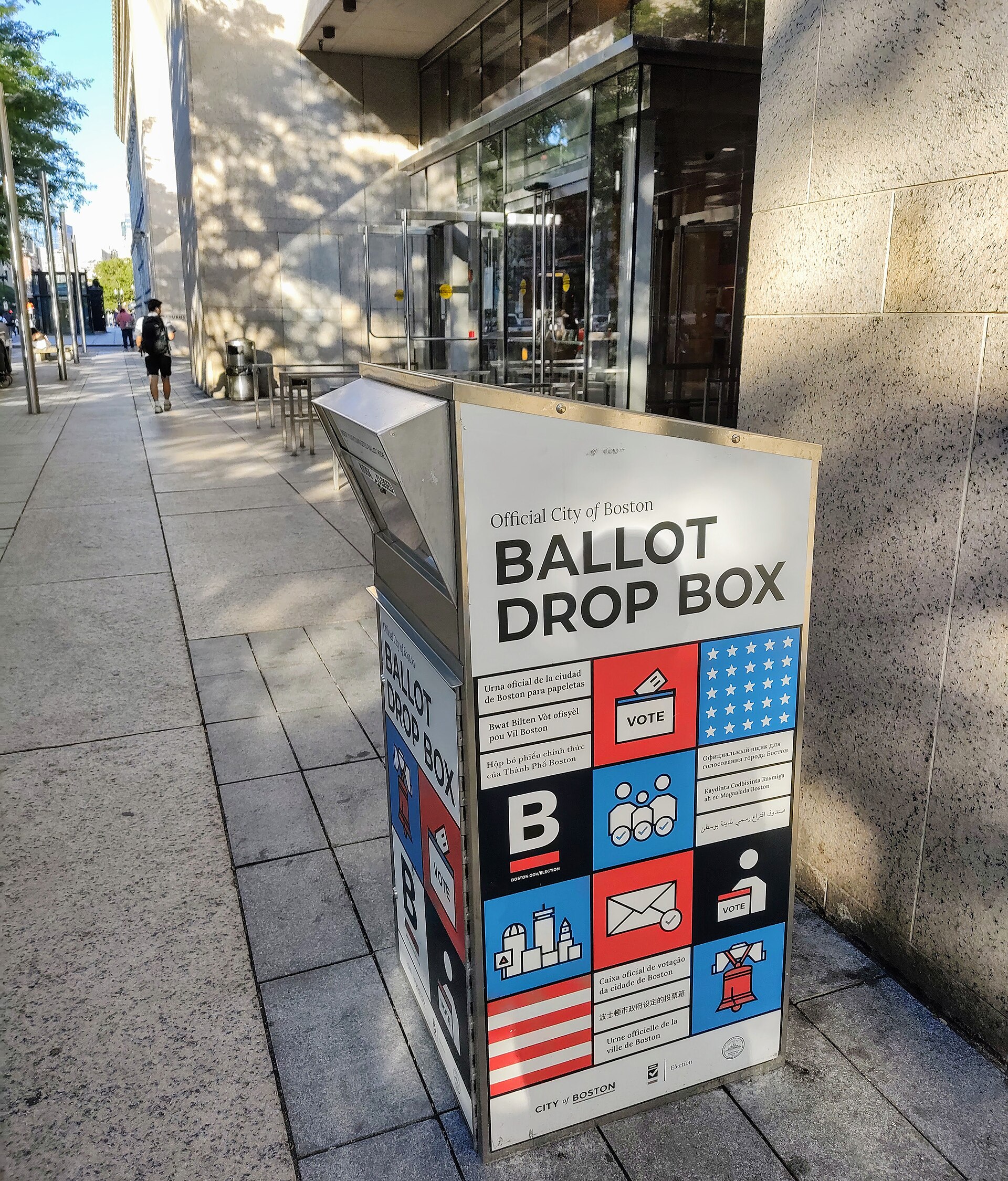
In Boston, the city's unofficial results show 87.61 percent yes.
Massachusetts was the only state where the legislature and governor's office were exempt from the records law, and the vote brings it in line with the rest of the country, WBUR reported.
What the law opens, and what it doesn't
The measure puts state lawmakers and the governor under the same public records law that already applies to city and town governments and state agencies, according to WBUR. Contracts, spending records and settlement agreements would become available, WBUR reported, but a lawmaker's communications with constituents and lobbyists still would not be accessible.
Question 1 specifies that it takes effect Jan. 1, 2027, according to WCVB.
The Legislature's competing bill
State lawmakers are working on their own version that would supersede the voter-approved measure, WBUR reported. Their proposal places the governor under the records law but narrows access to the Legislature's records and gives lawmakers more control over what they release.
A team of House and Senate negotiators has been working to craft a final bill behind closed doors, WBUR reported. Earlier this year, House lawmakers passed a public records bill they said would expand access and provide a framework for the legislative audit that voters approved in 2024, WCVB reported.
Lawmakers have argued they should control their own process because of the separation of powers under the state constitution, WBUR reported. Public records are overseen by the secretary of state, an executive branch office, and lawmakers say that office should not be able to force the legislative branch to comply with a records request.
The veto math
Gov. Maura Healey told Boston 25 News last month that she would veto an attempt to rewrite Question 1, WBUR reported. But House and Senate leaders hold Democratic supermajorities large enough to override her veto, according to WBUR, and State House News Service reported that Democrats will keep supermajorities in both chambers regardless of how contested legislative races turn out.
Under the state constitution, the Legislature can amend or repeal a voter-approved law, WCVB noted, citing lawmakers' revisions to the 2016 recreational marijuana law as an example, though doing so carries political risk.
DiZoglio's next move
State Auditor Diana DiZoglio, the measure's leading proponent, told WBUR she is weighing legal action if lawmakers pass their version, arguing they would undermine the will of the voters by overwriting the ballot question.
DiZoglio is already fighting the Legislature over a 2024 ballot question in which 72 percent of voters authorized her office to audit the Legislature, WBUR reported. Lawmakers have resisted that audit, citing some of the same separation-of-powers concerns.
There was no organized opposition campaign against Question 1, WCVB reported. To reach the ballot, each initiative needed at least 74,574 certified signatures last fall and 12,429 more by a July 1 deadline after the Legislature declined to act on it.
Both of DiZoglio's ballot fights now rest on the same unresolved question: whether the executive branch, or voters acting through an initiative, can compel the Legislature to open its own books. The 2024 audit vote passed with 72 percent and remains contested two years later, WBUR reported.
Why the margin matters
A yes vote above 85 percent, if it holds through the final count, would make Question 1 the most lopsided result on a nine-question ballot that tied the state record for the most questions, set in 1994, 1976 and 1972, according to WCVB. It also outpaced Healey's own share of the vote. The size of the margin is likely to shape the politics of any attempt to rewrite it.
What is not known
The conference committee has not released its bill, and there is no public timeline for a vote. Whether a court would entertain a challenge from the auditor, and on what grounds, is also unknown. The final vote count will be certified by the Secretary of the Commonwealth in the coming weeks.
Sources
- WBUR: Massachusetts voters approve Question 1 public records expansion (opens in a new tab)
- Boston.com: Election results, how Mass. voted on this year's 9 ballot questions (opens in a new tab)
- City of Boston: Unofficial Election Results (opens in a new tab)
- WCVB: Massachusetts 2026 ballot question results (opens in a new tab)
- State House News Service: Four ready to join House as legislative results trickle in (opens in a new tab)
- CBS Boston: Massachusetts 2026 election results (opens in a new tab)