Question 7 on Small Lots: What the Law Says, What the Official Summary Adds and Who Wrote the Arguments
The ballot question would amend the state zoning act to bar towns from requiring special permits for single-family homes on lots of 5,000 square feet or more. A line-by-line reading of the official text shows where it is precise and where it leaves room for local rules.
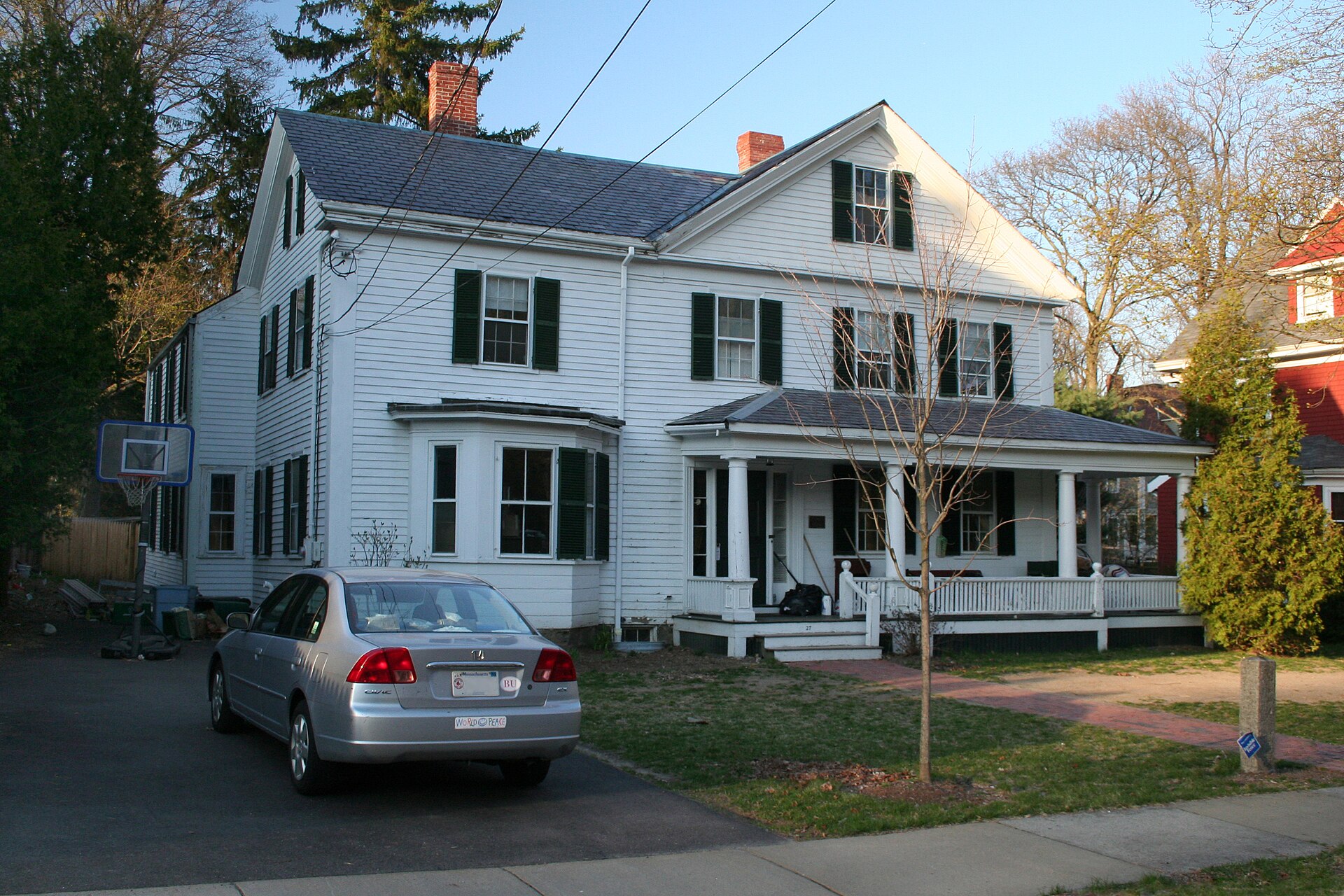
Question 7 on the Nov. 3 ballot would rewrite one paragraph of the state's zoning law to bar cities and towns from prohibiting a single-family home on any lot of at least 5,000 square feet, with at least 50 feet of street frontage and public water and sewer service, according to the Secretary of the Commonwealth's Information for Voters guide. The question is a proposed law, not a constitutional amendment, and the guide labels it "Law Proposed by Initiative Petition: Single Family Homes."
The full text is two sections long. Section 1 adds a paragraph to Section 3 of Chapter 40A of the General Laws, the Zoning Act, and Section 2 says the act takes effect as provided in Article 48 of the state constitution. The new paragraph says no zoning ordinance or by-law "shall prohibit, unreasonably restrict or require a special permit or other discretionary zoning approval" for a single-family residence in a zoning district that allows residential uses, provided the home is "fully contained within a lot" of at least 5,000 square feet and 50 feet of frontage that has access to public sewer and public water.
The same paragraph preserves local authority in one sentence. Such homes "may be subject to reasonable regulations, including, but not limited to, regulations concerning dimensional setbacks and the bulk and height of structures," and "may be subject to restrictions and prohibitions on short-term rental." It also says the Executive Office of Housing and Livable Communities "may issue guidelines or promulgate regulations to administer this paragraph."
The Attorney General's official summary describes those local powers slightly differently. It says cities and towns could "reasonably regulate certain aspects" of the homes, "including their height, distance from neighboring buildings, open space, parking requirements, and whether they can be rented out on a short-term basis." The statutory text itself names setbacks, bulk, height and short-term rentals. It does not mention open space or parking by name, though its list is open-ended. The summary is written by the Attorney General; the text is what the voters would enact.
The guide's "What Will Your Vote Do?" statement, written jointly by the Attorney General and the Secretary of the Commonwealth, says a yes vote "would allow single-family homes to be built on lots of 5,000 square feet or more in residential areas, subject to reasonable local regulation of certain aspects of those homes," and a no vote "would make no change to the law relative to building single-family homes."
The Executive Office of Administration and Finance, which writes the fiscal statement, said that if the law enables housing growth it "could provide positive new growth revenues to municipalities," but that it is "difficult to project the potential scale of new growth." It concluded the proposal has "no discernible material fiscal consequences for state and municipal government finances."
The pro and con arguments, which the guide says reflect the opinions of their authors and are not endorsed or checked by the state, come from two named groups. Wesley Lima of Legalize Starter Homes, based in Lowell, wrote the argument in favor. It says housing costs "have doubled since 2014," that large minimum lot sizes encourage "giant McMansions," and that a yes vote would reduce minimums to a size "more typical of suburbs nationwide." The state does not certify the 2014 figure. Adam Chapdelaine of the Massachusetts Municipal Association wrote the argument against. It says the measure "would override local planning" in all 351 cities and towns "regardless of existing neighborhoods, infrastructure or environmental conditions," and replaces local planning with "a one-size-fits-all mandate."
The Legislature did not act on the petition. The Special Joint Committee on Initiative Petitions held a hearing on March 16 on Initiative Petition 25-03, House 5000, and on May 4 a majority voted to recommend that the General Court take no action. Its majority report, signed by four senators and five representatives, said the committee "supports the overarching goal of expanding housing opportunities," but that opponents raised ambiguity over "size of structures" and "a lack of implementation guidance (including how 'adequate' infrastructure would be determined)." It also noted that under Article 48 the Legislature cannot change an initiative petition's text, so it could only approve or reject it as written.
The report adds a caution about courts. The Attorney General certified the petition under Article 48's narrow criteria, it said, but did not evaluate its broader constitutionality, and neither has a court. The question's text uses the word "unreasonably," and the committee's concerns about undefined terms such as "adequate" infrastructure point to where disputes could arise if it passes. The text does not define "access to public sewer service and public water service," and it leaves it to the housing office to issue guidance.
What the text does not say is how many lots would qualify. The measure does not set a count, and neither the summary, the fiscal statement nor either argument supplies one. Voters will decide on Nov. 3, and the guide is available from the Secretary of the Commonwealth's elections division.