MWRA's 20-Million-Gallon Expansion Request: Comments Close Wednesday, and a Citizens' Committee Asks for a Reserve
The state Water Resources Commission is reviewing MWRA's bid to send 20 more million gallons a day to new communities, while a separate hearing Wednesday covers a 0.08-million-gallon request from North Sherborn.
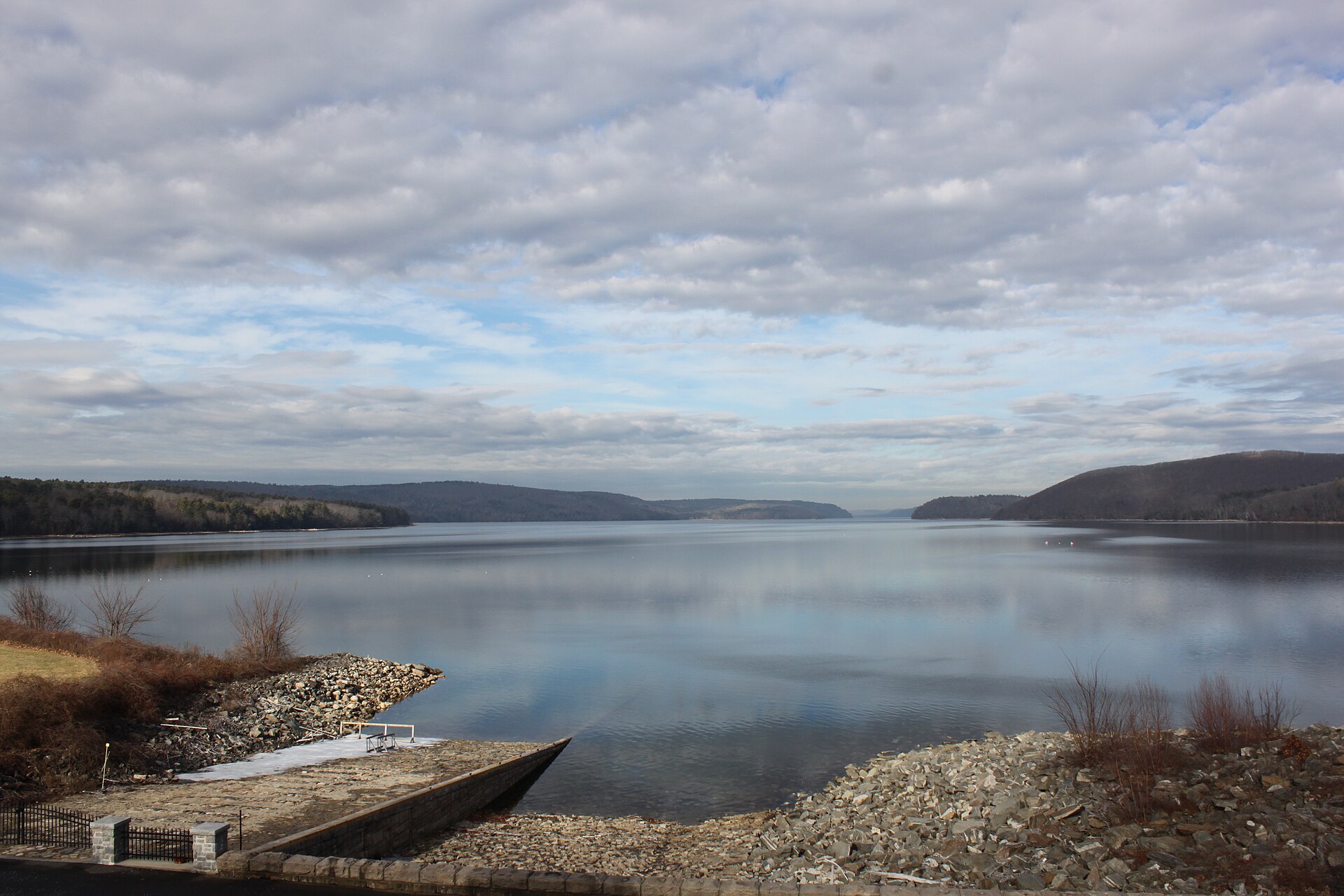
The public comment period on the Massachusetts Water Resources Authority's request to increase its water transfer by 20 million gallons a day closes at 5 p.m. Wednesday, Oct. 28, according to a notice from the state Water Resources Commission. On the same day the commission holds two virtual hearings on a far smaller request from the North Sherborn Water and Sewer District to buy up to 0.08 million gallons a day from the authority.
The larger request is a donor-basin application under Section 4.10 of the state's Interbasin Transfer Act regulations. The Oct. 7 notice says the section lets a regional water supply system ask the commission to evaluate the criteria for the donor basin separately from those for any receiving area. MWRA, the notice says, is seeking to supply "an additional 20 million gallons per day (MGD) on average to accommodate the expansion of its service area to multiple public water systems." Its sources are in the Chicopee River and Nashua River basins. Copies of the application are at the Clapp Memorial Library in Belchertown and the Bigelow Free Public Library in Clinton, and on the commission's website.
The commission is accepting comments on whether the application is consistent with the act's environmental criteria, such as impacts on fisheries, recreation and the aquatic ecosystem of the donor basin, and on the process by which a regional supplier may apply for an increase in the present rate of transfer. Comments go by email to Vanessa Curran at the Executive Office of Energy and Environmental Affairs or by mail to Vandana Rao at 100 Cambridge St., Suite 900, Boston.
One comment is already part of MWRA's own board record. The authority's Oct. 21 board agenda lists, under correspondence, an Oct. 7 letter from the Water Supply Citizens Advisory Committee about the application. The letter in the board packet is dated Sept. 30 and is addressed to the Water Resources Commission, with copies to MWRA's interim executive director, Steve Estes-Smargiassi, and others. The committee, based in Belchertown, says it "neither supports nor opposes" the 20 million gallon request because it is legal under the regulation, but that its neutral position "does not constitute support for allocating water beyond demonstrated need."
The letter gives numbers. The committee commends MWRA for cutting system-wide use from more than 330 million gallons a day in the 1980s to roughly 200 million today. It says current use is below MWRA's registered amount of 312 million gallons a day and the reservoirs' safe yield of 300 million, citing an MWRA presentation on Aug. 25. But it also cites MWRA's July 2026 water-use report, which it says showed total water supplied through July 4.5 percent higher than the same period in 2025.
The committee asks the commission to look at several things before approving the increase. It asks MWRA to quantify the water needed for ecosystem services in the upper and lower Swift River basin and for other donor-basin commitments, including the Quabbin hatchery, which the letter says typically uses about 6.2 million gallons a day against an approved 7 million. It says the 30 million gallons for downstream releases and the 40 million for a combined environmental allowance that appear in MWRA's materials are illustrative and "not established." It also asks that the hatchery withdrawal not be deducted twice in the safe-yield accounting.
The committee proposes a 10-million-gallon unallocated reserve for consideration. Its arithmetic: against a 300 million gallon safe yield, a 260 million gallon demand scenario shown in MWRA's presentation leaves 40 million, and a 10 million reserve would leave 30 million. The letter calls the reserve "an illustrative WSCAC proposal, not a reserve established by MWRA's analysis." It also asks MWRA to consider subsidized loans for leak-alerting meter systems and steeply rising rate structures. For context, the letter says median residential use in 2024 was about 50 gallons per person per day, with the most efficient communities under 30.
The North Sherborn request, noticed Oct. 16, is separate. The district, which has its service area in the Concord River Basin, proposes to connect to MWRA and buy up to 0.08 million gallons a day, which is 0.4 percent of the 20 million gallon request. The commission will hold a donor-basin hearing at 11 a.m. and a receiving-area hearing at 2 p.m. on Oct. 28 by Zoom, and will take comments on that application until 5 p.m. Nov. 4. Staff expect to present a draft recommendation at the commission's Dec. 10 meeting, with the draft posted by Dec. 1, a hearing on it Dec. 17 at 11:30 a.m. and comments through Dec. 24.
MWRA's reservoirs are not in the state's drought declarations. The Oct. 9 declaration by Energy and Environmental Affairs Secretary Rebecca Tepper lists the Northeast and Cape Cod regions and Nantucket at Level 2 and the Southeast at Level 1, and says MWRA's system "is not currently experiencing drought conditions," while still urging MWRA customers to conserve. The letter, however, asks the commission to consider cumulative effects "including under drought conditions."
The commission has not issued a decision on either application. The notices do not say when it will rule on the 20 million gallon request.
Sources
- MWRA: Notice of Public Comment Period Extension (Oct. 7) (opens in a new tab)
- MWRA: Notice of Public Hearings, North Sherborn application (Oct. 16) (opens in a new tab)
- MWRA Board of Directors meeting Oct. 21, 2026: agenda and materials (opens in a new tab)
- Mass.gov: Drought Conditions Improve in Connecticut River Valley (Oct. 9) (opens in a new tab)