Comment Window on $1.3 Billion Sewer Overflow Plan Closes Friday as MWRA Backs Off Magazine Beach Design
Officials told about 50 Cambridgeport residents the 10-million-gallon tank under the park is 'far from final.' Boston, Cambridge and Somerville councils have all asked for stronger protections than the draft offers, and ratepayers would cover the cost.
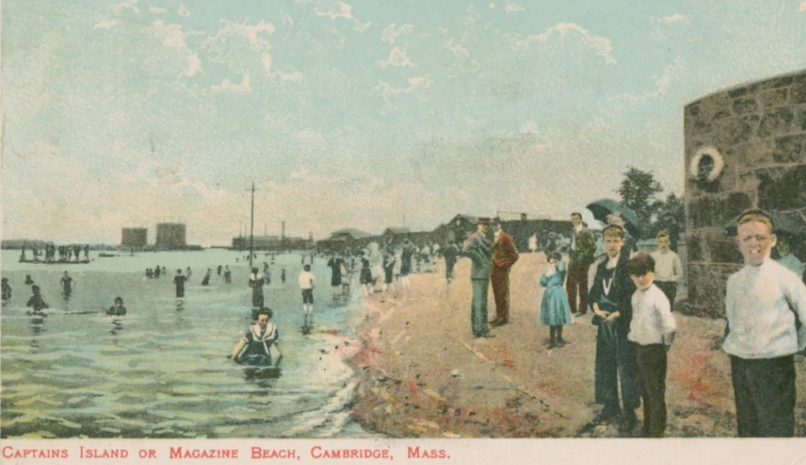
The public comment period on the regional plan to cut sewage overflows into the Charles River, the Mystic River and Alewife Brook closes Friday, Oct. 30, after a week in which the agency behind it signaled it would rethink the most contested piece: a 10-million-gallon storage tank under Magazine Beach in Cambridgeport.
The Draft Updated Combined Sewer Overflow Long-Term Control Plan was developed over four years by the Massachusetts Water Resources Authority with the Cambridge Department of Public Works and Somerville's Department of Infrastructure and Asset Management to meet Clean Water Act requirements, according to Cambridge Day. Its regional price tag is $1.3 billion, including about $690 million for projects along the Charles. The final public hearing was scheduled for Wednesday evening at Somerville City Hall and on Zoom.
Older cities in the region carry sewage and stormwater in the same pipes. In heavy rain, the pipes overflow and a mix of stormwater and untreated sewage spills into waterways. The draft aims to eliminate those discharges in a typical year under projected 2050 climate conditions. Storms of the intensity expected about once every five or 25 years would still overwhelm the system.
That gap is the core objection from all three city councils. Somerville's council voted 9-1 on Oct. 22 to oppose the draft and call for the "virtual elimination" of overflows. Cambridge's council voted unanimously on Oct. 5 to ask City Manager Yi-An Huang and staff to push for stronger controls, without formally opposing the plan. Boston's council, which was not part of developing the plan but shares the Charles, passed a nonbinding Aug. 26 resolution opposing the draft and asking for protection up to a 25-year storm. "We should not accept a long-term plan that allows untreated sewage to continue entering our waterways when there are infrastructure solutions available to significantly reduce these discharges," said Council President Liz Breadon, who filed the resolution.
The plan's single most visible element is the Magazine Beach tank, which would connect to the MWRA's Cottage Farm treatment facility near the BU Bridge. News that it could permanently remove 2.3 acres of recreational space and close eight acres for about six years of construction drew strong opposition. Huang called the permanent loss of parkland "not a viable proposal" in an Oct. 9 letter, and the council asked the authority to look at alternatives.
At a Tuesday meeting at the Morse School, MWRA Chief Operating Officer Kathy Murtagh told about 50 residents that the design is "just not mature enough" and that the authority had "mistakenly went to the most secure (option)" for itself, Cambridge Day reported. She pointed to a Stoneham tank with a grassy field open above it and said other locations would be studied, though they would likely require more pipe to reach Cottage Farm. Residents suggested parking lots, MIT-owned land and the former Beacon Park rail yard in Allston.
Obstacles beyond the MWRA are significant. State Rep. Mike Connolly said Magazine Beach is not an appropriate site, and that state Sen. Sal DiDomenico also opposes using the park. Converting protected parkland requires a two-thirds vote of both legislative chambers under Article 97 of the state constitution. Councillor Cathie Zusy said the Department of Conservation and Recreation, which manages the park, wrote to her that it does not intend to permit the project as proposed.
Ken Carlson, president of Magazine Beach Partners, cited MWRA records showing the tank would have prevented 14 of 22 Cottage Farm discharges since 2020. He said those discharges are already treated, at about 40 E. coli colony-forming units per 100 milliliters, compared with 40,000 to 100,000 in untreated overflows elsewhere. Murtagh said the tank's cost is "hundreds of millions" of dollars.
Ratepayers would pay for it. Projections given to Cambridge Day by both cities show the average single-family sewer bill in Cambridge could rise from about $1,200 in fiscal 2026 to $3,300 over 30 years, and Somerville's from about $850 to $2,600 by 2055. Somerville Councilor Ben Wheeler, the lone no vote there, said increases of "15 percent or more year after year" are "already a colossal burden."
Unanswered: the specific cost of the Magazine Beach tank, which alternative sites the MWRA will study, and how much more a 25-year-storm standard would add to bills.