EPA Publishes Plan to Scrap Methane 'Super Emitter' Program; Comments Due Dec. 16
The proposal, published in the Federal Register Thursday, would end third-party monitoring of big leaks, create looser standards for some wells and let operators flare associated gas. EPA says it saves $45 billion; critics say it lets the biggest leaks go unseen.
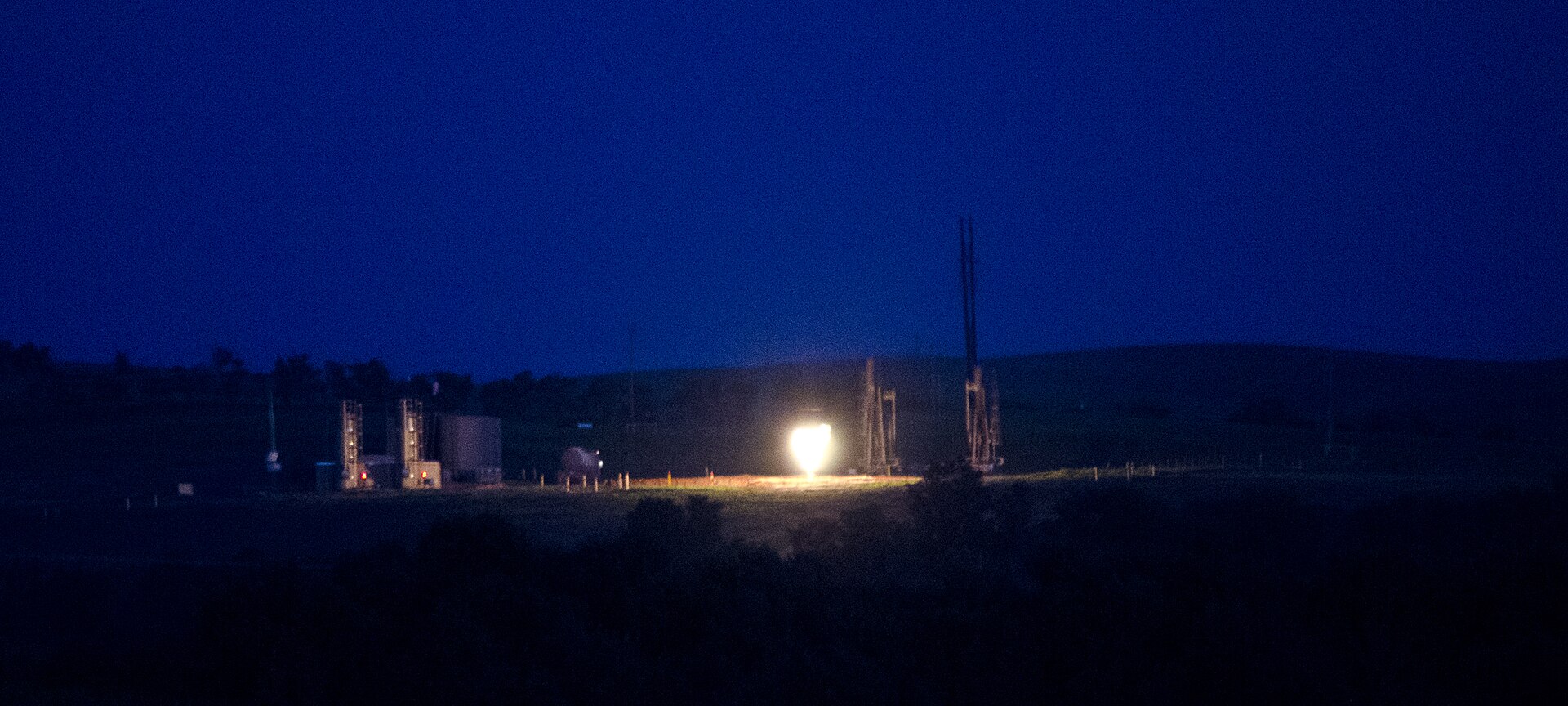
The Environmental Protection Agency's proposal to roll back key parts of the 2024 methane rules for the oil and gas industry was published in the Federal Register on Thursday, opening a public comment period that runs through Dec. 16, 2026. A virtual public hearing is set for Nov. 13.
President Donald Trump and EPA Administrator Lee Zeldin announced the proposal Tuesday in Lubbock, Texas. In its release, the EPA said the changes are expected to save $45 billion for consumers and businesses, "including families and small businesses operating marginal wells," and to "unleash an estimated 210 million additional barrels of oil and 1.41 trillion cubic feet of natural gas."
The Federal Register notice lists five main changes. First, the EPA proposes to rescind the Super Emitter Program, which would have certified third-party monitors to report large leak events and required states to do the same. The agency cites "legal concerns," questions the program's necessity and says other practices already give operators timely information to find and fix big leaks. The program was scheduled to take effect in January 2027, NPR reported.
Second, the EPA is co-proposing two ways to create separate categories of well sites with their own standards: by production level, marginal or non-marginal, or by resource type, conventional or unconventional. Third, it would split the "no identifiable emissions" requirement for covers and closed-vent systems into design and operational rules that allow for repairs. Fourth, for associated gas from oil wells, it would restore "95% efficient flaring or other control devices" as the best system of emission reduction, rather than requiring that the gas reach a sales line. Fifth, it would add flexibility on flame-monitoring data deviations and visible-emissions tests.
Methane is the main component of natural gas and is estimated to be 80 times more planet-warming than carbon dioxide over 20 years, NPR reported. "Behind every barrel of oil and every cubic foot of natural gas produced in the U.S. are millions of workers, businesses, and the heartbeat of this nation's economy. The Biden EPA destructively targeted all this," Zeldin said.
The American Petroleum Institute welcomed "a more workable approach." Critics argued the proposal could cost the industry product. "Methane is natural gas, or natural gas is methane," said Jon Goldstein of the Environmental Defense Fund. Capturing gas instead of leaking or flaring it means "more product that you can sell," he said. Goldstein also disputed the premise of the marginal-well carve-out, saying old, low-producing wells "are actually responsible for the lion's share of methane pollution" from production.
UC Santa Barbara professor Paasha Mahdavi said the super-emitter program would let regulators use alerts from certified outside monitors, including satellites. Without it, he said, large leaks would be harder to spot. "[The government] needs help from other people to say, 'Hey! You're breaking the law!' so they're able to prosecute," he said.
Comments can be submitted at regulations.gov under Docket No. EPA-HQ-OAR-2025-0163. The Federal Register notice says comments on the information-collection provisions are best assured of consideration if the Office of Management and Budget receives them by Nov. 30.
Not yet clear: which of the two well-site categorization options the EPA prefers, and how much additional methane the agency projects would be released under the proposal.
Sources
- Federal Register: Additional Reconsideration, Oil and Natural Gas Sector Climate Review (proposed rule, Oct. 29, 2026) (opens in a new tab)
- U.S. EPA: EPA Proposes Major New Revisions to Biden-era Oil and Natural Gas Regulations (Oct. 27) (opens in a new tab)
- NPR: Trump administration wants to remove regulations on a super planet-heating gas (Oct. 28) (opens in a new tab)