Wu Says Boston Is Studying New York's Congestion Pricing; Healey Says 'Not in the Moment That We're In'
The mayor told the MBTA Advisory Board her team has 'been in touch a little bit' with New York and is sending staff to Manhattan. She stressed there is no plan, and the governor dismissed the idea for now.
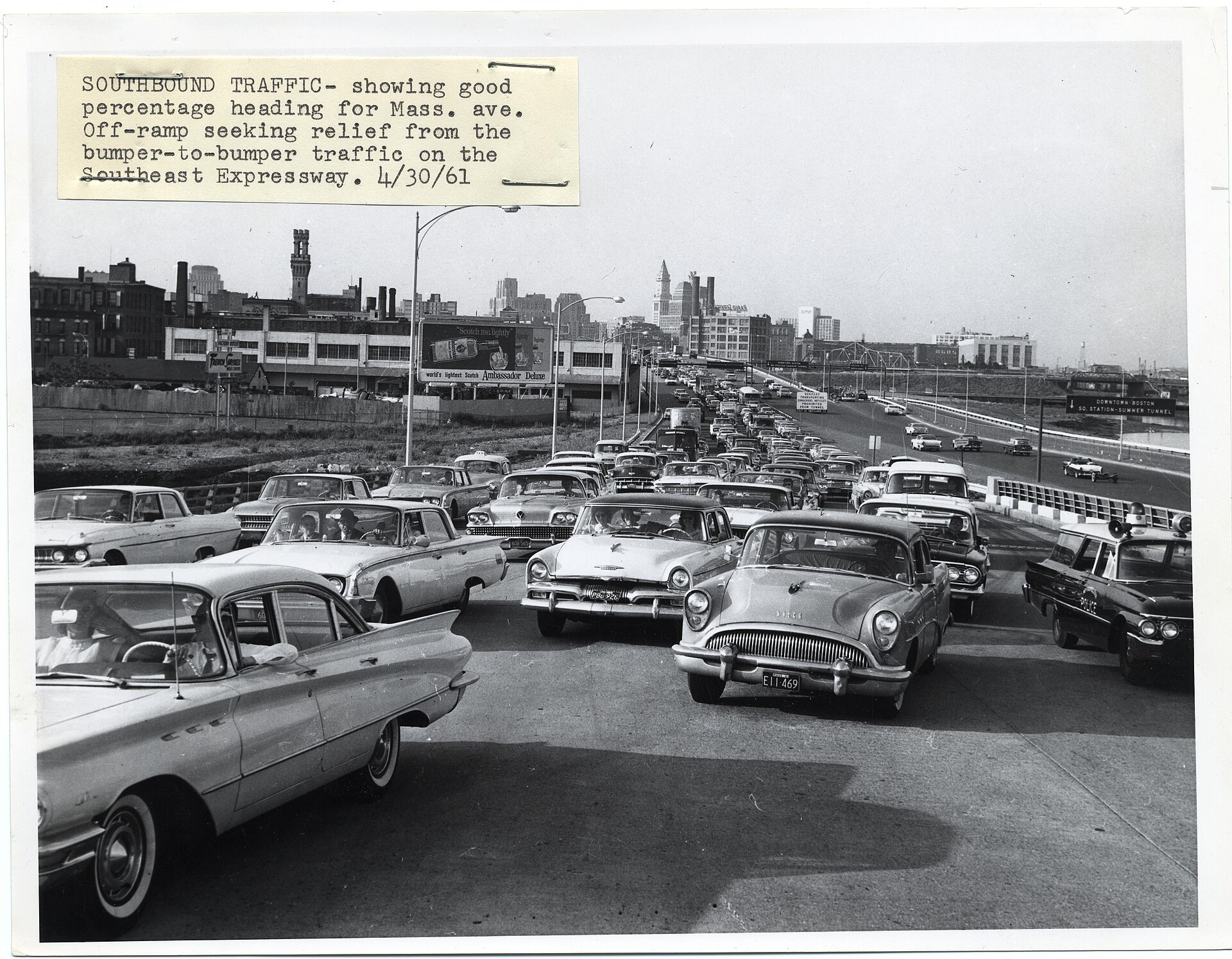
Boston Mayor Michelle Wu said this week that her administration has been in contact with New York City about its congestion pricing program and is sending a team to Manhattan to study it, while stressing that the city has no specific proposal. Gov. Maura Healey said the timing is wrong.
Wu made the comments Tuesday, Oct. 20, at a meeting of the MBTA Advisory Board, which represents the cities and towns in the transit system's service area, according to a State House News Service report published by NBC10 Boston.
The subject came up when board member Len Diggins urged Wu to consider new revenue for transit. "With the whole transportation system, we have to figure out a way to fund it, and sustainably. I just want to encourage you to not be afraid, you know, of the T word, you know. The tax word. I know that New York has, like, a payroll tax," Diggins said. "I don't know how we're going to do it," he continued. "But I think if you present the public with a plan, a good vision, along with that plan for what will happen with the additional funds for which you're asking, maybe it can go a long way towards getting the support for that."
Wu responded: "I thought when you mentioned New York, you were going to talk about congestion pricing, because that's been a huge source of funding for public transit improvements over there now."
"Our teams have been in touch a little bit to just understand, kind of, what they have experienced and the details there," Wu said, according to the News Service. She said the Massachusetts Municipal Association, Medford Mayor Breanna Lungo-Koehn, herself and other Metro Boston mayors "have all been talking about revenue for a long time now because the economic environment that we're in is straining cities in general," citing "record numbers" of Proposition 2 1/2 override questions on local ballots.
In an interview with Spectrum News, Wu emphasized that the city is at an early stage. "There's no there's not a specific plan on the table," she said. "It's really just learning and understanding what the real before and after has been for New York." She said a delegation of city and state staff will travel to Manhattan. "They have a lot that they wanted to share with us, so I'm sending our team to go hear it directly," Wu said. "Everything should be on the table when it comes to finding ways to fix traffic and have the quality of life that we all deserve."
Healey signaled no interest. "Not in the moment that we're in," she told Spectrum News. "I'm focused on affordability every single day. How do we drive down costs in housing and health care?"
New York's program charges vehicles entering its Congestion Relief Zone in Manhattan. Passenger and small commercial vehicles pay $9 once a day during peak hours, 5 a.m. to 9 p.m. on weekdays and 9 a.m. to 9 p.m. on weekends, according to NBC10's account. Motorcycles pay $4.50, and trucks and buses pay $14.40 to $21.60. Overnight tolls are lower.
The Metropolitan Transportation Authority said in January that the program generated more than $550 million in net revenue in its first year and that 27 million fewer vehicles entered the zone, an 11% reduction in traffic, according to the News Service report.
Not everyone in New York is sold. Darius Ross, a New York City resident who said he works in real estate, told Spectrum News that the charge adds to the cost of living. "Please find another tax revenue, tax source, something another - find another way because people are going to get priced out," he said.
The idea has a history in Massachusetts. In 2024, then-Transportation Secretary Monica Tibbits-Nutt said the state's Transportation Funding Task Force would be "looking at everything," including congestion pricing, and faced backlash after discussing tolls at the state's borders, the News Service reported. Drivers on the Massachusetts Turnpike already pay tolls, but proposals to add tolls to untolled roads have been politically sensitive.
Wu's appearance before the board was mainly about bus service. She called the city's fare-free bus pilot "transformational" and said Boston has about 150,000 bus rides on an average weekday, more than half of the MBTA's ridership within the city, according to the News Service.
She also described plans for five free, city-run Link Bus routes serving Mattapan, Roxbury, Allston-Brighton, Charlestown and the Lower Mystic, and the South Boston waterfront. The routes are meant to provide "last-mile service" between residential neighborhoods and transit stops. The city is using $11.5 million from the Federal Highway Administration's Congestion Relief Program for the shuttles, is issuing a request for proposals and can support three years of operation under its current plan, Wu said.
Wu did not say when the delegation would travel to New York or whether the city would release findings.
Sources
- NBC10 Boston (State House News Service): Mayor says Boston has been in touch with NYC about congestion pricing (opens in a new tab)
- Spectrum News: Boston considering congestion pricing (Oct. 22) (opens in a new tab)
- State House News Service: Boston has been in touch with NYC about congestion pricing (opens in a new tab)