Tufts Asks a Federal Judge to Throw Out an Arbitrator's Order Reinstating a Fired Professor
Trustees of Tufts College v. SEIU Local 509 was filed Oct. 9 in federal court in Boston. An arbitrator had reduced the lecturer's 2025 firing for violating the sexual misconduct policy to a written reprimand. The case tests how far a union contract's just-cause protection reaches.
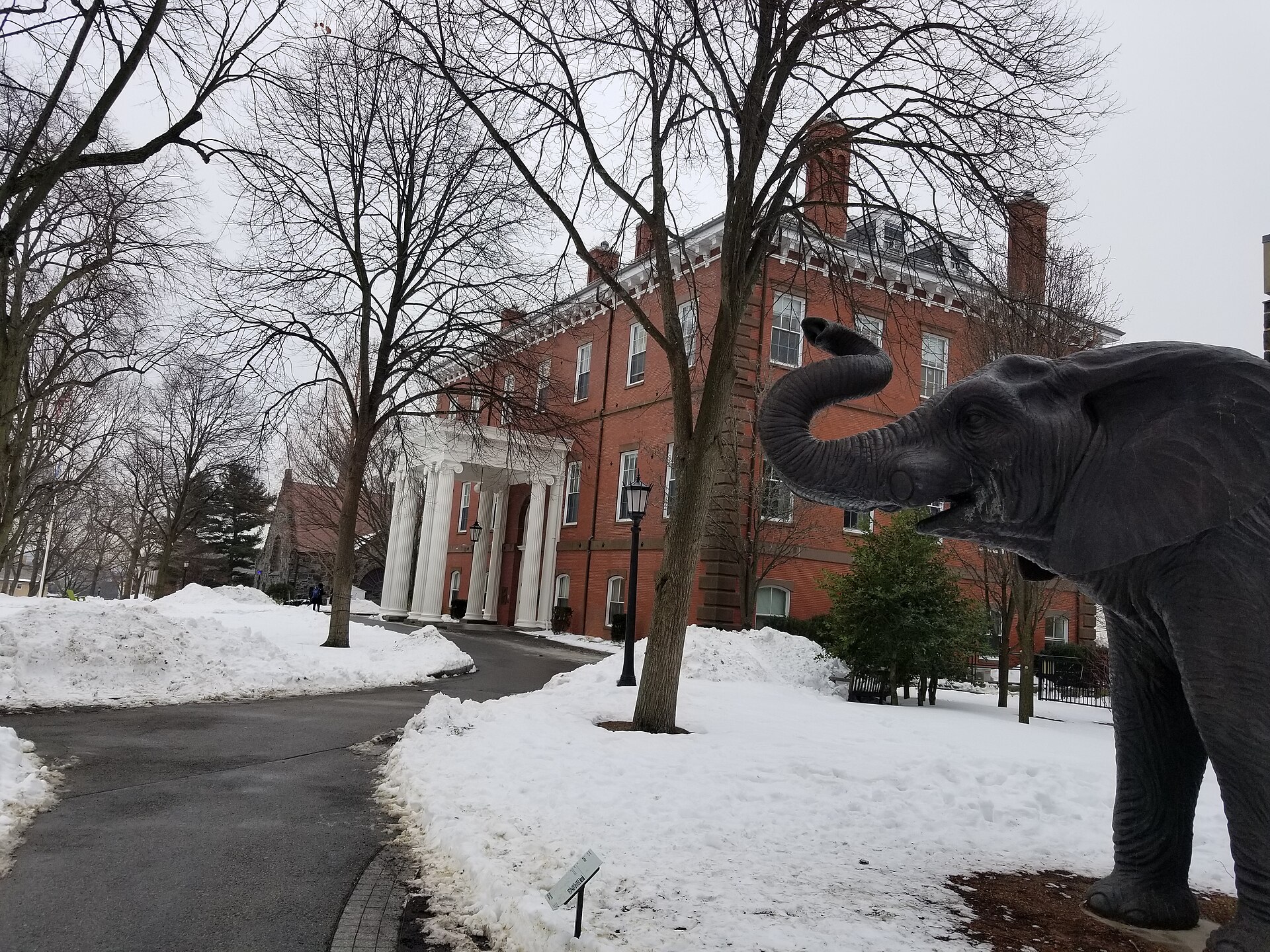
Tufts University has gone to federal court to block the reinstatement of a non-tenure-track professor it fired last year, asking a judge to vacate an arbitrator's ruling that reduced the firing to a written reprimand, according to the federal court docket and The Tufts Daily.
The case, Trustees of Tufts College v. Service Employees International Union Local 509, was filed Oct. 9, 2026, in the U.S. District Court for the District of Massachusetts, docket number 1:26-cv-14595, according to the court record on CourtListener. It is assigned to Magistrate Judge Jennifer C. Boal. The docket classifies it as a labor-management relations case brought under Section 301 of the Labor Management Relations Act, 29 U.S.C. § 185, the federal law that governs enforcement of union contracts and the arbitration awards issued under them.
The underlying dispute, as described in Tufts' complaint and reported by the Daily, began when an undergraduate reported hearing sexual noises from the professor's office after midnight on a weeknight and fearing a student was involved. The woman was later identified as the professor's girlfriend. A Title IX investigation found the professor violated Tufts' Sexual Misconduct Policy and lied to investigators, and Dean of Arts and Sciences Bárbara Brizuela fired him in March 2025, the Daily reported. The Daily has not named the professor because of the ongoing litigation, and this story does not name him either.
SEIU Local 509, which has represented Tufts' full-time non-tenure-track lecturers since around 2014, took the firing to arbitration under its contract. The union pointed to Article 13 of the collective bargaining agreement, which says a faculty member "will not be disciplined, suspended, or discharged without just cause," and argued the conduct, while serious, "was not fundamentally disqualifying" in the way fraud, plagiarism, predation, exploitation or violence would be, according to the Daily.
Last month, arbitrator Elizabeth Neumeier ordered the professor reinstated with full seniority and reduced the termination to a written reprimand for violating the policy, the Daily reported. She found that the conduct did not include penetrative sex and that investigators had wrongly assumed it did based on the student's recording.
Courts rarely overturn labor arbitration awards. Under decades of Supreme Court precedent, judges generally must uphold an award if it draws its essence from the contract, even if the judge would have decided differently. Employers seeking to vacate an award usually argue the arbitrator exceeded the authority granted by the contract or that enforcing the award would violate a well-defined public policy. The docket's cause-of-action entry, listed as a suit to compel arbitration under Section 185, is the court system's standard category for these cases and does not by itself indicate which argument Tufts is making.
The case touches a broader question for universities with unionized faculty: whether a finding under a school's own misconduct policy can be second-guessed by a neutral arbitrator applying a just-cause standard. Title IX procedures and union grievance procedures run on separate tracks, and this case shows them reaching different results on the same facts.
Questions still open: whether the professor has returned to work while the case is pending, whether the union will ask the court to confirm the award, and how quickly the court will rule.