Supreme Court Refuses to Let Prisons Bureau Enforce Policy Ending Hormone Therapy for Transgender Inmates
In a one-sentence order, the justices left in place Judge Royce Lamberth's injunction. Justices Thomas and Alito would have granted the administration's request; the White House called the ruling 'a loss for common sense.'
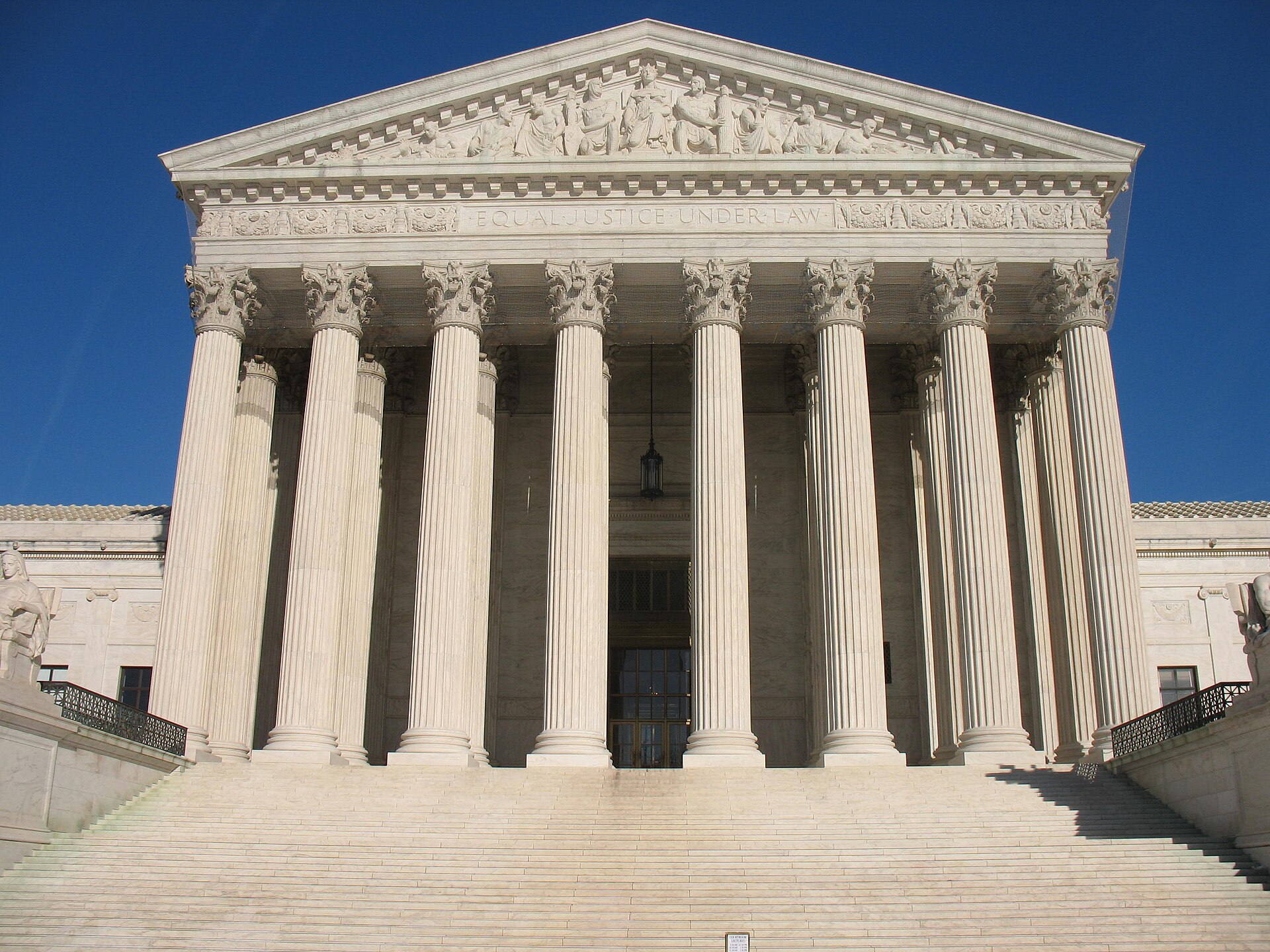
The U.S. Supreme Court on Wednesday, Oct. 21, refused to let the Federal Bureau of Prisons enforce a new policy that would cut off hormone therapy and other gender-related care and accommodations for transgender inmates while a legal challenge proceeds.
In a brief, unsigned order in Trump v. Kingdom, the court denied the administration's request to pause a lower court ruling blocking the policy, SCOTUSblog reported. Justices Samuel Alito and Clarence Thomas indicated, without explanation, that they would have granted the request. The court gave no reasoning for its decision.
The policy at issue was adopted by the Bureau of Prisons in February 2026, about a year after the bureau issued two memoranda implementing an executive order President Donald Trump signed on the first day of his second term. That order directed the attorney general to "ensure that no Federal funds are expended for any medical procedure, treatment, or drug for the purpose of conforming an inmate's appearance to that of the opposite sex."
The 2026 policy would bar transgender inmates from obtaining hormone therapy and "social accommodations," such as makeup, wigs and padding, according to SCOTUSblog. Courthouse News Service reported that it also restricted surgery. Advocates for the inmates said the bureau overrode the clinical judgment of its own medical providers and mandated a halt to treatment for almost 1,000 people in its custody.
The bureau has said it adopted the 2026 policy "independently of" the executive order. It produced an extensive administrative record and a 43-page memorandum attributing the change to, among other things, "the latest scientific information." The bureau said its earlier policies relied on recommendations by the World Professional Association for Transgender Health, whose standards prison administrators had deemed "unreliable" and "unpersuasive." It also said providing access to procedures such as gender-transition surgery could subject transgender prisoners to "attacks," "raise fairness concerns" and "breed resentment among other inmates," SCOTUSblog reported.
Three transgender inmates filed a class-action lawsuit in federal court in Washington. On Aug. 26, Senior U.S. District Judge Royce Lamberth issued an order barring the bureau from implementing the 2026 policy. The lower court found, in part, that the administration lacked evidence that such treatments had previously caused security problems, and concluded the policy had been reverse-engineered to implement the executive order, according to Courthouse News. About three weeks later, a divided panel of the U.S. Court of Appeals for the D.C. Circuit declined to freeze Lamberth's order.
The administration went to the Supreme Court on Sept. 28. Solicitor General D. John Sauer argued that the district court had "substitut[ed] its own policy judgment for that of the" bureau, "rel[ied] on evidence outside the administrative record, and fault[ed] the agency for following presidential directions," and that it "denied prison administrators the substantial deference they are due." The government also argued that hormone interventions and social accommodations were "not medically necessary" to treat gender dysphoria, Courthouse News reported.
The inmates countered that the administration was asking the justices "to overturn a three decades-long status quo" and that the bureau had not provided a "reasoned explanation" for the change, as federal administrative law requires. "Withdrawing care will cause significant changes to their bodies and put [them] and Class members at serious risk of worsening gender dysphoria as well as other mental health symptoms including depression, anxiety, self-harm, and suicidality," their lawyers wrote.
The order came 12 days after the government filed its reply brief, SCOTUSblog noted.
"The court was clear: The BOP cannot illegitimately deny people critical healthcare while the government's appeal proceeds," Aditi Shah, a staff attorney at the ACLU of the District of Columbia, said in a statement. "This ruling will prevent serious and irreparable harm to plaintiffs and the class while we continue to challenge the government's unlawful efforts to deny medically necessary healthcare for political reasons."
White House spokeswoman Allison Schuster called the decision "a loss for common sense." "Since the President's very first day in office, he has fought to halt the U.S. taxpayer funding of transgender mutilation of prison inmates, and the waste of taxpayer resources on so-called 'social accommodations,'" she said. "This administration will continue to fight for bold action to stop the waste of taxpayer dollars, restore gold standard science as the guiding principle of all health policy, and protect countless Americans from these dangerous, life-altering medical practices, especially those funded on the taxpayer's tab."
The denial is not a ruling on the merits. The case returns to the D.C. Circuit, where the government's appeal of Lamberth's order is pending, and Lamberth's injunction remains in effect in the meantime.