The T's $310 Million Locomotive Deal Is Part of a $374 Million Project, and It Leaves 50 More Engines Unfunded
MBTA board documents show 10 Tier 4 diesel and 10 battery-catenary locomotives from Siemens, $23.8 million in contingency, $200 million from MassDOT and options for up to 50 more locomotives 'pending funding availability.'
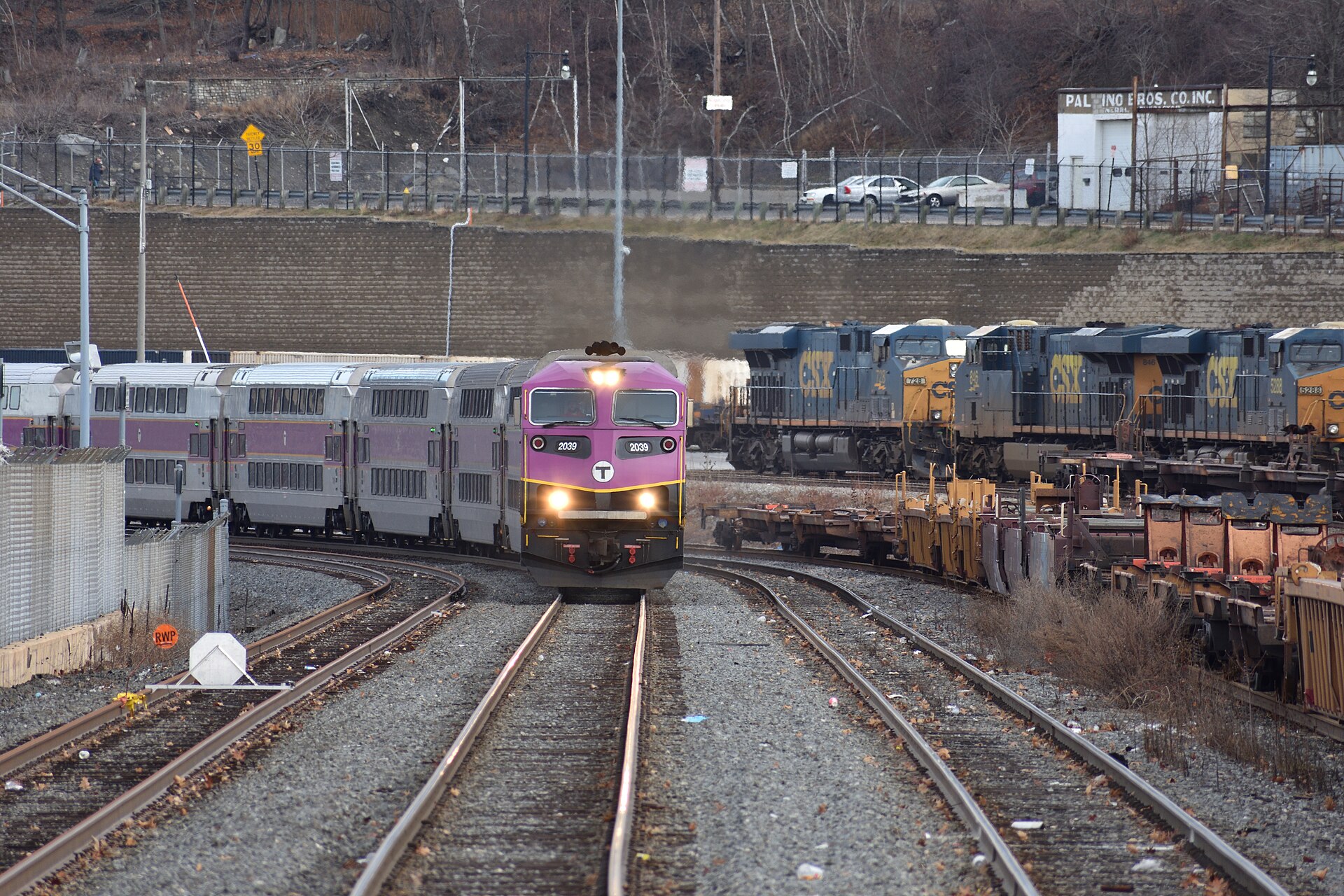
The MBTA board's approval last week of a contract worth up to $310.4 million for 20 new commuter rail locomotives was the headline number, but the T's own board presentation shows a total project budget of $373.8 million, and an option for up to 50 more locomotives that has no funding yet.
The presentation, delivered by William G. Wolfgang, the MBTA's senior director of vehicle engineering, to the board on Oct. 22 and to its audit and finance committee on Oct. 15, recommends awarding Formal Contract 187F-25 to Siemens for 10 Tier 4 diesel-electric locomotives, 10 dual-mode battery and catenary locomotives, capital spares, a simulator and special tools, for a total "not to exceed $310,359,988."
The full budget adds $63.4 million in other costs, according to the same document: $20,559,000 in professional services, $5,257,230 in force account work by T staff, $6,167,700 in project administration, $7,636,200 in indirect costs and a $23,789,700 contingency. A note says the contingency "includes anticipated change orders for platform integration modifications." The project will be funded with federal and state money, including $200 million approved by the MassDOT Board of Directors on Sept. 23, 2026, the presentation says.
The case for the purchase rests on the age of the current fleet. The presentation says the T's GP40 locomotives were built more than 50 years ago and remanufactured 28 to 29 years ago, and that 13 have exceeded their useful life. Its F40 locomotives were built 33 to 39 years ago, with useful life ending between 2029 and 2035. Even the newest units, the HSP46s, built 14 years ago, are entering a mid-life overhaul that will take up to 10 out of service from 2029 into 2031 or later.
Siemens' diesel model is described as service-proven, with more than 440 produced or on order, and the presentation says the locomotives will cut local emissions by more than 75 percent compared with the current fleet. The battery and catenary units would have no local emissions and could run under "segmented catenary," meaning partial overhead electrification. Pilot locomotives are expected in less than three years from notice to proceed. Worcester Business Journal reported that diesel deliveries are planned for mid-2029 through 2030 and battery units in 2030 and 2031.
The purchase drew criticism from advocates who want the commuter rail electrified, according to the Worcester Business Journal and Boston Weekly. The T's document frames the deal as "progress towards the Regional Rail Initiative" but buys an equal number of diesel and battery units.
The largest open question is the option. The contract "includes up to 50 optional locomotives to fully replace legacy fleets (pending funding availability)," the presentation says. It does not give a price for those units, a mix of diesel and battery, or a date by which the T must decide.
What remains unknown: the cost of the 50 optional locomotives, whether the T will seek federal grants for them, and how many of the 20 new engines will be in service before the F40s reach the end of their useful life.
Sources
- MBTA Board of Directors: Locomotive Procurement presentation (Oct. 22, PDF) (opens in a new tab)
- MBTA Audit and Finance Committee: Locomotive Procurement presentation (Oct. 15, PDF) (opens in a new tab)
- Worcester Business Journal: MBTA approves new locomotives for commuter rail, drawing criticism over diesel investment (opens in a new tab)
- Boston Weekly: Morning Brief, Oct. 27 (opens in a new tab)