A Jury Called Live Nation a Monopoly. In Boston, It Still Runs Five of the Big Rooms. So What Changes for Fans?
Six months after the verdict, the penalty phase is pushed to 2027, the Justice Department's separate settlement is still awaiting a judge's ruling, and two House Democrats want that deal investigated.
If you've bought a ticket to a big rap show around Boston in the last few years, there's a decent chance the building, the promoter and the ticket site all trace back to the same company.
On April 15, a federal jury in New York found that Live Nation and its subsidiary Ticketmaster broke federal and state antitrust laws, according to the New York Attorney General's office. Six months later, nothing about how you buy those tickets has changed yet. Boston Uncut went through the verdict, the reported court filings and the company's own venue listings to lay out where it stands.
What the jury found
The case was brought by New York Attorney General Letitia James and a bipartisan coalition of 33 other attorneys general, including Massachusetts Attorney General Andrea Campbell, according to the New York AG and WCVB.
After a five-week trial, the jury found that Ticketmaster unlawfully maintains a monopoly in ticketing services at major concert venues, that Live Nation has a monopoly over large amphitheaters, and that Live Nation unlawfully requires artists who use its amphitheaters to also use its promotion services, according to the New York AG. The jury found fans were overcharged $1.72 per ticket. That overcharge finding applies to the 22 jurisdictions that reached the damages question, according to the case tracker TopDisputes.
Courthouse News reported that the verdict from the nine-person jury was unanimous, reached after four days of deliberations.
"For too long, Live Nation has abused its power to drive up prices and harm fans, artists and venues," Campbell said, according to WCVB. "This verdict forces real accountability – lowering costs and sending a clear message that no company, no matter how powerful, is allowed to rig the market against consumers."
Live Nation's Boston footprint
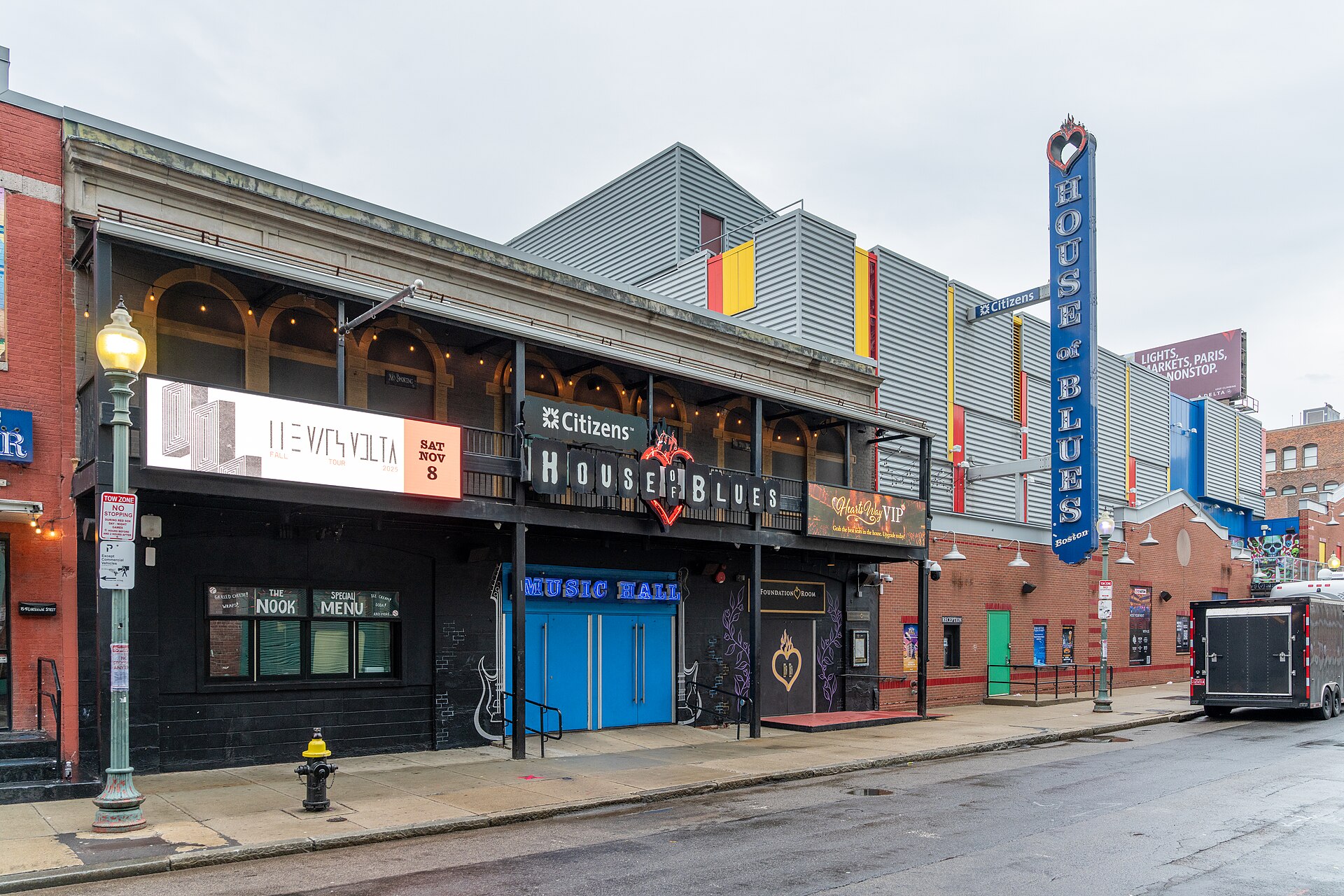
Here's the local part. Live Nation's own special events site lists five Boston-area venues it markets: Citizens House of Blues Boston on Lansdowne Street, which holds up to 2,200 guests; Leader Bank Pavilion in the Seaport, with 5,000 seats; MGM Music Hall Fenway, a 5,000-capacity room the company describes as located inside Fenway Park; Xfinity Center in Mansfield, which accommodates up to 19,900; and BankNH Pavilion, which accommodates up to 8,500, according to the company.
That's the club, the mid-size room and the summer amphitheaters. For a touring rap or R&B act, that covers most of the ladder from a first headline show to a summer shed tour.
The jury's amphitheater finding is the one to watch here, because Leader Bank Pavilion and Xfinity Center are exactly the kind of outdoor venues the case was about. The verdict itself does not name any Boston building. It describes a national market.
Why nothing has changed yet
A verdict isn't a penalty. The remedies phase, where U.S. District Judge Arun Subramanian decides what Live Nation actually has to do, is a separate bench trial. Courthouse News reported that it likely won't start until as early as February 2027 and could run into spring. The states are asking for a full structural separation of Live Nation and Ticketmaster, a breakup, rather than selling off pieces. Other options on the table include fee caps, mandatory multi-vendor ticketing and open-platform requirements.
Live Nation is also fighting the verdict. It filed motions asking the judge to overturn the verdict or order a new trial, Hypebot reported. "In the end, the jury verdict is legally indefensible," the company said in the filing. The court heard those motions on July 29, and they remain pending, according to TopDisputes.
On money, Live Nation says the $1.72 figure only applies to tickets sold at 257 venues in certain states over the past five years, and it expects damages under $150 million, which would be tripled under federal antitrust law, according to Courthouse News. Hypebot reported the company has set aside a $450 million legal reserve.
For scale: in the first quarter of this year, Live Nation reported revenue of $3.8 billion, up 12%, and Ticketmaster brought in $765 million, Courthouse News reported.
The other deal
There's a second track. The U.S. Justice Department sued alongside the states in 2024, then settled in March, one week into the trial, according to the National Independent Venue Association. Courthouse News reported the deal included a $280 million fund for state damages claims, divestiture of 13 amphitheater booking agreements, and a 15% cap on service fees. Live Nation keeps Ticketmaster under that deal.
Only six states joined the federal settlement, TicketNews reported, and NIVA said those six would share about $18.5 million. Massachusetts was among the states that kept litigating.
NIVA's executive director, Stephen Parker, did not hold back. "A jury found on April 15 that Live Nation is an illegal monopoly. This proposed settlement asks a federal judge to let that monopoly remain virtually intact," he said in a statement.
The public comment window on the deal closed Sept. 4, per NIVA. Courthouse News reported the judge expected to rule by mid-September or October. It hasn't ruled. As of its latest update, TopDisputes listed the Tunney Act review as still pending, after Live Nation on Oct. 2 opposed a renewed request by the states for discovery into how the federal deal was negotiated. Live Nation called that request unduly burdensome.
The political question
Reps. Jamie Raskin and Jerrold Nadler filed a formal comment asking Subramanian to investigate how the settlement came about, TicketNews reported. They cite an August Wall Street Journal investigation that reported President Donald Trump directed a senior Justice Department official after a Feb. 27 Oval Office meeting with Live Nation CEO Michael Rapino.
Live Nation has said Rapino discussed the status of the lawsuit with Trump but that the two did not discuss substantive settlement terms, according to TicketNews. TicketNews also noted the reporting has not established any explicit trade, and Raskin and Nadler are not presenting their filing as proof of a quid pro quo. They are asking the judge to find out.
The rap connection
Live Nation has another case hip-hop fans know. Hypebot reported that all 10 wrongful-death suits from Travis Scott's 2021 Astroworld festival have settled confidentially, but hundreds of personal injury cases remain before Judge Kristen Hawkins in a consolidated docket, with no firm date for the next bellwether trial.
What we still don't know: whether Subramanian approves the Justice Department deal, how he rules on Live Nation's request for a new trial, and whether the remedies phase ends with a breakup or with rules. Until then, the ticket you buy for Leader Bank Pavilion next summer works the same way it did before the verdict.
Sources
- New York Attorney General: Attorney General James and Coalition of States Win Trial Against Live Nation and Ticketmaster (April 15, 2026) (opens in a new tab)
- WCVB: Massachusetts AG, ticket sellers weigh in on Ticketmaster verdict (opens in a new tab)
- Courthouse News: Penalties phase of Live Nation ticket monopoly trial will stretch into 2027 (opens in a new tab)
- Hypebot: Live Nation and Ticketmaster lawsuit tracker, pending cases (opens in a new tab)
- TicketNews: Raskin, Nadler urge probe of Live Nation settlement (opens in a new tab)
- NIVA: Statement on the Tunney Act comment period for the Live Nation settlement (July 13, 2026) (opens in a new tab)
- TopDisputes: States v. Live Nation case status and timeline (opens in a new tab)
- Live Nation Special Events: Boston venues (opens in a new tab)