Days Before the Election, the Justice Department Subpoenas Los Angeles Election Workers and Widens Its Alaska Case
Grand jury subpoenas went to at least two employees of the Los Angeles County registrar a day after a federal judge rejected the department's bid to set aside California ballots. In Alaska, the department filed an amended complaint in the two-Sullivan Senate race.
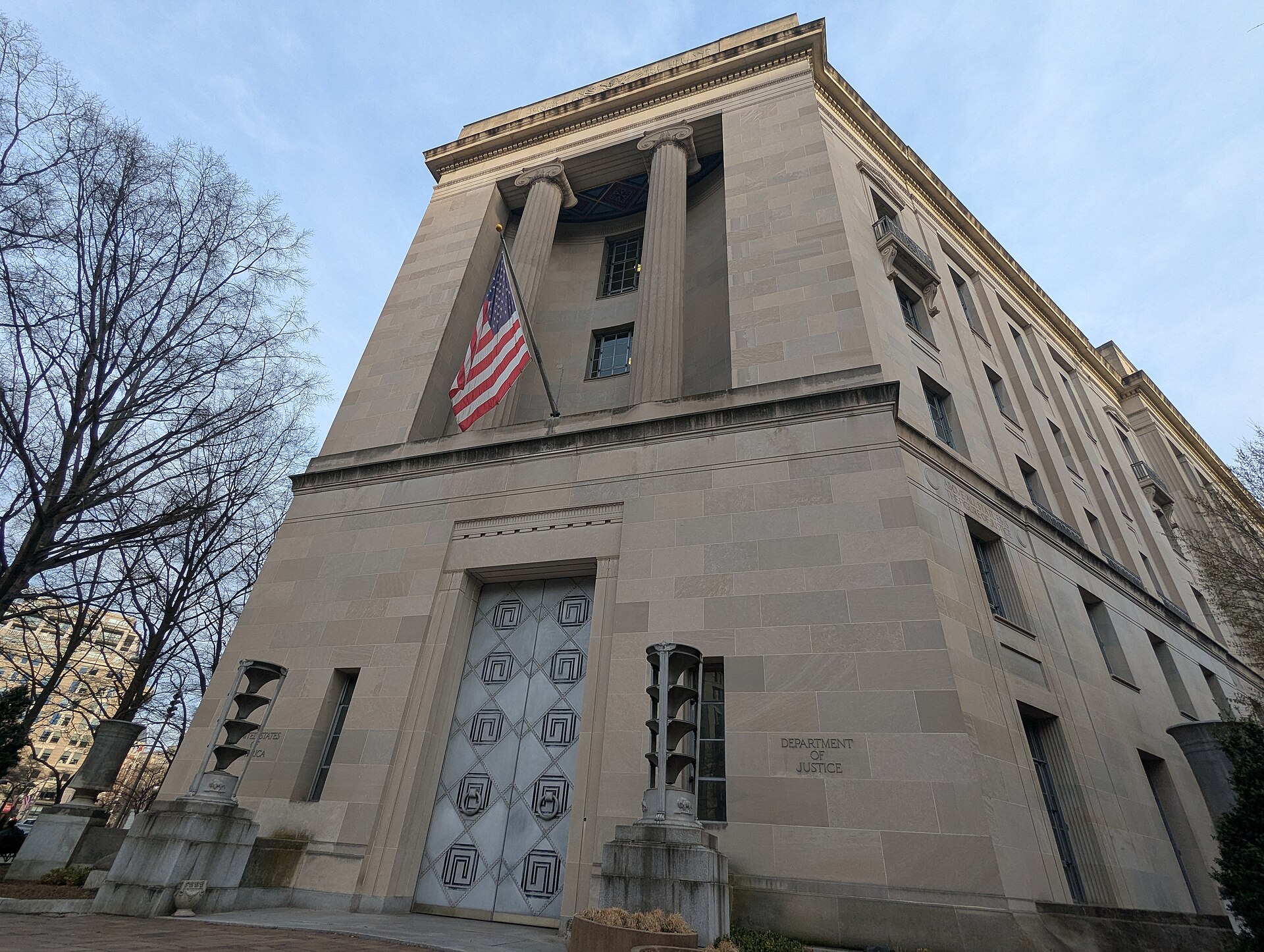
The U.S. Justice Department has escalated its involvement in the final days of the midterm elections on two fronts, according to NPR: grand jury subpoenas to election workers in Los Angeles County and an amended court filing in Alaska's closely watched U.S. Senate race.
The Los Angeles County Registrar-Recorder's office confirmed to NPR on Thursday that it received grand jury subpoenas directed at employees the previous week. The New York Times first reported that at least two employees were served with subpoenas instructing them to appear in court on Nov. 4, the day after the election. It is not clear whether the employees are targets of a criminal investigation, NPR reported, and a Justice Department spokesperson did not respond to a request for comment.
The subpoenas follow weeks of conflict between the Trump administration and California election officials over the administration's effort to identify noncitizens on the state's voter rolls. In recent weeks the department sent letters to local election officials warning that they could "risk significant federal scrutiny and legal exposure" if they refused its demand to set aside ballots from people federal officials flagged as "likely" noncitizens. "If persons knowingly tabulate ballots cast by individuals identified by federal agencies as noncitizens, they risk becoming aiders and abettors to a federal crime," the letters said.
A federal judge rejected that demand on Wednesday. U.S. District Judge David O. Carter found no legal basis for the department's request to require California officials to stop processing the ballots of thousands of voters on a list of 20,000 names, and said the court was not convinced the list was reliable, according to NPR. He also said the effort would risk disenfranchising eligible voters and creating election chaos. The department is appealing to the 9th U.S. Circuit Court of Appeals.
Carter also addressed the warnings to election workers. At a hearing Tuesday he told department officials, "This court believes it would be wise that any threats to state and county elected employees cease immediately." His written order on Wednesday repeated it: "The court reiterates what it said yesterday: these threats must stop."
Los Angeles County Registrar-Recorder Dean Logan said Carter's admonishment "was well placed and appreciated." "At every step, the U.S. Department of Justice has taken a confrontational, adversarial approach," Logan said in a statement. "Election officials are acting in accordance with state and federal law." He added that the county would "take whatever steps necessary to ensure the safety of our employees."
In Alaska, the department moved after a New York Times report on the state's toss-up Senate race, which could help decide control of the chamber. The race features the Republican incumbent, Sen. Dan Sullivan, and a second, non-incumbent candidate also named Dan Sullivan, whom Republicans have long described as a spoiler. According to NPR, the Times story detailed efforts by Democratic campaign operatives to recruit him, based on interviews and communications among attorneys and advisers to the Democratic candidate, former Rep. Mary Peltola, and senior aides at the Democratic Senatorial Campaign Committee. NPR said it had not independently confirmed the Times reporting.
The Peltola campaign and the DSCC repeated their denials of involvement after the story was published. Peltola called it a distraction while campaigning Wednesday, according to Alaska Public Media, as cited by NPR. The non-incumbent Sullivan did not respond to Alaska Public Media; he has previously said it was his own decision to run. "Mary Peltola and her campaign have spent months gaslighting Alaskans, denying a scheme they were running all along," Nate Adams, a spokesperson for Sen. Sullivan, said. President Trump called the findings "Voter Fraud at the Highest Level" in an online post.
The Justice Department had already asked a court the previous week to delay certification if the incumbent loses by a small margin, citing possible voter confusion, a case that election law experts broadly called weak, in part because the Constitution gives states control of elections, NPR reported. On Thursday, department officials said the Times story expanded their options, and the department filed an amended complaint citing it. Separately, Republican Gov. Mike Dunleavy directed Alaska's Department of Public Safety to "investigate whether this scheme violated Alaska's laws and whether criminal charges or civil action are warranted." Those are allegations under investigation; no one has been charged.
The Alaska Supreme Court ruled in June that the non-incumbent Sullivan could appear on the general election ballot, which notes which Sullivan is the Republican incumbent. Alaska uses ranked-choice voting in its general election, and whether to keep that system is itself on the ballot.
Elaine Kamarck, a Brookings Institution senior fellow who has co-written a book on campaign dirty tricks, told NPR such tactics are "pretty standard fare for campaigns," and that laws to prevent them are hard to write.
Still unknown: what the Los Angeles grand jury is investigating, whether the 9th Circuit will act before ballots are counted, and how a court will treat the amended Alaska complaint.