Harvard's Institute of Politics Was Founded to Send Students Into Public Service. Its Top Student Leaders Increasingly Go to Consulting Instead
A Crimson analysis of more than 200 Student Advisory Committee members found 58% of Executive Team members started in public service in 2016-20, compared with about 19% in 2021-25. Campaign jobs nearly vanished.
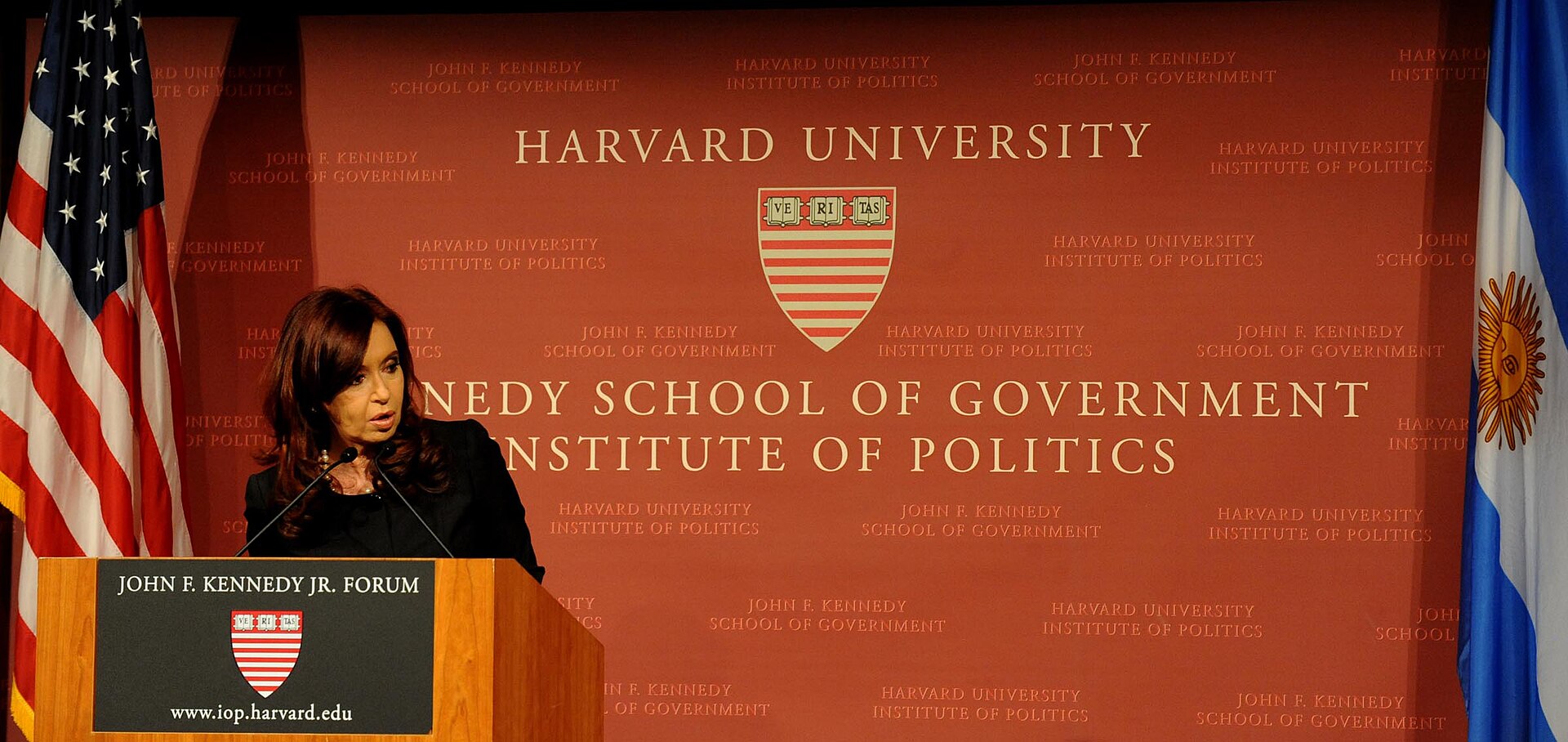
The share of Harvard Institute of Politics student leaders who start their careers in public service has dropped sharply, with more heading to consulting firms and other private-sector jobs, according to an analysis published Friday by The Harvard Crimson.
The Crimson tracked the career paths of more than 200 current and former members of the IOP's Student Advisory Committee, the student body that runs the institute's programming. The IOP, part of the Harvard Kennedy School, was founded in 1966 to inspire students to pursue careers in politics and public service.
The sharpest change was among the four students who lead the committee each year. From 2016 to 2020, 58% of Executive Team members began their careers in public service, the Crimson found. Among those who served from 2021 to 2025, about 19% did. In raw numbers, 11 of 19 Executive Team members in the earlier period started in public service, compared with three of the 16 who have graduated from the later period. Eight of those 16 went into the private sector and five went on to further education.
The Crimson illustrated the shift with two teams. In 2017, every member of the Executive Team went straight into public service: three to political campaigns and one to the New York City mayor's office. All four members of the 2024 team took private-sector jobs or internships, including at a venture capital fund and at McKinsey & Company.
Across the full committee, the trend was less pronounced. Of the 218 students who served from 2016 to 2025, the Crimson identified first destinations for 194. Seventy-one, about 37%, entered the private sector; 58, about 30%, took jobs in government, campaigns or nonprofits; and 65, about 33%, went to graduate school, fellowships or academia. McKinsey, Bain & Company and Boston Consulting Group alone accounted for 15 of the 71 private-sector jobs.
Nearly all of the decline in public service came from political campaigns, according to the analysis. Ten committee members from 2016 to 2020 went directly into campaigns or party organizations, compared with two from 2021 to 2025. Government jobs varied without a clear pattern, at about 14% of first destinations. None of the 19 Class of 2027 committee members whose summer internships the Crimson identified worked on a campaign, though 13 worked in government or nonprofits, including five in the federal government.
Former leaders pointed to money and hiring timelines. "It's kind of blunt, but a lot of those private sector opportunities are definitely more lucrative, and I think very abundant for Harvard students," said Carter G. Demaray '25, the IOP's 2023 treasurer. Kevin L. Ballen '22, the 2021 vice president, said, "The pipelines are so clear for the private sector," while public service is "just a more last minute type of job opportunity." "Most nonprofits don't have budget to hire people far in advance," he said.
Unpaid internships are part of the problem. "Many public service internships are completely unfunded," said Alexa C. Jordan '22, who said an IOP-funded internship made public service possible for her. Thomas A. Tait '26, now at a whistleblower-defense nonprofit, credited the IOP's paid Director's Internship but questioned its broader impact: "I think that the IOP does its best to uphold that mission, but I don't know that it's successful."
IOP Director Betsy Fischer Martin, a former executive producer of NBC's "Meet the Press" who took over in August, cautioned against judging commitment by first jobs. "Public service is rarely a straight line," she wrote in a statement, saying "where someone works at 22" does not necessarily reflect where a career will go.
The data show movement both ways. Of the 32 committee members from 2016 to 2020 who started in public service, 14 later held private-sector jobs, and 12 of the 39 who started in the private sector later worked in the public sector. But private-sector careers tended to stick: 30 of those 39 were in private-sector jobs in their most recent recorded positions.
The Crimson also noted that the IOP's Governance Lab partnered in 2024 with the Harvard-affiliated venture firm Xfund, reserving up to three spots in its $100,000 startup competition for Governance Lab ventures. Then-IOP President Pratyush Mallick '25 helped lead that partnership and joined the fund after graduating.
Still unknown: whether the trend reflects changes at the IOP, in the job market, or in national politics, and whether Fischer Martin's changes will shift where student leaders go.