Georgia's Constitutional Court Opens Hearings on Ruling Party's Bid to Ban Five Opposition Parties
Sitting in Batumi, the court rejected every opposition motion on the first day, including requests to recuse judges and to summon Bidzina Ivanishvili and Mikheil Saakashvili as witnesses. A ruling is due by June 2027.
Georgia's Constitutional Court began hearing arguments on Wednesday, Oct. 21, on a lawsuit by the ruling Georgian Dream party that seeks to ban five opposition parties, rejecting every motion the opposition filed on the first day, according to the regional news outlet JAMnews.
The petition, filed by 88 members of Georgia's Parliament, targets the United National Movement, the Coalition for Change, Lelo-Strong Georgia, the Federalists and Gakharia for Georgia, according to Imedi and JAMnews. It asks the court to declare the parties' activities unconstitutional and to ban them.
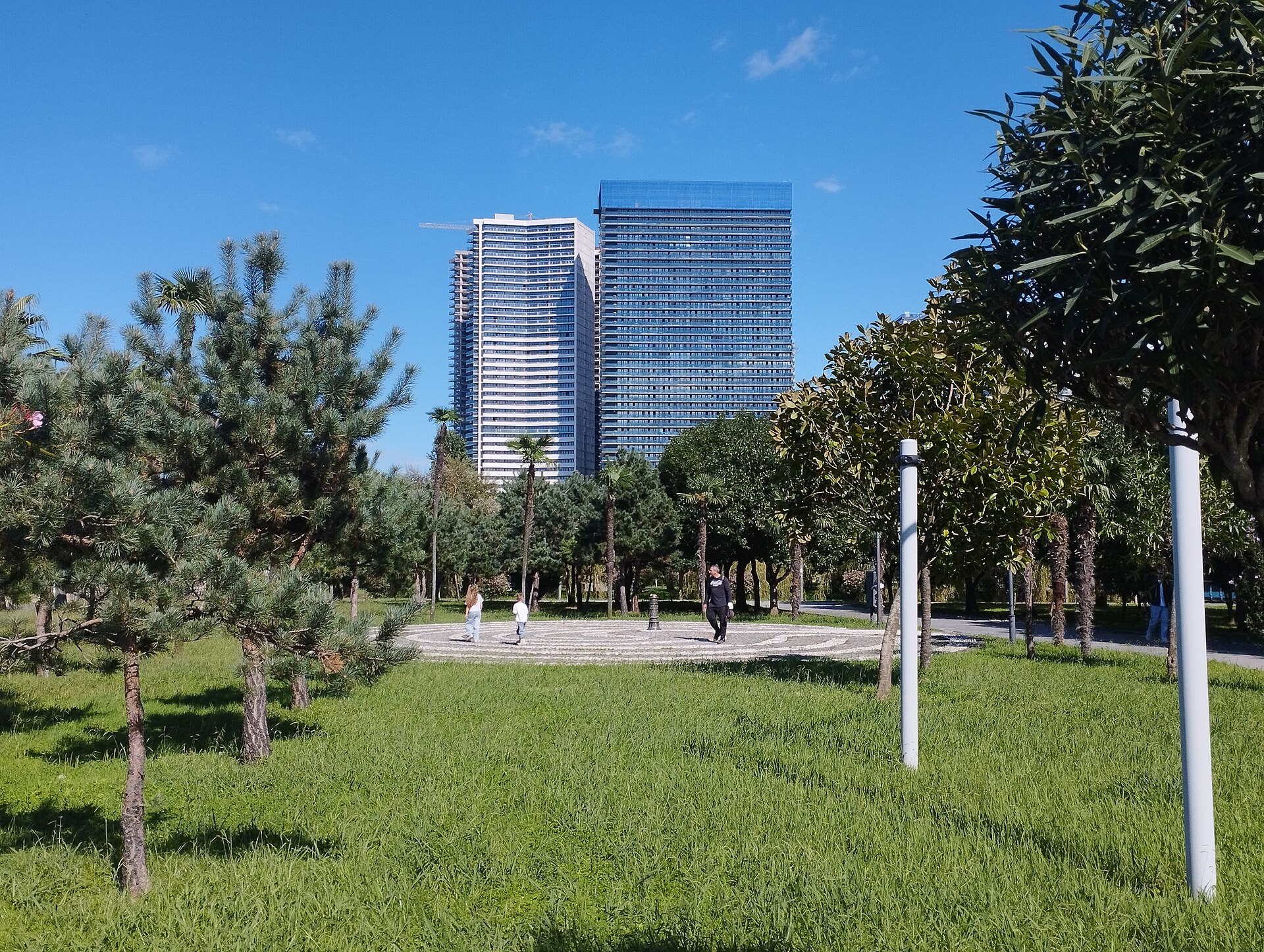
The case is being heard by the court's full plenum in the Black Sea city of Batumi. Hearings were scheduled for Oct. 21, 22 and 23, and the court has until June 24, 2027, to rule, JAMnews reported. Four of the seven judges must vote in favor for the court to uphold the claim. The presiding judge is Revaz Nadaraya.
According to the court's press release, as summarized by Imedi, the petitioners argue that all five parties violated the first sentence of Article 23, Paragraph 3 of Georgia's constitution, through past attempts to overthrow or forcibly change the constitutional order and continued pursuit of that goal. The petition also alleges that the United National Movement infringed Georgia's independence and territorial integrity, citing the August 2008 war with Russia and developments after 2012.
The 88 lawmakers allege that the parties or their members systematically violated human rights, refused to recognize the legitimacy of elected bodies and officials, and since 2016 have consistently challenged the legitimacy of the current government, according to Imedi. They also cite links between the parties' current and former leaders and the United National Movement.
The hearing began with a motion by United National Movement leader Ana Tsitlidze for all seven members of the court to recuse themselves, JAMnews reported. She described the proposed ban as "a decision taken by the Kremlin against Georgia's sovereignty and freedom." Nadaraya responded: "Make your political assessments elsewhere. This is a courtroom, where rules, procedures and the law apply."
When Tsitlidze called Nadaraya a member of a "judicial clan," he warned her that the court would not accept insulting language and that he might order her to leave, according to JAMnews. Lelo also sought the recusal of three judges, joined by the Coalition for Change. The plenum rejected all the recusal motions, with Nadaraya saying that a judge's biography or past career does not constitute legal grounds for disqualification.
One judge, Manana Kobakhidze, a founder of Georgian Dream, left the court after the plenum refused on Oct. 9 to let her recuse herself, JAMnews and Georgia Times reported.
The court also rejected the United National Movement's request to summon the party's founder, former President Mikheil Saakashvili, and its former chairman, Levan Khabeishvili, as witnesses, as well as Georgian Dream founder and honorary chairman Bidzina Ivanishvili. "The plenary session has not seen a specific connection to the case or the lawsuit, or any indication of what exactly these witnesses would confirm," Nadaraya said. At one point the court ordered United National Movement representative Khatia Dekanoidze to leave the courtroom, JAMnews reported.
Gakharia for Georgia asked for its case to be heard separately under the principle of "one political party — one proceeding." Its representative, Berdia Sichinava, argued that it is the only targeted party that took up its seats in parliament rather than surrendering its mandates, undercutting the ruling party's claim that it seeks to ban only "boycott parties." The court rejected the request; Nadaraya said each defendant would be judged solely on the facts relating to it and that the court could not issue an adverse ruling if the evidence proved insufficient.
The Federalists did not attend, saying participation would be pointless, JAMnews reported. Two Coalition for Change leaders, Nika Melia and Elene Khoshtaria, were following the proceedings from prison; Melia was jailed for failing to appear before a parliamentary commission whose findings form the main basis of the lawsuit. Only Georgia's Public Broadcaster was allowed to film inside the courtroom, while other outlets followed the court's YouTube stream.
Outside the court, the party Freedom Square, which is not named in the suit, held a protest, and a group of Georgian civil society organizations issued a joint statement opposing the lawsuit and warning of its effect on political competition, Georgia Times reported. Supporters of the case describe it as a lawful application of existing rules; critics call it a threat to pluralism. Until the court rules, the named parties remain legal entities.
Sources
- JAMnews: Court begins hearing case to ban opposition parties in Georgia: first-day developments (opens in a new tab)
- Imedi: Georgia's Constitutional Court holds hearing on petition to ban 5 political parties (opens in a new tab)
- Georgia Times: Constitutional Court hears opposition ban case (opens in a new tab)