Nearly 1,000 Arrested as Mostly Peaceful French Protests Turn to Clashes After Dark
The government counted at least 400,000 marchers across France on Saturday over the cost of living and education; unions said twice that. The interior minister blamed late violence on 'ultra-left' groups and reported two serious injuries. Protests also took place in Italy, Spain and Albania.
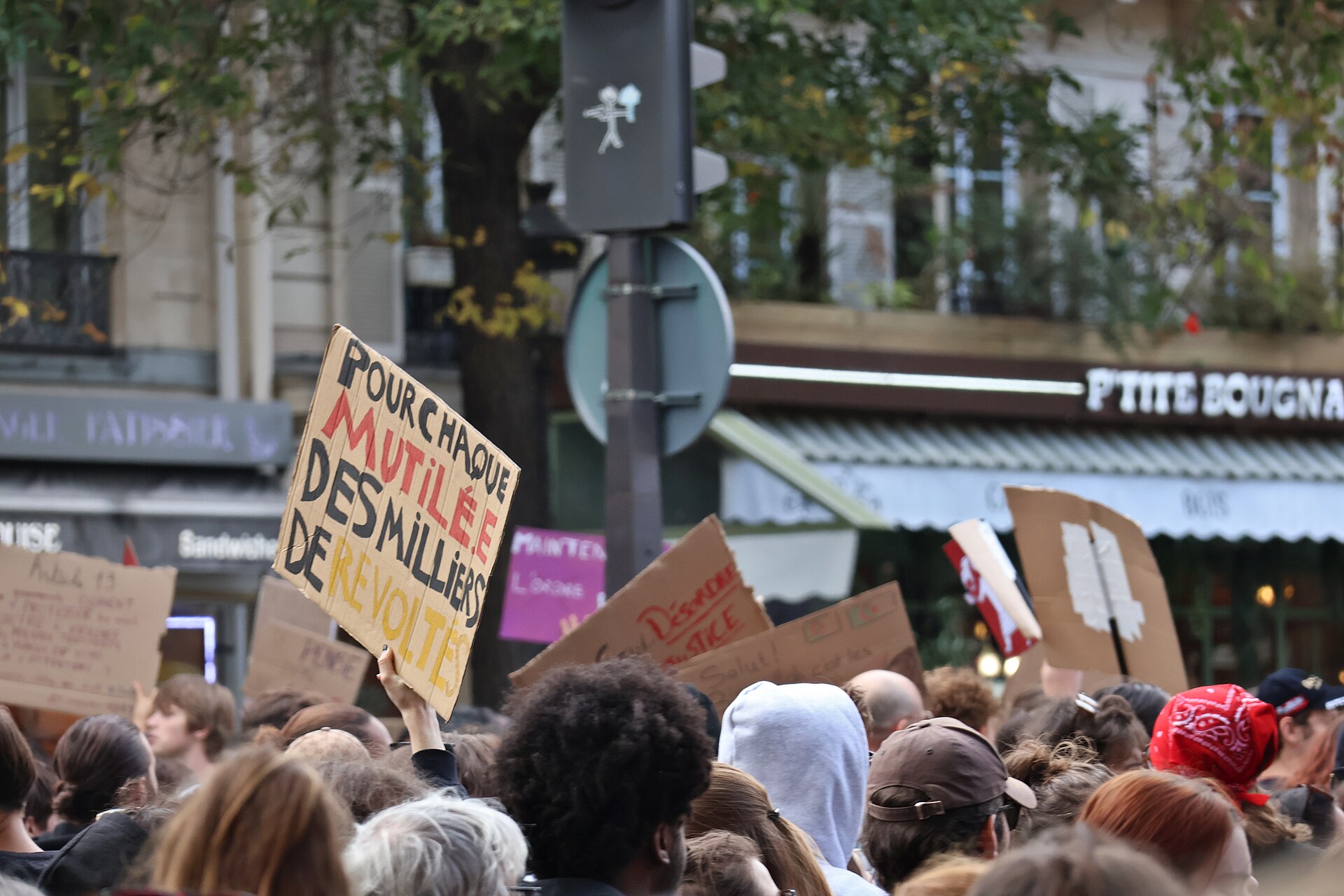
French police arrested almost 1,000 people on Saturday during protests across France, Interior Minister Laurent Nuñez said, after a day of largely peaceful marches over the cost of living and education gave way to clashes in several cities, the BBC and The Guardian reported. Nuñez said the number of arrests was expected to rise.
The government estimated that at least 400,000 people marched nationwide, The Guardian reported, while trade unions put the figure at about double that. In Paris alone, police counted 110,000 marchers, according to the BBC.
Nuñez said the marches "passed off well" in cities but that officers were later confronted with "an extremely elevated level of violence" from "ultra-left" groups who threw projectiles and aimed fireworks at police to provoke clashes, The Guardian reported. In Paris, he said, "several thousand radical activists gathered at the rear of the march, including about 500 individuals identified as rioters."
Two people were seriously injured, Nuñez said, according to The Guardian: a 20-year-old man in Toulouse who reportedly had his fingers blown off, and a second person in Clermont-Ferrand. He did not give details of either case.
The day began calmly. The Guardian described the Paris march in the afternoon as peaceful and lighthearted, with brass bands, families and banners criticizing government policing, including "Oppression breeds rebellion" and "The right to protest." At the end of the route, at Porte de Vincennes on the city's eastern edge, groups of masked men dressed in black who had not appeared to take part in the march threw glass bottles and stones at police, who responded with tear gas, water cannon and stun grenades, the paper reported. A bin was set on fire and fireworks were fired toward officers.
Elsewhere, police fired tear gas in Lyon and Nantes, barricades were set alight in Marseille, and people ripped boards from a shop in Bordeaux, according to the BBC. Nuñez said there were clashes for the first time in Cannes and Montpellier between far-right activists and "ultra-left militants," The Guardian reported.
Protesters described heavy-handed policing. A man who gave only his first name, David, told Agence France-Presse a police officer had thrown a baton at him, leaving a gash on his face, according to The Guardian. A 23-year-old student who gave his name as Mike said, "Look around, they're just teenagers. Is it normal for teenagers to be teargassed and beaten with batons?" One protester told the BBC, "We feel like we're in a dictatorship."
Saturday's marches followed riots and looting the previous weekend in which more than 2,700 people were arrested across France, the BBC reported. Nuñez said that while some shops were vandalized and looted on Saturday, "the scale was far smaller" than a week earlier and shopping centers had been well protected, according to The Guardian. The prime minister urged the public not to "lump" looters and protesters together, according to a BBC video segment.
The unrest was not limited to France. In Rome, authorities locked down luxury shopping streets and tightened security around the Circus Maximus and Piazza del Popolo, and an anti-war march briefly clashed with police near Piazza della Repubblica, The Guardian reported. Several hundred students in Rome marched peacefully to distance themselves from violence the week before, particularly in Milan, where Italian officers raided homes. Protests also took place in Spain and Albania.
Questions remaining: how many of those arrested will be charged, whether unions plan further national days of action, and what the government will offer on the cost-of-living and education demands behind the daytime marches.