Commonwealth Leaders Open Their Summit in Antigua With Reparations Off the Agenda but at the Center of the Room
Britain's prime minister agreed Friday to a structured dialogue and to consider an apology. A Caribbean leader says London came 'kicking and screaming.' The UK calls his account of its lobbying 'completely untrue.'
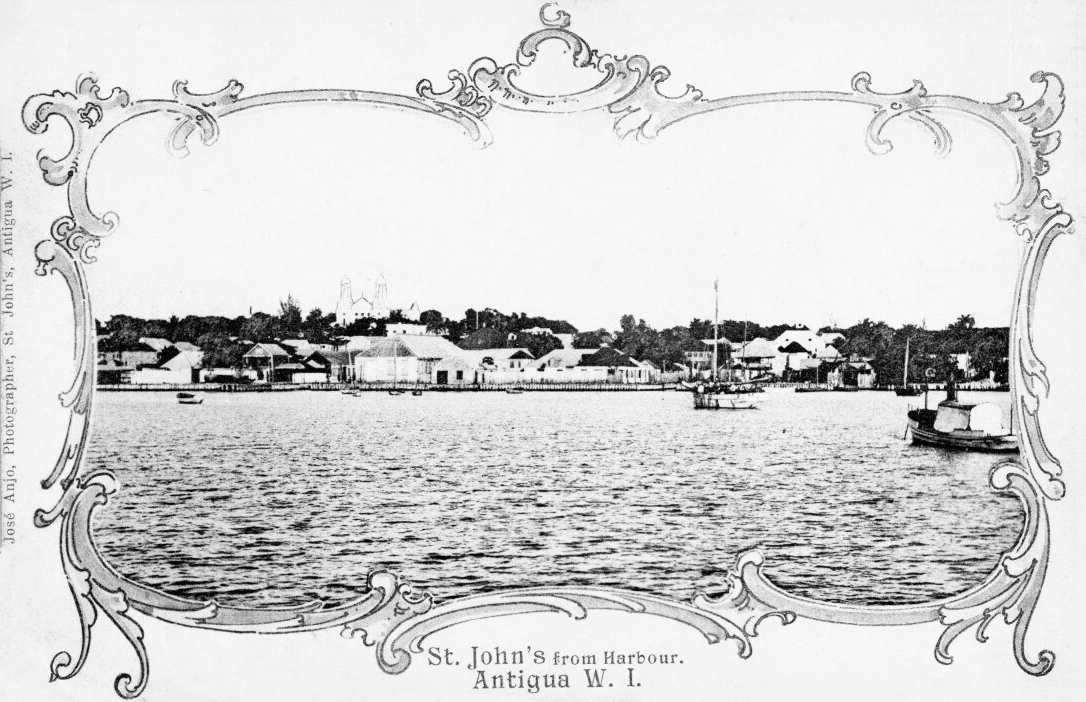
Leaders of the 56-nation Commonwealth opened their summit in Antigua and Barbuda on Sunday, the 45th anniversary of the country's independence from Britain, with slavery reparations absent from the formal agenda but dominating the conversation around it, The Guardian reported.
The official priorities for the Commonwealth Heads of Government Meeting, known as CHOGM, include trade, climate resilience and finance, sustainable debt, democracy and investment in young people. Reparatory justice is not listed.
On Friday, British Prime Minister Andy Burnham went further than any of his predecessors, agreeing in an op-ed for The Guardian to a structured dialogue on reparations and to consider an apology, The Guardian reported. Caribbean governments and campaigners welcomed the step while making clear that agreeing on forms of reparation remained their priority.
Ralph Gonsalves, a former prime minister of St. Vincent and the Grenadines and a senior figure in the Repair Campaign, told The Guardian that British officials had been "vehement" about keeping reparations off the agenda. "The British officials – and in that regard they were joined by the Canadian officials – were even raising the prospect that if it is on the agenda the prime minister of Britain wouldn't go," he said. He also accused officials of spreading what he called a false claim that India opposed the item.
"The British government, they're coming, kicking and screaming to the table of structured dialogue. But at least they're coming," Gonsalves said.
Britain's Foreign, Commonwealth and Development Office rejected the account. "We categorically reject this completely untrue accusation," a spokesperson said. "The UK has approached this conversation in good faith, and we have at no point told any other Chogm member what should not be on an agenda." Canada's response was not included in The Guardian's report.
Prof. Sir Hilary Beckles, chair of the Caricom Reparations Commission, had called the gathering "the Chogm of reparations." Guyana's president, Irfaan Ali, called for a Commonwealth subcommittee to work out the details of the dialogue over the next six to 12 months and said talks should focus on development. "How do we identify a system of support where the UK government, with its financial institutions, can sit with countries … and work on a development pathway, identify development gaps, whether in health, education, social services, infrastructure?" he said.
Barbados Prime Minister Mia Mottley thanked Burnham for "breaking new ground" but said, "On reparations in particular, our views differ, and we will say so plainly and respectfully." She named an apology, investment in health and education, tackling poverty and inequality, and fairer debt terms as possible areas of agreement. Bahamas Prime Minister Philip Davis said the issue concerned "the enduring consequences of slavery and the importance of justice, acknowledgment and meaningful redress."
Gonsalves said the structured dialogue itself was unlikely to begin at the summit, but its format would likely be discussed when leaders meet in their private retreat.
Conservative leader Kemi Badenoch told broadcasters Sunday that an apology would be a "navel-gazing distraction," describing slavery as an evil "in which people from every continent and region participated," The Guardian reported. King Charles has indicated he will not offer a full apology. Protests were planned along the routes the king and Burnham were to travel in St. John's, the capital.
Gonsalves pointed to a United Nations General Assembly resolution on March 25, 2026, which he said India supported, and to campaigns in Africa and inside Britain's Parliament. "It is an issue which you can't duck any more," he said.
The reparations debate has a Massachusetts dimension. The colony was one of the first in North America to legalize slavery, and Boston merchants profited from the trade that linked New England, the Caribbean and West Africa. Boston has its own municipal Task Force on Reparations, created by the City Council in 2022, and Greater Boston is home to large communities with roots in Caribbean Commonwealth nations, including Jamaica, Trinidad and Tobago, Barbados and Guyana.
Whether the leaders' final communique mentions reparatory justice, whether Ali's proposed subcommittee is created, and whether Britain's dialogue produces an apology or financial commitments are the open questions as the summit continues this week.
Sources
- The Guardian: UK was 'vehement' slavery reparations should not be on Commonwealth summit agenda (Nov. 1) (opens in a new tab)
- The Guardian: Britain should not apologise for slave trade, says Kemi Badenoch (Nov. 1) (opens in a new tab)
- Commonwealth Secretariat: CHOGM 2026 (opens in a new tab)
- City of Boston: Task Force on Reparations (opens in a new tab)