Cate Blanchett's Consent Group, CAA and a List of Stars From De Niro to Madonna Tell a Federal Judge That Hollywood Already Knows How to License Work for AI
A 31-page amicus brief in The New York Times' lawsuit against OpenAI and Microsoft argues the tech companies' claim that clearing rights is too costly is wrong. OpenAI pointed to briefs backing its fair-use defense.
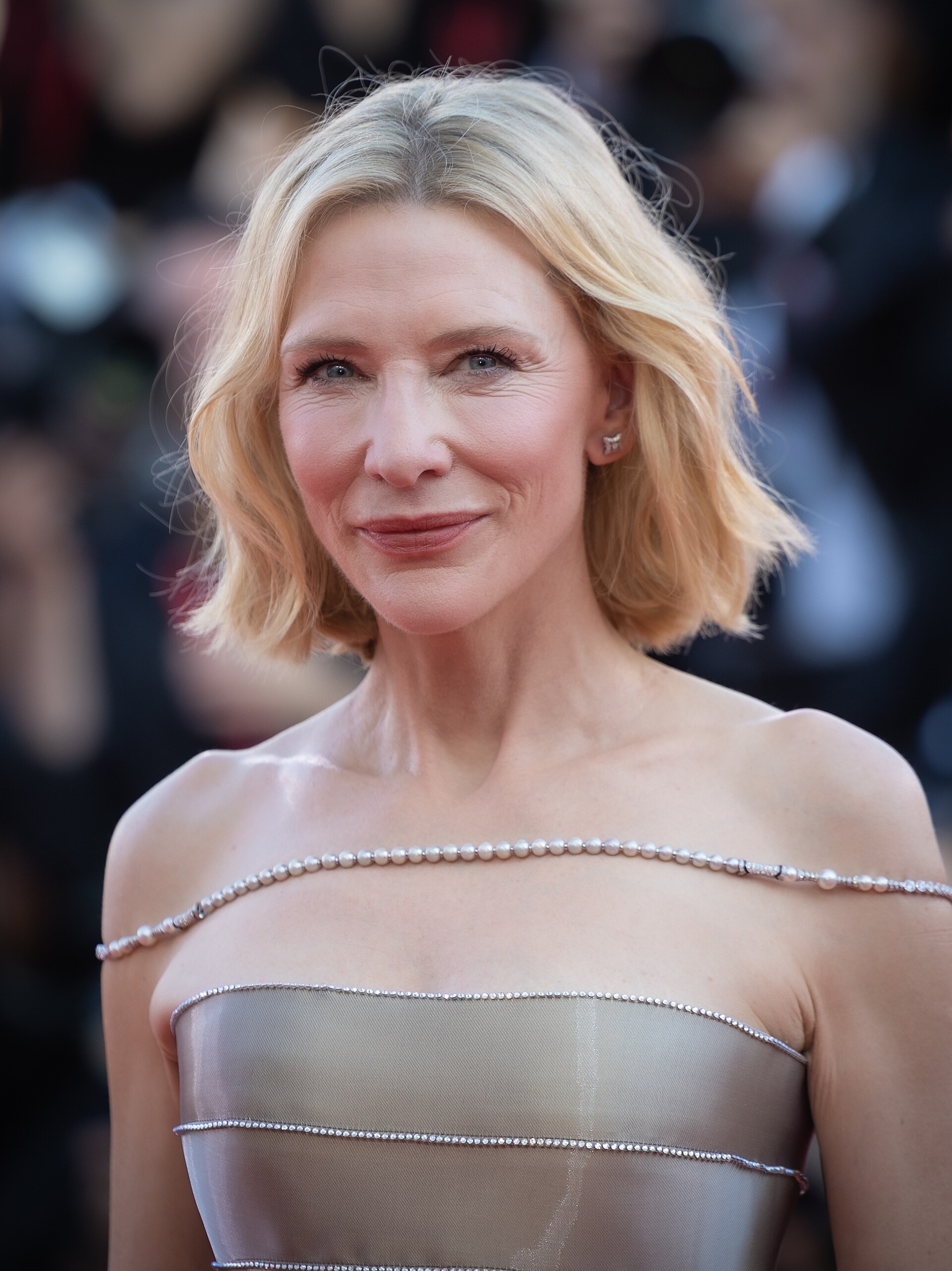
A nonprofit co-founded by Cate Blanchett, joined by the talent agency CAA, several creative-industry groups and an appendix of well-known actors, directors and musicians, has filed a friend-of-the-court brief in The New York Times' copyright lawsuit against OpenAI and Microsoft, Variety reported Friday.
The 31-page brief was filed in the U.S. District Court for the Southern District of New York by the Human Consent Foundation. It was joined by CAA, the Music Artists Coalition, the National Association of Voice Actors, Writer, Inc. and the Creative Coalition on AI, according to Variety.
The core argument is a direct answer to one of the tech companies' positions in the case: that licensing the enormous volume of material used to train AI models would be impractical. "Defendants have argued that licensing creative works for AI training is cost-prohibitive," the brief says, as quoted by Variety. "Defendants also claim there is no settled means of valuing training data. The facts demonstrate otherwise. The creative industries already have in place a proven infrastructure and workflows to clear rights for dispersed works at scale and cost-effectively."
The brief's appendix lists entertainers who support the effort. Variety named Anne Hathaway, Emma Thompson, Dan Levy, Ron Howard, Madonna and Olivia Wilde, along with Ariana DeBose, Bette Midler, Helen Mirren, Julia Roberts, Robert De Niro, Rosario Dawson, Scarlett Johansson, Vince Gilligan, Rian Johnson, Paul Feig, Greg Berlanti, Dave Eggers and the Stan Lee Foundation, among others.
Blanchett offered a statement in the brief itself. "I've been working in film and theater for over 30 years, and in that time, the principle has never changed," she said. "If someone wants to use my face, my voice or my image, they ask me first. There is a contract. There is a conversation. This isn't a new idea or a complicated legal framework, it is simply how we treat each other in this industry. Consent isn't a barrier to creativity, it is the foundation of it."
Director Steven Soderbergh, who also backs the foundation, offered a statement in the brief as well, declaring that the principle of permission should not change in the AI era, Variety reported.
Nikki Hexum, the foundation's co-founder and CEO, said the filing was meant to show the court "how the creative industry actually works and acknowledge the solutions that have been built and are continuing to develop for this new digital era."
"Our goal is to ensure that as the market for AI data licensing grows, the humans who create the value in that market are protected and have a meaningful choice," Hexum said. "We are not starting from scratch. There is already a functioning market and infrastructure for licensing creative work. We just need to ensure that new AI technology respects those boundaries and choices, including the choice not to participate."
The group is new. It was founded as RSL Media in May by Hexum and Blanchett and launched a registry in June where people can record what permissions they give AI models to use their likenesses, according to Variety.
OpenAI did not respond to the brief directly. A spokesperson pointed Variety to a company blog post published Friday that highlights briefs from several groups, including the U.S. government, supporting OpenAI's position that its use of the material is protected by the fair use doctrine. "Experts and leaders across a wide range of fields have recognized that fair use is a win-win that benefits everyone, and have shared their perspectives with the Court in filing briefs in support of fair use," the post said. Microsoft did not immediately respond to Variety's request for comment.
The Hollywood filing followed by one day a brief from SAG-AFTRA, the Writers Guild of America and the American Federation of Musicians. The unions argued that accepting the tech companies' fair-use claim "would render moot the terms the unions and the industry agreed to at the bargaining table." "It would harm not just the copyright owners, but the people who create the work," their brief said.
The Times sued OpenAI and Microsoft in December 2023, alleging that the companies infringed its copyrights by using thousands of its articles without permission to train AI systems. The Times moved for summary judgment last month, according to Variety. Those claims have not been decided, and OpenAI and Microsoft dispute them.
Amicus briefs do not make anyone a party to the case. They are arguments offered to the judge, who decides how much weight to give them. The brief is notable less for its legal novelty than for who signed on: some of the most recognizable names in film and music, putting themselves on the record about how AI companies should be allowed to use creative work.
What remains unknown: when the court will rule on the summary judgment motion, and whether other studios or record companies will file their own briefs.