Every Cambridge Councillor Signs On to a Disability-Rights Order Opposing a Justice Department Opinion and a Texas Court Ruling on Community Living
The order reaffirms the 1999 Olmstead decision, which the Supreme Court has not overturned, and asks the city manager to identify barriers to community integration in city programs. It carries no new spending.
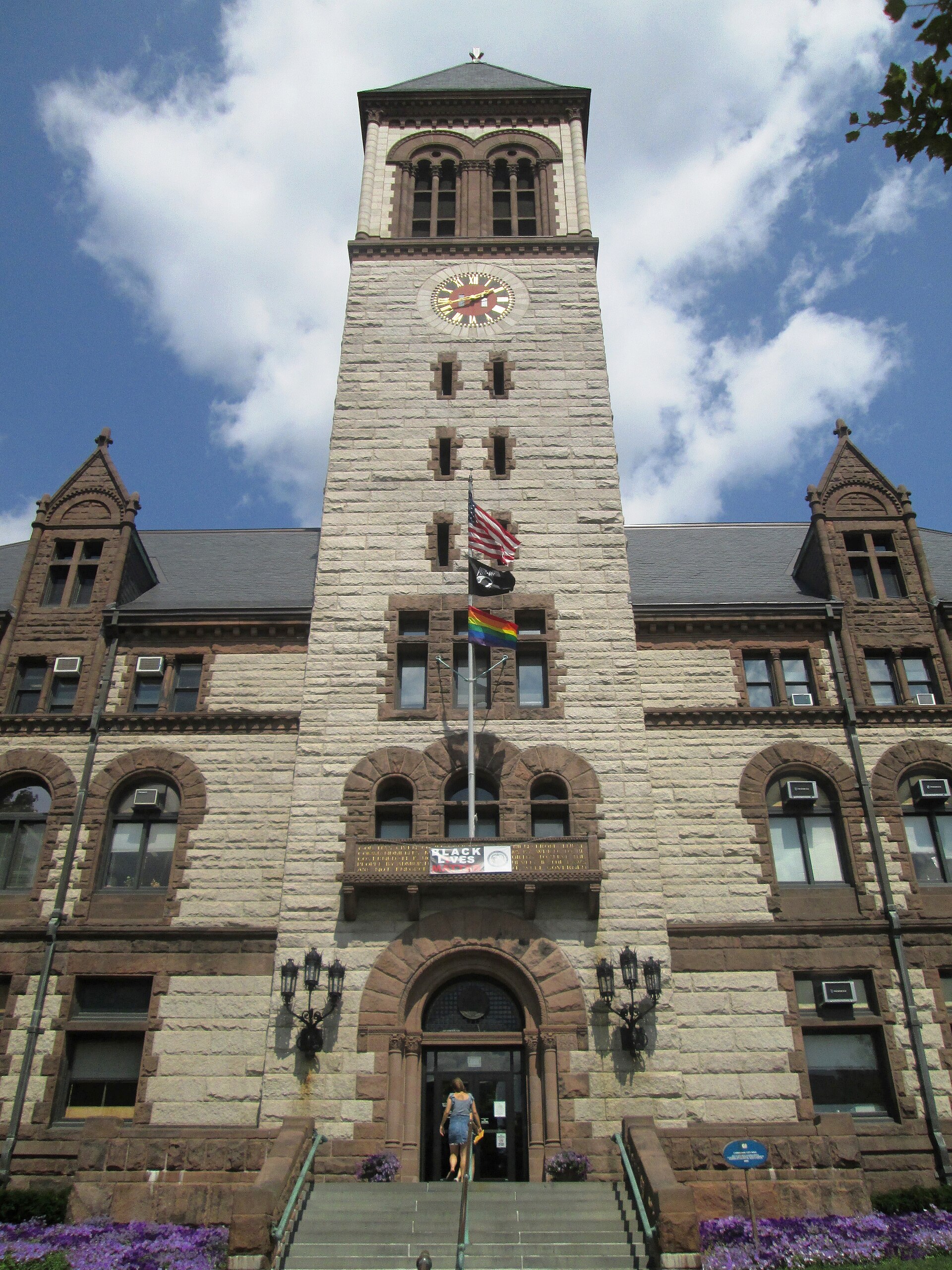
The Cambridge City Council on Monday adopted a policy order opposing two federal actions that it says weaken protections against the unjustified institutionalization of people with disabilities, after all nine councillors were added as sponsors, according to the council's Nov. 2 vote record and the text of the order.
The order, PO26#205, was filed by Mayor Sumbul Siddiqui with Councillors Sobrinho-Wheeler, McGovern, Zusy, Al-Zubi, Flaherty, Nolan and Simmons and Vice Mayor Azeem listed as co-sponsors in the final text. It passed 8-0, with Azeem absent, after comments from Siddiqui, Zusy, Flaherty, Nolan and Rachel Tanenhaus of the Cambridge Commission for Persons with Disabilities, according to the Cambridge Civic Journal's record of the meeting.
<h3>The two federal actions</h3>
The order names its targets precisely. It states that on June 18, 2026, the U.S. Department of Justice's Office of Legal Counsel issued an opinion challenging the interpretation of the Americans with Disabilities Act and the Rehabilitation Act as establishing a federal community integration mandate. It also states that on Sept. 23, 2026, a federal district court in Texas v. Kennedy vacated certain community integration provisions of the U.S. Department of Health and Human Services' Section 504 regulations.
Against those, the order sets the Supreme Court's 1999 decision in Olmstead v. L.C., which, as the order summarizes it, recognized that unjustified institutional isolation of people with disabilities is discrimination under Title II of the ADA and that people with disabilities are entitled to services in community-based settings when appropriate. The order notes that Olmstead 'has not been overturned,' but says the federal developments 'have created uncertainty about the continued enforcement of community integration protections.'
That distinction matters for readers. The Justice Department opinion is a legal interpretation by the executive branch, and the Texas ruling is a district court decision. Neither, by itself, overturns a Supreme Court precedent. The council's order is a statement of opposition and local policy, not a legal ruling on either action.
<h3>What the city is asked to do</h3>
The order's operative section asks the city manager to work with the Cambridge Commission for Persons with Disabilities, the Cambridge Human Rights Commission and relevant city departments 'to strengthen public awareness of disability rights, reasonable accommodations, and available complaint processes, and to identify barriers to community integration within City programs and services.'
It also cites the city's own laws: the Cambridge Human Rights Ordinance and the Cambridge Fair Housing Ordinance, which the order says prohibit discrimination on the basis of disability and support access to housing free from discrimination, including reasonable accommodations and modifications required by law.
The order carries no appropriation and sets no deadline for a report. Copies are to be sent to the two city commissions, the Massachusetts attorney general, the U.S. secretary of health and human services, the assistant attorney general for the Justice Department's Civil Rights Division and the governor.
<h3>The debate in the chamber</h3>
The Cambridge Somerville Independent reported that Siddiqui said, 'Cambridge will not stand by quietly when those rights are threatened,' and that Zusy, who said she grew up with a disabled brother, argued that leaving people 'out on the street is not a valid or humane option' and that the order comes with a responsibility to fund programs and support services. That funding point is a councillor's argument; Monday's order did not appropriate money.
The order's findings describe what community living requires in practice: accessible housing, transportation, personal assistance, and health and behavioral health services. It states that unnecessary institutionalization 'can separate people with disabilities from their families, communities, employment, and opportunities to participate fully in civic and community life.'
It also includes language on a narrower concern: a resolve recognizing 'the importance of preventing discriminatory assumptions about disability and opposing the misuse of institutional placement or disability-related labels to deny individuals their rights, autonomy, and equal participation in society.'
<h3>Same night, related spending</h3>
On the same agenda, the council adopted, 8-0, a city manager request to appropriate $1,000,000 from the Community Benefits Stabilization Fund to the Grant Fund Human Services Other Ordinary Maintenance account, after questions from Councillor Nolan to City Manager Yi-An Huang and Sandra Clarke of the Community Development Department, the vote record shows. It also approved moving $50,000 from free cash into the Community Benefits Stabilization Fund. The records reviewed do not tie either appropriation to the disability-rights order.
What remains open is how the city manager's office will carry out the request: which programs will be reviewed for barriers, whether a public report will follow, and whether the federal actions named in the order produce any change in services in Cambridge. The Texas v. Kennedy ruling and the Justice Department opinion remain subject to further legal challenge outside the city's control.
Sources
- Cambridge City Council Nov. 2, 2026 agenda, votes and text of PO26#205 (Cambridge Civic Journal) (opens in a new tab)
- Cambridge Somerville Independent: People with disabilities are 'very, very scared' by Trump policies, inspiring statement of support in Cambridge (opens in a new tab)
- Justia: Olmstead v. L.C., 527 U.S. 581 (1999) (opens in a new tab)