BU Engineers Join a $39.5 Million Push to Let Robots Remove Stroke Clots Remotely. 'Where You Have a Stroke Determines Whether You Survive It'
The ARPA-H project pairs BU with Philips, Johns Hopkins and Weill Cornell. BU also released a study of Berkeley's checkout-lane candy ban and got a $7.6 million NIH training grant for trauma research with VA Boston.
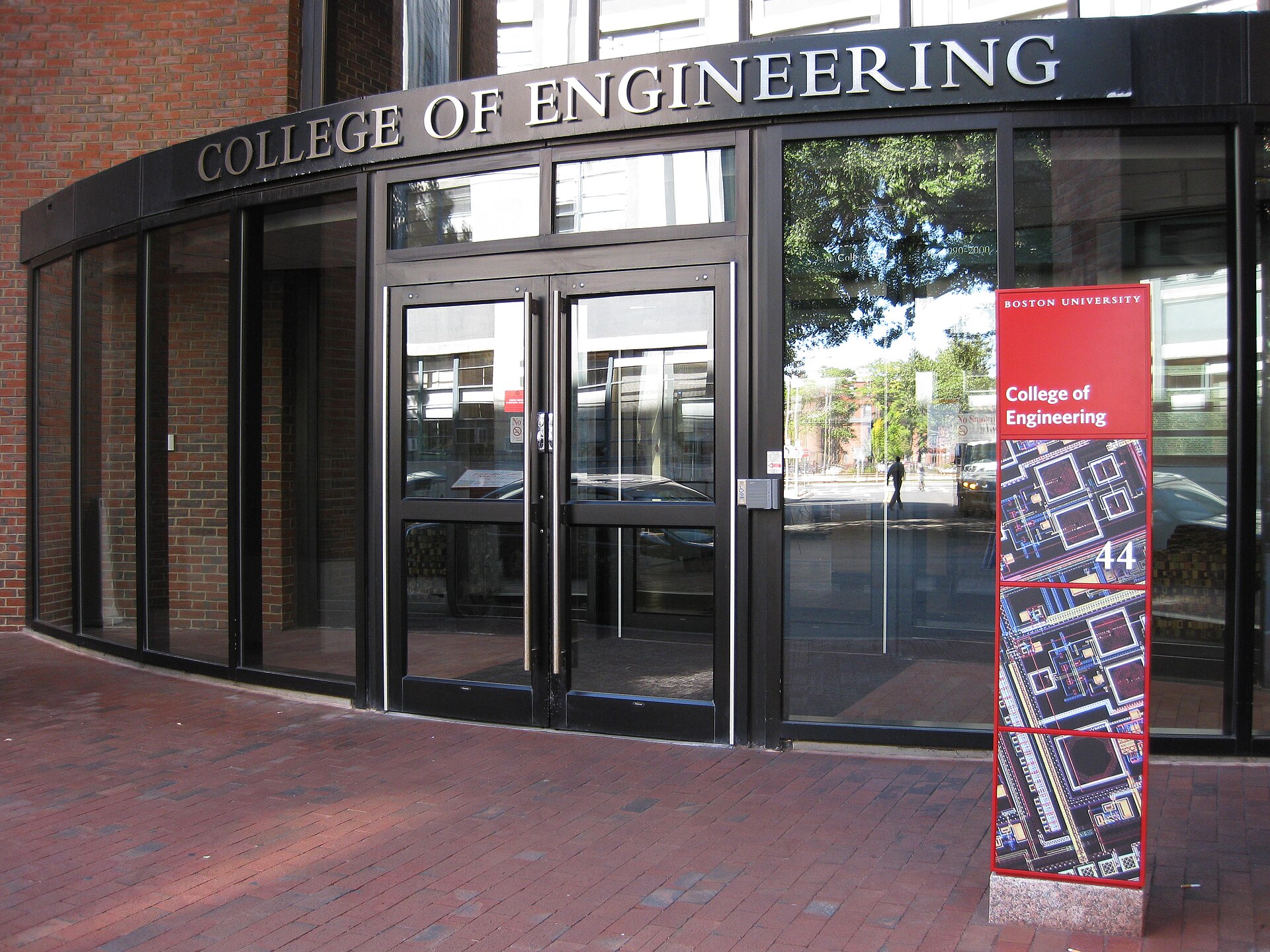
Boston University engineers are part of a new $39.5 million consortium that aims to use robotics and artificial intelligence so more stroke patients can get clot-removal surgery quickly, even far from a major hospital, BU's research news site The Brink reported Nov. 2.
<h3>The stroke project</h3>
The team includes the health technology company Philips, Johns Hopkins University and Weill Cornell Medicine. It is funded by the federal Advanced Research Projects Agency for Health, known as ARPA-H, through its Autonomous Interventions and Robotics program, according to The Brink.
The goal is technology that makes it possible to perform surgeries to remove blood clots remotely. BU's piece is the hardware that goes inside the body. Sheila Russo and Tommaso Ranzani, both associate professors of mechanical engineering in BU's College of Engineering, will help develop a catheter that can navigate blood vessels and break up clots.
'We are building the "body" of the robot here at BU, while Johns Hopkins handles the autonomy and decision-making, and Philips integrates it all into an imaging platform,' Ranzani told the engineering school's news team, as quoted by The Brink. He said the technology could more than quadruple the number of patients who receive life-changing, and possibly life-saving, treatment.
Russo framed it as a question of fairness. 'What makes this work exciting is that it tackles a fundamental healthcare inequity: right now, where you have a stroke determines whether you survive it, or face lifelong disability,' she said. 'This project aims to change that by automating and decentralizing a procedure that's been locked in specialized centers.'
<h3>Why it matters here</h3>
Clot-removal surgery today is done at specialized centers, which is the gap the team describes. A procedure that can be guided from a distance is the kind of technology Russo described as moving care out of 'specialized centers.' The project is in development, and The Brink did not give a timeline for clinical use.
<h3>Candy at the checkout</h3>
The same Brink roundup reported on a study by researchers at BU School of Public Health and the University of California, Davis, of a first-of-its-kind ordinance in Berkeley, Calif., banning the display of candy and sugary drinks in checkout lanes.
The ban took effect in March 2021. Researchers found it showed promise in reducing sales of soda and small packets of sweets, and it also led to higher sales of healthier snacks like nuts and seeds, The Brink reported.
Compliance mattered a lot. Sales of sugary items fell the most in supermarkets, which did a better job following the rule. They held steady in drug stores, which reportedly had the lowest compliance.
'Our findings suggest that healthy checkout policies can help reduce impulsive purchases and even encourage healthier snack choices, but it is critical for cities to actively enforce these policies if they aim to see meaningful and sustained decreases in sugary product sales,' said Justin White, an associate professor of health law, policy and management at the School of Public Health.
The takeaway from the study for any city weighing a similar rule is that passing it is only the first step. Enforcement decides whether it works.
<h3>$7.6 million for trauma research</h3>
BU also announced that the National Institute of Mental Health, part of the National Institutes of Health, awarded $7.6 million to a BU training program for researchers who study trauma and stress, The Brink reported. The program connects postdoctoral fellows with experts and projects at the BU Chobanian & Avedisian School of Medicine and the VA Boston Healthcare System.
Terence M. Keane, VA Boston's associate chief of staff for research and a director at the National Center for PTSD, said the five-year grant 'is recognition that there are very few places in the country that can provide this training, and that here at BU and the VA we can do that, and we do it well.' Keane is also a BU professor of psychiatry and clinical psychology.
According to a medical school news release cited by The Brink, the program aims to prepare researchers for academic careers in the psychology and neurobiology of traumatic stress disorders.
<h3>The data center poll</h3>
The roundup also included a BU College of Communication survey, run with Ipsos, finding that just over half of Americans oppose data center construction while only a quarter support it. Respondents underestimated opposition across parties: just 21 percent believed Republicans oppose construction, while 37 percent actually do, and only 28 percent believed independents do, while the true figure is 56 percent, The Brink reported.
Republicans were less likely than Democrats or independents to have formed a solid opinion on data centers, the researchers found. The Media & Technology Survey is led by COM's Communication Research Center and its Center for Media Innovation & Social Impact.
<h3>The bigger picture</h3>
Taken together, the roundup shows how much of BU's research is aimed at problems people run into every day: getting to stroke care in time, the snacks at the register, the mental health effects of trauma and the data centers going up around the country. The stroke work in particular depends on federal research money through ARPA-H, and the trauma program on NIH.