Xi Opens APEC in Shenzhen Warning of 'Rampant' Protectionism, a Day Before Meeting Trump and Putin Together
China's leader pitched a 'super-sized open market' and pledged to cut tariffs and widen access. He did not name the United States, whose tariffs dominate the region's trade agenda.
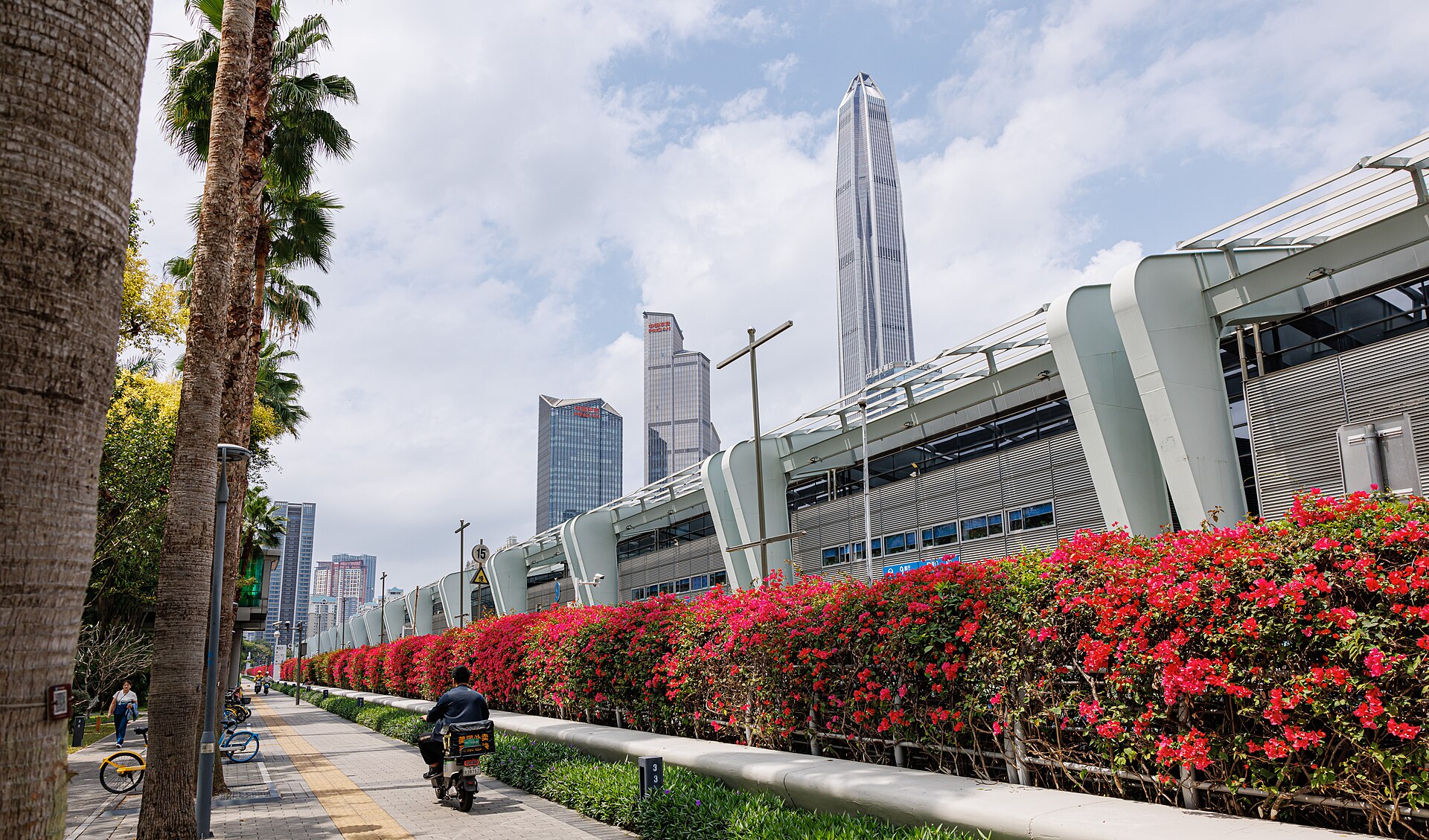
Chinese President Xi Jinping opened the Asia-Pacific Economic Cooperation CEO Summit in Shenzhen on Wednesday with a speech that cast China as a defender of open trade, a day before an unprecedented three-way meeting with President Donald Trump and Russian President Vladimir Putin.
"Today, we find ourselves in a changing and turbulent world. Global growth lacks momentum, and unilateralism and protectionism are rampant," Xi said, according to the official English text published by the Chinese government. "To open doors or close doors, work together or against each other" was the choice facing the region, he said.
Xi did not name the United States. But the language echoed Beijing's long-running criticism of U.S. tariffs and export controls, which have been central to relations between the two largest economies during Trump's second term.
He laid out four priorities for the region. On security, he said, "There can be no prosperity without security, and no security without stability," and called for upholding "the postwar international order" and "an equality-based and orderly multipolar world." On trade, he urged APEC members to "firmly safeguard the WTO-centered, rules-based multilateral trading system," keep supply chains "stable and unimpeded" and work toward a Free Trade Area of the Asia-Pacific, a long-discussed regional pact.
On technology, Xi called for partnerships in science and innovation and deeper cooperation "in the digital economy and AI," noting that "unicorn companies and large AI models have emerged in large numbers" among APEC members. On development, he said a uniform approach would not work for economies at different stages and called for removing trade and investment barriers while ensuring benefits are shared.
Much of the speech was a sales pitch to the executives in the room. Xi described China as "a super-sized open market" with the world's largest middle-income population and as "a super-sized innovation testing ground" for technologies from factory robots to autonomous driving and drone delivery. "China will not only cut tariffs and expand market access but also go a step further," he said, promising reforms in "rules, regulation and standards" and wider opening in services.
He cited China's growth of 4.6 percent in the first three quarters of the year and said the country's 15th Five-Year Plan, which began this year, had gotten off to a good start. He also proposed a World Association for Bay Areas Economic Cooperation, noting that Shenzhen is part of the Guangdong-Hong Kong-Macao Greater Bay Area. China is hosting APEC for the third time.
Shenzhen was a deliberate choice of setting. Xi described the city's transformation over more than 40 years "from a small border town into an international metropolis" as a product of China's reform and opening policies, which began in special economic zones like Shenzhen in 1980.
The speech sets the stage for Thursday, when Xi, Trump and Putin are scheduled to meet together, a format with no precedent among the three powers. Trade, the war in Ukraine and North Korea are expected to be discussed. Trump has said he might also meet North Korean leader Kim Jong Un if Kim attends, though no meeting has been scheduled.
Xi also pointed to China's record inside the World Trade Organization. He noted that China hosted APEC leaders for the first time in 2001, the same year it joined the WTO, and said that over the past 25 years China "has fully honored its WTO accession commitments" and "has stood up to unilateralism and protectionism." He called China "the world's second largest consumer market," citing growth areas from new energy vehicles and smart homes to the "silver economy" and ice and snow tourism, and mentioned the ninth China International Import Expo, held recently in Shanghai, which he said many of the executives present had attended.
He closed with an appeal to the business leaders themselves. "I hope you will carry forward the entrepreneurial spirit, boldly pursue innovation and excellence, explore and expand opportunities for business cooperation, and make greater contributions to economic integration in the Asia-Pacific," Xi said, inviting them to "share in the opportunities created by Chinese modernization." The speech offered promises of tariff cuts and wider market access but no specific measures or timelines.
Massachusetts has a stake in the outcome. The state's technology and life sciences industries depend on Asia-Pacific supply chains and customers, and tariff changes between Washington and Beijing affect costs for manufacturers and research labs in the state.
Open questions include whether Thursday's meeting produces any agreement on tariffs or export controls, what the three leaders say publicly about Ukraine, and whether China follows its pledges on market access with concrete measures.
Sources
- Gov.cn: Full text of Xi Jinping's keynote speech at the APEC CEO Summit 2026 (opens in a new tab)
- CNA: 'Security makes prosperity possible': Xi urges Asia-Pacific cooperation at APEC summit (opens in a new tab)
- The Korea Herald: Seoul backs possible Trump-Kim dialogue as APEC summit speculation mounts (opens in a new tab)