Vineyard Wind and Revolution Wind Are Both Fully Online. Federal Output Data Show How Long the Massachusetts Project Lagged.
Vineyard Wind reached full operation Oct. 29, seven and a half months after its last turbine went up. In May, it told a court that 36 of its 62 turbines were not spinning.
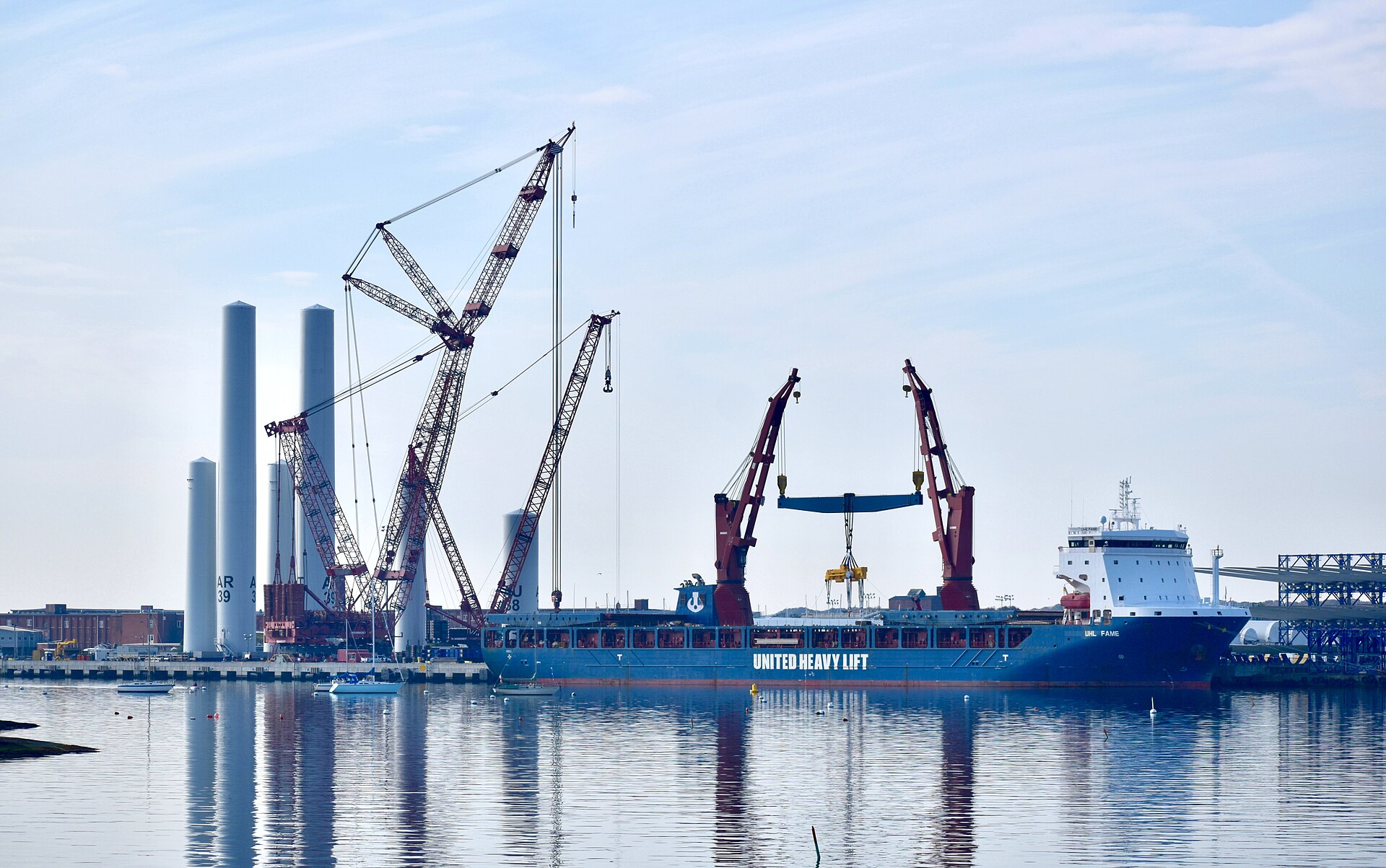
Two of the country's first large-scale offshore wind farms serving southern New England are now fully operational, their developers said, after years of construction delays and federal efforts to halt them.
Vineyard Wind, the 62-turbine project about 15 miles south of Martha's Vineyard that delivers power to Massachusetts, became fully operational on Oct. 29, spokesperson Craig Gilvarg confirmed to The New Bedford Light, in reporting published by Boston.com. Revolution Wind, a 65-turbine project south of Block Island serving Rhode Island and Connecticut, announced last Thursday that it was fully online after three years of construction. Rhode Island's Office of Energy Resources issued a statement marking the milestone.
Capacity. Vineyard Wind has 800 megawatts of capacity and Revolution Wind 704 megawatts, a combined 1,504 megawatts, according to the Environmental League of Massachusetts and WBUR. The developers say the projects together will power about 750,000 homes, with Vineyard Wind's developer projecting 400,000 homes once fully operational and Revolution Wind's 350,000.
What the federal data show. Both projects had been delivering power at reduced capacity for months. Vineyard Wind produced 336,382 megawatt-hours from July through September, according to Federal Energy Regulatory Commission data analyzed by The Light, which estimated that was enough to power about 193,300 Massachusetts homes. Revolution Wind produced 314,321 megawatt-hours in the same period, about 22,000 fewer.
The lag. Vineyard Wind finished installing turbines in March and took seven and a half months to reach full operation; Revolution Wind finished in September and took about a month and a half, The Light reported. In May, Vineyard Wind said in court filings and hearings in its lawsuit against turbine supplier GE Vernova that the project was producing "less than half of its expected capacity" and that 36 of its 62 turbines were not spinning. That suit sought to keep GE Vernova from leaving its contract to service the turbines before final commissioning; the parties settled in September after GE Vernova withdrew its termination notice.
Federal headwinds. Both projects faced stops and starts from the federal government, including an attempt last month to pull permitting for Revolution Wind after it had been completed, according to The Light.
Reaction. Advocates said the projects will eliminate 1.6 million metric tons of carbon pollution a year, the equivalent of taking 325,000 cars off the road. "A fully operational Vineyard Wind means New England families have another clean, affordable, local source of energy being delivered to their homes through the coming winter season," Conservation Law Foundation staff attorney Anxhela Mile said in a statement. "Federal and state leaders should be preparing to build out more of these projects to help lower energy costs and keep our air clean."
Why winter matters. Roger Williams University engineering professor Gordon Stewart cautioned that wind output is cyclical and less predictable than other sources, generally peaking in winter when winds are stronger, The Light reported. That makes the next quarter's federal data, covering New England's windiest season, the first full test of both projects at capacity.
Context for Massachusetts. The completion comes as state officials and health and business leaders gather this week to discuss affordability, and as a Boston City Council hearing on high energy costs scheduled for Nov. 12 was canceled, according to a city notice. Regional electricity prices remain a political issue across New England.
What is still unknown. Neither developer has published a full commissioning report, and The Light noted that private companies tend to be secretive about engineering setbacks. Whether all 62 Vineyard Wind turbines run reliably through the winter will show up in future FERC filings.