SJC Upholds Massachusetts' Age-21 Rule for Gun Carry Licenses, 5-2
In Commonwealth v. Thomson, the court found the limit consistent with a historical tradition of keeping guns from young people outside supervised settings. Two justices wanted more historical evidence first.
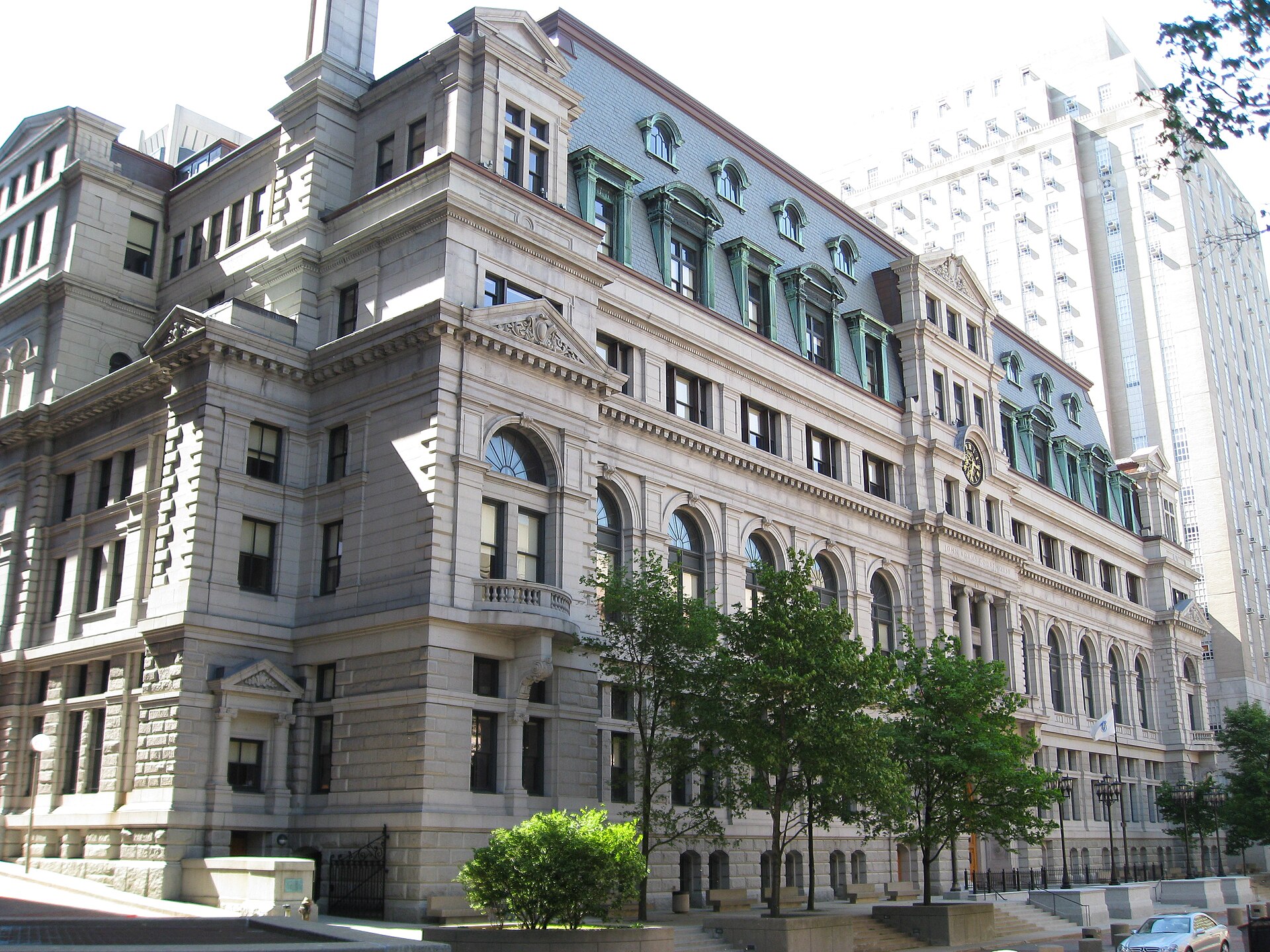
The Supreme Judicial Court ruled on Tuesday, Oct. 20, 2026, that Massachusetts may continue to bar people under 21 from obtaining a license to carry a firearm, rejecting a Second Amendment challenge by a man who was 20 when police said he threw away a loaded handgun while fleeing a traffic stop.
The vote in Commonwealth v. Thomson, SJC-13856, was 5-2. Justice Wolohojian wrote for the majority. Justice Kafker, joined by Justice Wendlandt, concurred in part and dissented in part, according to the opinion and an analysis by the legal site Mass Legal Resources. The case was argued March 2.
According to the opinion, a police officer stopped a car that ran a red light in December 2021. The defendant, Mikai Thomson, was in the front passenger seat. When the officer asked whether anyone in the car had a weapon, Thomson did not answer and was asked to step out. He complied, then pushed the officer and ran, discarding a loaded 9 mm semiautomatic handgun. He was convicted in the Dorchester division of the Boston Municipal Court of carrying a firearm without a license.
Thomson had never applied for a license. At the time, the court wrote, the licensing statute "did not (and still does not) permit persons under twenty-one years of age to obtain a license to carry." The SJC moved the appeal from the Appeals Court on its own initiative.
The court first ruled that Thomson could not argue the law was unconstitutional as applied to him. It repeated its rule that "standing to bring an as-applied challenge to the Commonwealth's firearm licensing scheme requires having applied for (and been denied) a license." He was allowed to bring a facial challenge, arguing the age limit is unconstitutional in all its applications.
On that question, the court agreed that a 20-year-old carrying a handgun is conduct covered by the Second Amendment's text. Under the U.S. Supreme Court's 2022 decision in New York State Rifle & Pistol Association v. Bruen, that placed the burden on the state to show the restriction fits the nation's historical tradition of firearm regulation.
The majority relied on founding-era militia laws and the common-law treatment of minors, under which young men were supplied with guns by responsible adults for supervised militia service rather than owning them on their own, according to Mass Legal Resources' summary. It adopted the historical survey in the U.S. Court of Appeals for the Eleventh Circuit's 2025 en banc decision in National Rifle Association v. Bondi, which upheld Florida's restriction on gun sales to people under 21, and added Massachusetts history.
The court concluded that "restriction of firearm possession by those deemed too young to handle them safely outside of supervised settings is consistent with the nation's regulatory tradition." It described Massachusetts law as "a licensing scheme that gives progressively greater unsupervised access to the possession and use of firearms by young people as they mature in age." A 15-year-old may get a firearm identification card with a parent's certificate; an 18-year-old may get one without it; and at 21 a person may apply for a license to carry. An FID card allows possession of a non-large-capacity rifle or shotgun. The conviction was affirmed.
Kafker agreed Thomson could bring a facial challenge but objected to how the majority developed the historical record. "I believe further briefing and expert historical analysis are required to draw the appropriate analogy reliably and correctly," he wrote. Because of the court's approach, he wrote, "the first time the defendant will see much of the history undergirding the court's legal conclusion will be when the court's opinion issues." He would have sent the case back to the trial court.
The opinions describe a divided national picture. The U.S. Court of Appeals for the Fifth Circuit struck down a federal ban on handgun purchases by 18- to 20-year-olds in Reese v. Bureau of Alcohol, Tobacco, Firearms and Explosives in 2025. The Eighth Circuit struck down Minnesota's age-21 limit on carry permits as applied to 18- to 20-year-olds in Worth v. Jacobson in 2024. The Third Circuit struck down a Pennsylvania rule barring 18- to 20-year-olds from carrying guns outside the home during a state of emergency. The dissent noted Thomson's argument that the federal appellate decisions upholding limits concerned sales, while "the only Federal appellate court decisions on possession came out the other way."
Because the ruling rests on the federal Second Amendment, Thomson could ask the U.S. Supreme Court to review it, Mass Legal Resources noted. The SJC observed that the high court has declined to review several similar cases.
The decision came two weeks before voters decide Question 9, which asks whether to keep Chapter 135 of the Acts of 2024, the gun law passed in July 2024. A yes vote keeps the law; a no vote repeals it. The Boston Globe has reported that the 2024 law raised the minimum age to buy semiautomatic rifles and shotguns from 18 to 21. Thomson concerned a different rule, the age limit for a license to carry, which predates the 2024 law, and the court did not decide the 2024 law's age provisions.
Mass Legal Resources noted that the court's reasoning, that the state may tie gun access to age and supervision, could matter in any future challenge to those provisions. A Suffolk University/Boston Globe poll released this week found 57.2% of likely voters supporting Question 9 and 31.4% opposed.
Thomson was represented by Elizabeth C. Lazar. Assistant District Attorney Ian MacLean argued for the Commonwealth, and the youth advocacy division of the Committee for Public Counsel Services filed a friend-of-the-court brief, according to the opinion.