The Senate Moves Toward a Final Vote on the Biggest Permitting Rewrite in a Generation. One Clause Splits Democrats.
Senators voted 70-27 to end debate on the Bipartisan American Affordability and Jobs Act. Votes on a substitute and final passage are scheduled for Wednesday, with a race to finish before Democrats take Congress in January.
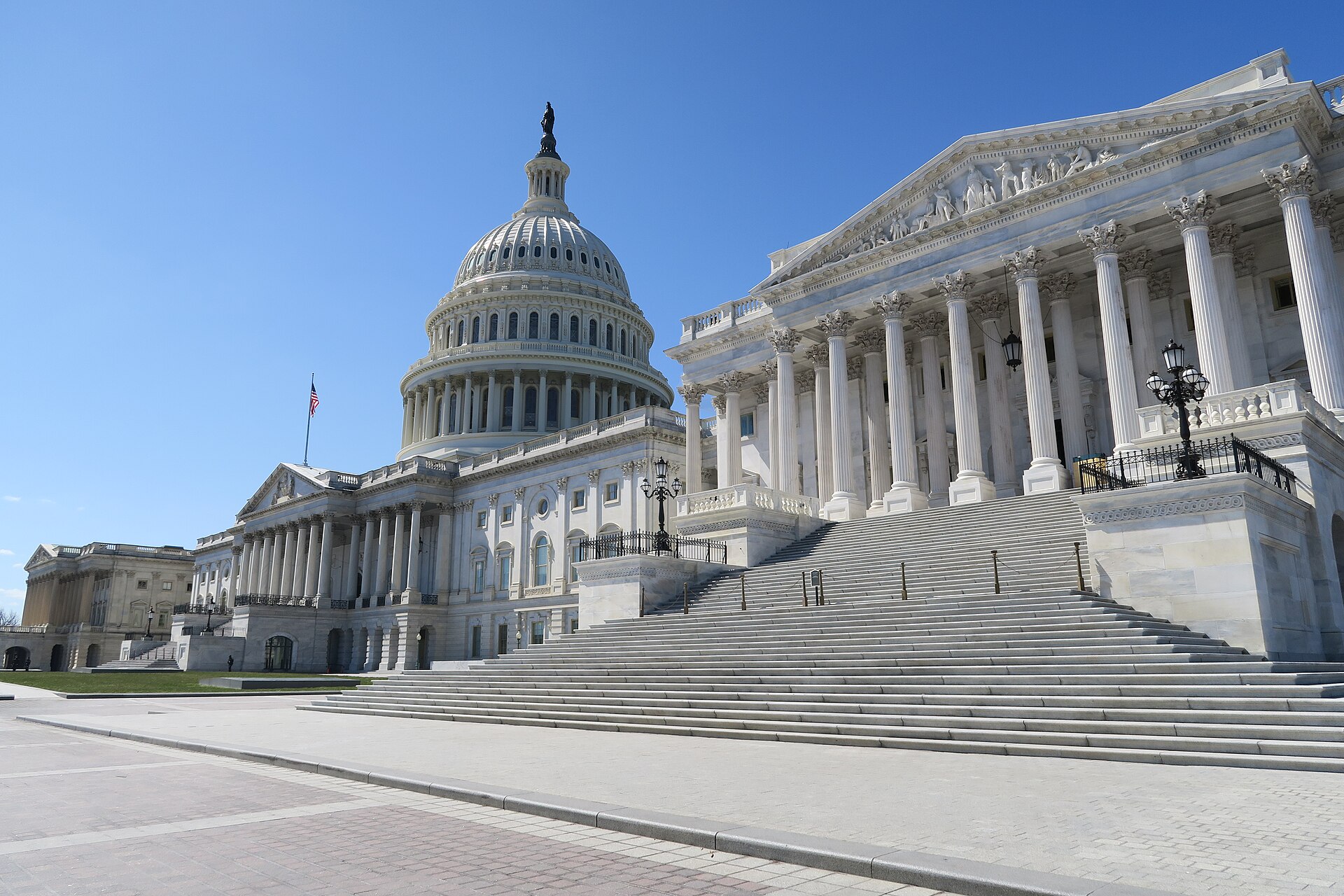
The U.S. Senate voted 70 to 27 on Monday night to end debate on a revised version of the Bipartisan American Affordability and Jobs Act, a sweeping overhaul of federal permitting rules for power lines, pipelines, mines and other energy projects, setting up further votes on Wednesday.
According to the Senate's floor schedule, votes were set to begin at 11:45 a.m. Wednesday on a motion to waive a budget point of order raised by Sen. Jeff Merkley of Oregon, adoption of a substitute amendment offered by Sen. Shelley Moore Capito of West Virginia, and cloture on the underlying vehicle, H.R. 2347. Last week the Senate voted 73 to 25 to open debate.
The bill, known as BAAJA, is sponsored by Capito and Sen. Mike Lee of Utah, both Republicans, and Democratic Sens. Sheldon Whitehouse of Rhode Island and Martin Heinrich of New Mexico. Its sponsors are trying to pass it before Democrats take control of both chambers of Congress in January, betting that the current combination of a bipartisan Senate deal, a Republican House and a president who supports the bill may not recur, Inside Climate News reported.
The least controversial section concerns transmission lines. Today a single state can stall an interstate line for years; environmental reviews for transmission take more than twice as long as for gas pipelines, and the main federal process for planning lines between regions has produced no miles of high-voltage line since 2011, according to Inside Climate News. The bill would let federal regulators approve a line if a state refuses or does not act within a year, and would require neighboring grid regions to plan lines together.
The bill also requires data centers to pay for the grid upgrades they need, a provision supporters tie to rising electricity bills. Democrats campaigned this fall on affordability and data center accountability, and Whitehouse has argued the bill lets them begin delivering on those promises immediately.
The most contested provision is Section 1401, which would make a finished federal permit hard to revoke. Agencies could withdraw one only in narrow circumstances, such as fraud, a court order or an immediate threat to health or the environment. An agency that interferes in bad faith could owe the developer a quarter to half of what it has spent. The protection applies to any permit in effect on or after Nov. 6, so it covers approvals already issued.
The motivating example is offshore wind: in 2025, the Trump administration halted five offshore wind projects, one of them about 87 percent built, Inside Climate News noted. But the clause is fuel-neutral, protecting pipelines, liquefied natural gas terminals and mines as fully as wind farms.
That has split Democrats. Heinrich argues the bill would cut permitting for a major power line from about two decades to about five years, too slow for the current administration to finish much, so the next president would benefit. Earthjustice President Abigail Dillen argues the opposite: industries favored by the current administration will rush to lock in approvals that no successor can undo. President Donald Trump said last week he still will not approve wind turbines, bill or no bill.
Modeling does not settle the dispute. Rhodium Group projects the bill cuts emissions in every scenario it ran but said permit certainty was too unsettled to model, while Purdue University's Kevin Kircher found the opposite, largely by assuming more fossil fuel production. Rhodium's Ben King called it partly "a bet on what's going to win out."
Even if the Senate passes the bill this week, the House must pass a matching version. House Minority Leader Hakeem Jeffries has said he wants changes. Massachusetts has a direct stake, since the state's clean energy plans depend on new transmission lines and offshore wind.
In other Senate business Tuesday, the chamber confirmed Anna St. John to the U.S. Court of Appeals for the Fifth Circuit by a vote of 52 to 46.
Open questions include whether the substitute is adopted without further changes, how many Democrats vote for final passage, whether the House takes up the Senate text before the session ends, and how agencies would apply Section 1401 to permits already in court.