Northeastern Opened '300,' a Global Entrepreneurship Hub in Horticulture Hall, With a Public Launch This Week.
The historic building at 300 Massachusetts Avenue will house a 24/7 student venture space and a Startup Hub for as many as 30 outside companies. An open house is set for Nov. 18 and 19.
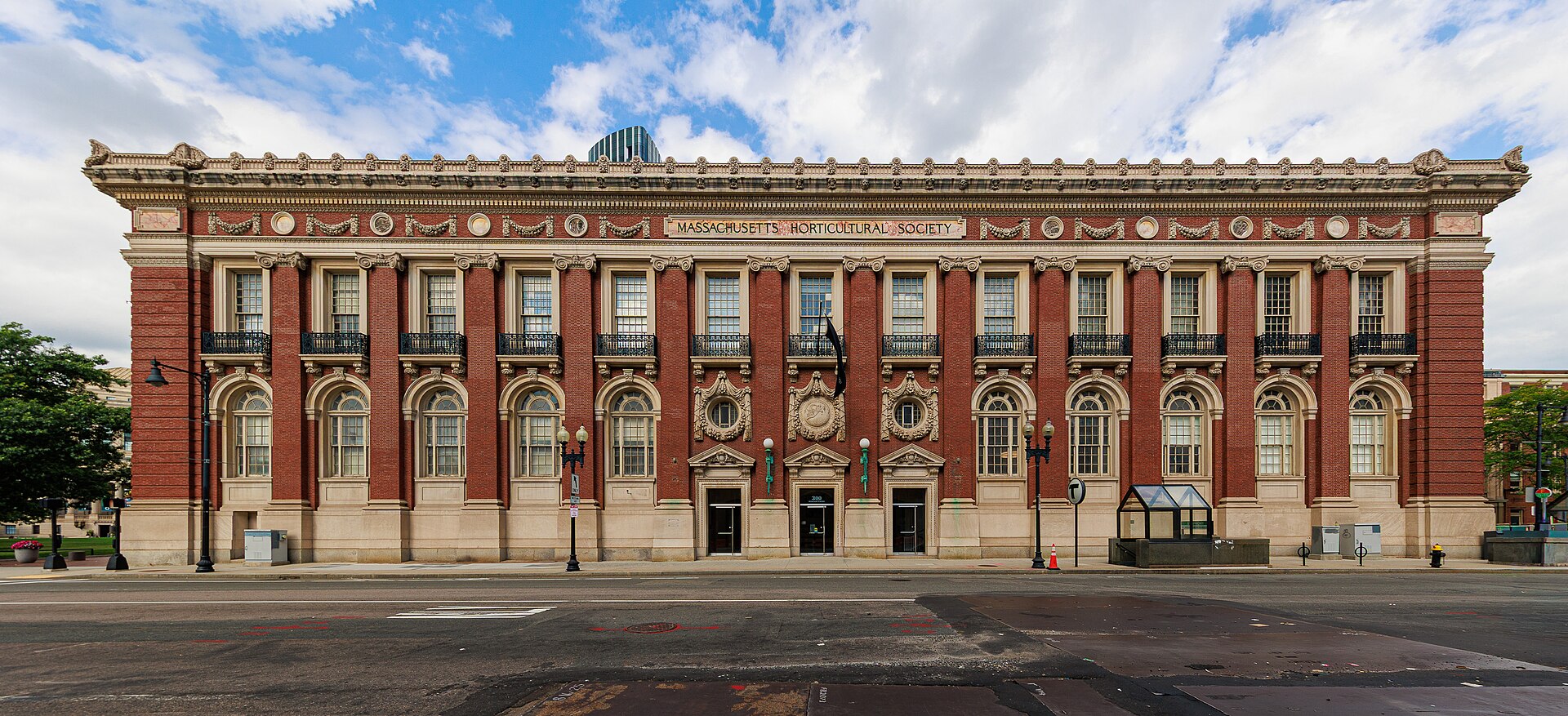
Northeastern University has a new flagship for its global entrepreneurship work: a hub called 300, in historic Horticulture Hall at 300 Massachusetts Avenue in Boston. The university announced the project on Monday, with photographs dated Nov. 16, and described the building as a landing place for students, founders, investors and industry partners from across Northeastern's 14 campuses and beyond.
Richard Corps, the university's vice president of global entrepreneurship, called the hall 'the heart of a connected global entrepreneurship network' and 'a major step forward in Northeastern's ambition to become a global leader in entrepreneurship.' The space, he said, is meant to make entrepreneurial opportunities 'no longer limited by geography.' It sits alongside existing university efforts that already include student clubs and IDEA, the student-led venture accelerator.
The hub is built as two rooms with a lobby between them. A dedicated student venture space will be open 24 hours a day, seven days a week, for Northeastern students to work on ideas. Across the lobby, a Startup Hub will rent space to as many as 30 outside ventures, which, in return, are expected to provide experiential learning opportunities to the Northeastern community. Students and companies are meant to meet and work across that hall on purpose, not by accident.
The Boston site will connect to Northeastern's existing startup hubs in Vancouver, Toronto, Portland and London. The university says that an entrepreneur with access to one hub can work and connect from any of the others. That is the 'global' part of the pitch, and it is also a test: a network of rooms is only as useful as the people who actually move between them.
Students who spoke to Northeastern Global News described more ordinary needs. Sean Blundin, a fourth-year data science and finance student helping organize a multi-day AI hackathon that will help launch the space, said founders are often 'just asking for a locker or for a whiteboard or for a desk that's consistently available.' Add reliable Wi-Fi and coffee at all hours, he said, 'then they're off to the races.' Archi Marrapu, a second-year health sciences and business major, called 300 a potential 'jewel in the startup space' and said she plans to work there during a Sherman Venture co-op while developing VOYCE, a public-speaking platform she launched as a solo founder in January. Nicholas 'Nikko' Lara, a 2015 graduate, said the launch is 'an extension' of infrastructure that should support 'not just the ideas, but the materialization of those concepts into something that can make money or become a viable business.'
The public opening is this week. An open house on Nov. 18 and 19 is scheduled to include networking, a university-wide showcase, and conversations about venture capital, scaling companies and the creator economy. The launch is to end with hackathon finals in which five teams present to a panel of judges that will include Northeastern graduates and presidential entrepreneurs-in-residence Alan McKim, founder of Clean Harbors, and Chet Kanojia, co-founder of Starry and UnifyCX.
A new building does not, by itself, make a university a global entrepreneurship capital. What it does is give students a desk, a door that stays open overnight, and a set of companies working across the hall under a rule that they have to let students in. The open house will show whether the room fills. The next year will show whether anyone uses the other hubs, and whether the 30 company slots turn over the way a real incubator has to.
Whether 300 becomes a landmark or just a well-lit room will be visible in ordinary ways: whether the 24-hour space is actually full at 2 a.m., whether the 30 company desks turn over, and whether anyone from London or Vancouver ever works a week on Massachusetts Avenue. The open house this week will be busy. The useful test comes after the banners come down.
Corps's line about opportunity no longer being limited by geography is the promise. A desk in Horticulture Hall is the delivery mechanism. If the two stay connected, 300 will have been worth the renovation photographs. If they do not, it will still be a good room on Massachusetts Avenue, which is not nothing, and not yet the global network on the banner.