Residents Came Weekly to a School for Aid Packages. Russian Bombs Hit the School, Then the Shelter, Then the Responders. The Death Toll Has Reached 31
Four police officers and two rescuers were among the dead in Komyshuvakha, according to Ukrainian and U.N. officials. The strike came a day after the longest pause of the war, a local truce around Oleshky, ended.
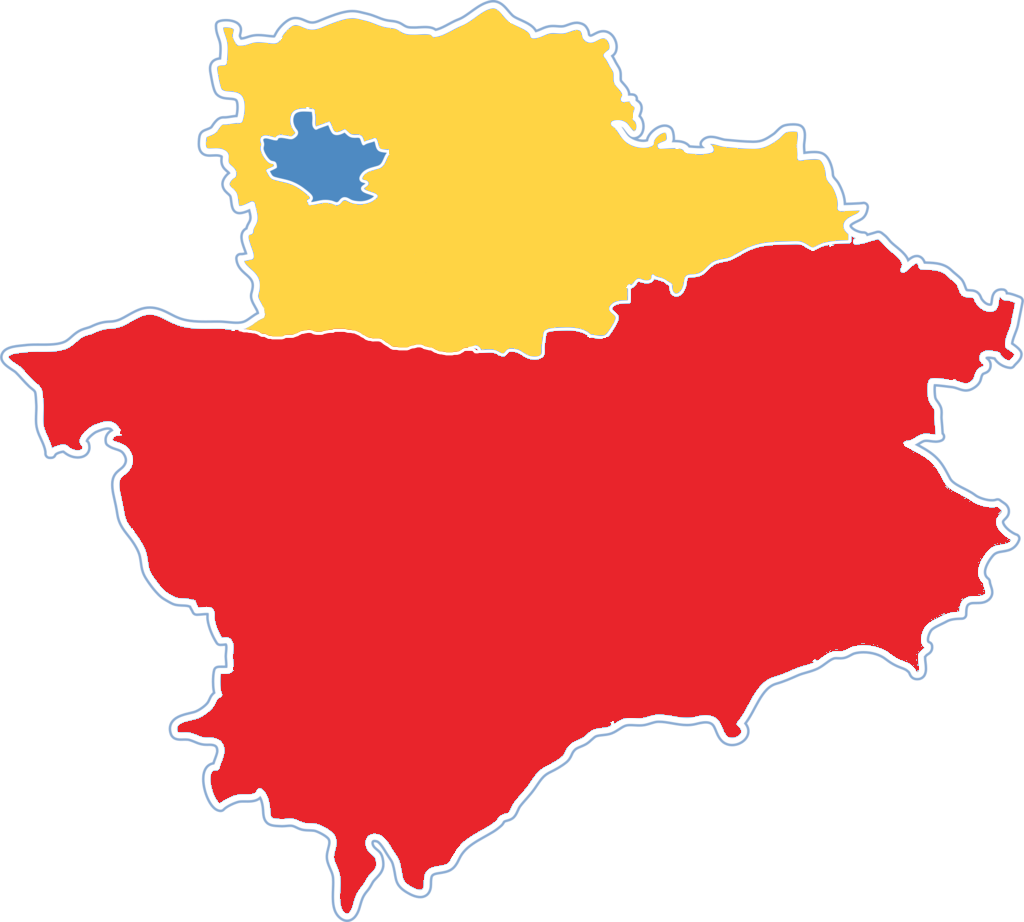
Russian air strikes on Monday hit a school used to distribute humanitarian aid in Komyshuvakha, a village in Ukraine's southern Zaporizhzhia region, and then a nearby shelter, killing at least 29 people with 48 still missing, The Guardian reported. The regional administration later raised the death toll to 31, Interfax-Ukraine reported.
The dead included four police officers and two rescue workers, said Mykhailo Semikin, acting head of the regional military administration, according to The Guardian. At least five people were hospitalized.
<h3>The U.N.'s account</h3>
The United Nations humanitarian coordinator for Ukraine, Matthias Schmale, condemned the attack. In a statement, the U.N. office said that during the morning of Nov. 2, air strikes by the Russian armed forces 'reportedly killed at least 29 civilians, the majority of whom were local residents who came to get aid at a local school and employees of the local administration.' It said 'subsequent strikes at the same location killed two rescuers and four police staff who responded to the first attack.'
'People living close to the front line already endure immense hardship. The possibility of being killed while seeking essential assistance or shelter is horrifying,' Schmale said. 'Civilians seeking support and first responders coming to the rescue must never be a target. Civilian facilities, including humanitarian assistance, must be respected and protected under international humanitarian law.'
The U.N. statement uses 'reportedly' for the death count and does not itself attribute intent. Ukrainian President Volodymyr Zelenskyy described the attack as deliberate, a 'double-tap' strike that hit civilians and then those who came to help, according to The Guardian and other outlets. Russia's response to the accusation was not included in the reports reviewed.
<h3>A known gathering</h3>
Zelenskyy said the Russians could not have been unaware that residents remaining in Komyshuvakha gathered each week to pick up humanitarian packages from the site, The Guardian reported. Rescue efforts on Monday evening were hindered as Russian drones carried out additional attacks on the bombed area, Semikin said. As night fell, responders searched the rubble by torchlight, according to photos and video posted by local officials.
<h3>A nationwide barrage</h3>
The attack was part of a wider wave. Russia launched 289 attack drones, 17 ballistic missiles and 59 cruise missiles across nine regions, triggering emergency power cuts, Zelenskyy said in an online post that noted the barrage coincided with U.S. elections, according to The Guardian. The Kyiv Independent reported that 10 regions faced power outages.
'The Russians think America won't notice this signal of theirs,' Zelenskyy said. 'But we need to notice and stop such terror. We need to help Ukraine defend its skies; otherwise, Russia will never stop its missile strikes.'
In the Dnipro area, rescuers pulled a woman alive from rubble on Tuesday morning after an attack that killed one person and wounded 17, local authorities said.
<h3>The end of a truce</h3>
The strikes came after a six-day local ceasefire around the Russian-occupied city of Oleshky in Kherson region ended. The Guardian described it as the longest pause in fighting in the war, now in its fifth year, and said it was brokered by U.S. first lady Melania Trump. The pause allowed an evacuation of Oleshky; Euronews reported that Russia resumed attacks in Kherson region after it ended, and that Kyiv said Russia had used the pause to reinforce positions.
'If Russia genuinely wanted de-escalation, there was an opportunity following the situation in Oleshky to continue taking humanitarian steps. We proposed this. But Russia continues to kill people,' Zelenskyy said, according to The Guardian.
<h3>Talks next week</h3>
U.S. special envoy Steve Witkoff said Monday that U.S.-led talks between Russia and Ukraine would resume Nov. 10-11 in Abu Dhabi, The Guardian reported. President Donald Trump has pushed for a settlement, but there has been no breakthrough, and Kyiv and its European allies worry that Trump has increasingly sided with Moscow, the paper reported.
<h3>What remains unknown</h3>
Nearly 50 people were still listed as missing, according to the regional administration, so the death toll may rise. Investigators have not published the munitions used or a full timeline of the strikes. Under international humanitarian law, deliberately targeting civilians or rescue workers is prohibited; whether that occurred here is a question for investigators, not an established finding.
Sources
- The Guardian: Russia bombs aid centre and shelter in Ukraine, killing at least 29 people (Nov. 3) (opens in a new tab)
- United Nations in Ukraine: Statement by Humanitarian Coordinator Matthias Schmale on Komyshuvakha (Nov. 2) (opens in a new tab)
- Interfax-Ukraine: Death toll from Russian strikes on Komyshuvakha rises to 31 (opens in a new tab)
- BBC News: Russian bombing kills 29 people at humanitarian aid centre (opens in a new tab)
- Euronews: Russia resumes attacks on Kherson region after truce ends (opens in a new tab)
- Kyiv Independent: Russian attacks across Ukraine, 10 regions face power outages (opens in a new tab)