House Republicans Give the Smithsonian Until Nov. 11 to Turn Over How It Reviews Exhibits, Citing an Inspector General Report on a Cooper Hewitt Installation About 'Domicide'
Reps. Tim Burchett and Brian Jack say Directive 603 'fails to lay out an appropriate purpose or procedure.' The Smithsonian told its inspector general some changes were already made and others were in progress.
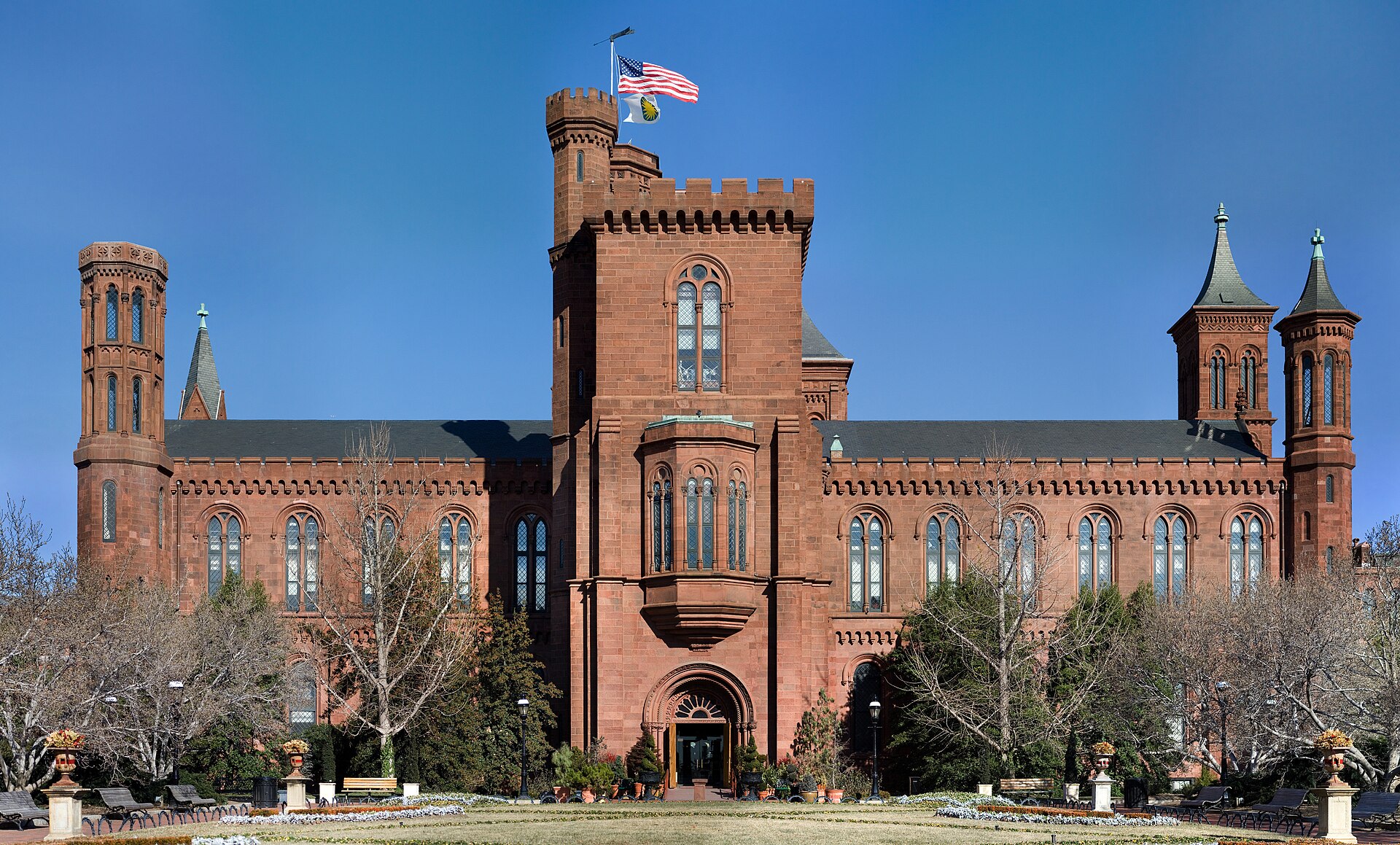
Two Republican members of the House Oversight Committee have asked the Smithsonian Institution for records on how it reviews proposed exhibits, saying the institution did not provide the information when members requested it at a July hearing.
In an Oct. 28 letter to Smithsonian Secretary Lonnie Bunch III, Rep. Tim Burchett of Tennessee, chairman of the Subcommittee on Delivering on Government Efficiency, and Rep. Brian Jack of Georgia requested documents on the Smithsonian's content review process, according to the committee's press release. The letter set a Nov. 11 deadline and sought all Smithsonian directives, a timeline and communications about planned revisions to Smithsonian Directive 603, and access to six record groups in the Smithsonian Institution Archives, according to a summary of the letter by The Digital Free Press.
Directive 603 is the Smithsonian's internal policy for reviewing proposed exhibits that are sensitive or of public interest. "It is instrumental to preserving the Smithsonian's reputation as a trusted source for Americans," the lawmakers wrote, according to the release.
The letter relies heavily on a Smithsonian Office of the Inspector General report released in June 2026, which reviewed an installation in the Cooper Hewitt, Smithsonian Design Museum's exhibition "Making Home-Smithsonian Design Triennial."
According to the lawmakers' description of that report, the installation "was originally proposed to showcase 10 New York City buildings compressed into a single room" and was instead turned into "a display of homes destroyed by American made munitions in various military engagements against ISIS and other terrorist organizations." The installation was titled Patterns of Life, according to Art in Context's coverage.
"Organizers explained they wanted to portray American military doctrine and even America's founding as being intertwined with 'domicide,' defined as 'the massive and deliberate destruction of homes in order to cause human suffering,'" the lawmakers wrote. That is the lawmakers' summary of the organizers' intent; the curators' own description of the installation was not included in the release.
The lawmakers quoted the inspector general's central finding: "The Inspector General's report found that SD 603 fails to lay out an appropriate purpose or procedure for the review process." They added that "the Smithsonian responded to the report by noting that some changes had already been made to the policy and others were in-progress as of 2026."
The letter goes further than the inspector general's procedural finding. "Beyond the procedural issues with SD 603, the Subcommittee is concerned that the Smithsonian has cultivated a scholarly community that supports insinuations that the deliberate destruction of homes to intentionally cause human suffering is intertwined with the military doctrine of the United States," Burchett and Jack wrote. "Its content review procedures need to be sufficiently robust to prevent blatantly partisan and inaccurate exhibitions."
That concern is the lawmakers' characterization, not a finding of the inspector general as quoted in the release.
The letter follows the subcommittee's July 2026 hearing on what its release calls the Smithsonian's "radical agenda to reshape the past." That hearing came after a report released by the White House Domestic Policy Council on July 4, 2026, which, according to the committee, described left-wing bias at the National Museum of American History. The administration has pressed the Smithsonian over the content of its exhibitions throughout the year.
The Smithsonian is a trust instrumentality of the United States that receives most of its operating budget from federal appropriations, which is the basis for congressional oversight. It is governed by a Board of Regents that includes the chief justice, the vice president and members of Congress.
The Smithsonian's public response to the October letter was not included in the committee's release or in the coverage reviewed for this story. Its only response cited by the lawmakers is to the inspector general: that some changes to Directive 603 had already been made and others were under way. Whether the Smithsonian will produce the requested records by Nov. 11, or negotiate over their scope, had not been reported as of Monday.
The letter's requests are specific. A timeline of planned revisions to Directive 603 would show whether the Smithsonian began rewriting its review process before or after the inspector general's report and the July hearing. Access to the archive record groups could show how earlier exhibitions were vetted.
Whether the inquiry stays focused on review procedures or turns into a broader effort to change what federally supported museums display is the larger question. The release frames the subcommittee's mission as ensuring that Smithsonian funding is used "to educate Americans and to help instill an appreciation for our nation's great history and heritage" rather than "to fund radical political agendas." Curators and historians have generally argued that museums must be free to present contested history. The committee's next step, if the records are not produced, could include a subpoena, which would require a committee vote.
Sources
- House Oversight Committee: Burchett and Jack investigate the Smithsonian's improper review of proposed exhibits (Oct. 28) (opens in a new tab)
- House Oversight Committee: Letter to Smithsonian Secretary Bunch (PDF, Oct. 28) (opens in a new tab)
- The Digital Free Press: House panel seeks Smithsonian exhibit review records (opens in a new tab)
- Art in Context: House seeks Smithsonian records on domicide exhibit (opens in a new tab)