One Strike Under Way and Five More Authorized: Where Every Union Stands at Harvard and MIT This Week
Harvard's graduate workers walked out Tuesday for the second time this year. At MIT, graduate workers and 600 facilities workers have both voted to authorize strikes and held a joint practice picket Thursday. A side-by-side look at the votes, the demands and the offers.
Cambridge's two big universities are facing more organized labor pressure at once than at any point in recent memory. One strike is under way, and unions representing thousands more workers at Harvard and MIT have voted to authorize their own, according to union announcements and reporting by Cambridge Day and The Tech.
Here is where each stands, based on those sources.
Harvard graduate workers (HGSU-UAW Local 5118): on strike since Tuesday, Oct. 27. The union said 1,710 of its more than 4,000 members voted over nine days, with 88 percent in favor, Cambridge Day reported. It is the union's second strike this year; it ended a 40-day strike nearly five months ago. The union said it has held 38 bargaining sessions over a year and a half and agreed on seven contract articles over the summer, including changes to a transition support fund and paid leave, but contends that since September administrators have "brought zero proposals to the table." Its demands include third-party investigations of harassment and discrimination claims, protections for non-citizen and disabled workers, pay equity between research assistants and teaching fellows, and wages on par with peers including MIT and Brown.
Harvard's response: in a statement to the community Monday, Provost John Manning and Executive Vice President Meredith Weenick called another strike "unwarranted" and said the university "has shown an unwavering commitment to reaching an agreement," according to Cambridge Day.
Harvard Academic Workers (HAW-UAW) and UNITE HERE Local 26: strike authorized. HAW represents about 2,600 researchers, teachers and instructors; Local 26 represents about 580 food service workers, Cambridge Day reported. "Harvard has three strike threats this fall and it's because they're poorly negotiating with thousands of workers," HGSU president Denish Jaswal said.
MIT Graduate Student Union (UE Local 256): strike authorized, not yet called. The union's own results page says 1,708 ballots were cast, which it describes as a supermajority of members, and 92.5 percent voted yes. Voting ran from Oct. 19 to Oct. 22. The Tech reported that after six months and 15 sessions, seven contract articles have tentative agreement, while union shop, a three-year contract, wages, health care and protections for international workers remain at a standstill. The union says the vote authorizes its bargaining committee to call a strike, that a strike date would be announced in advance, and that it would not strike the day immediately after Thursday's practice picket.
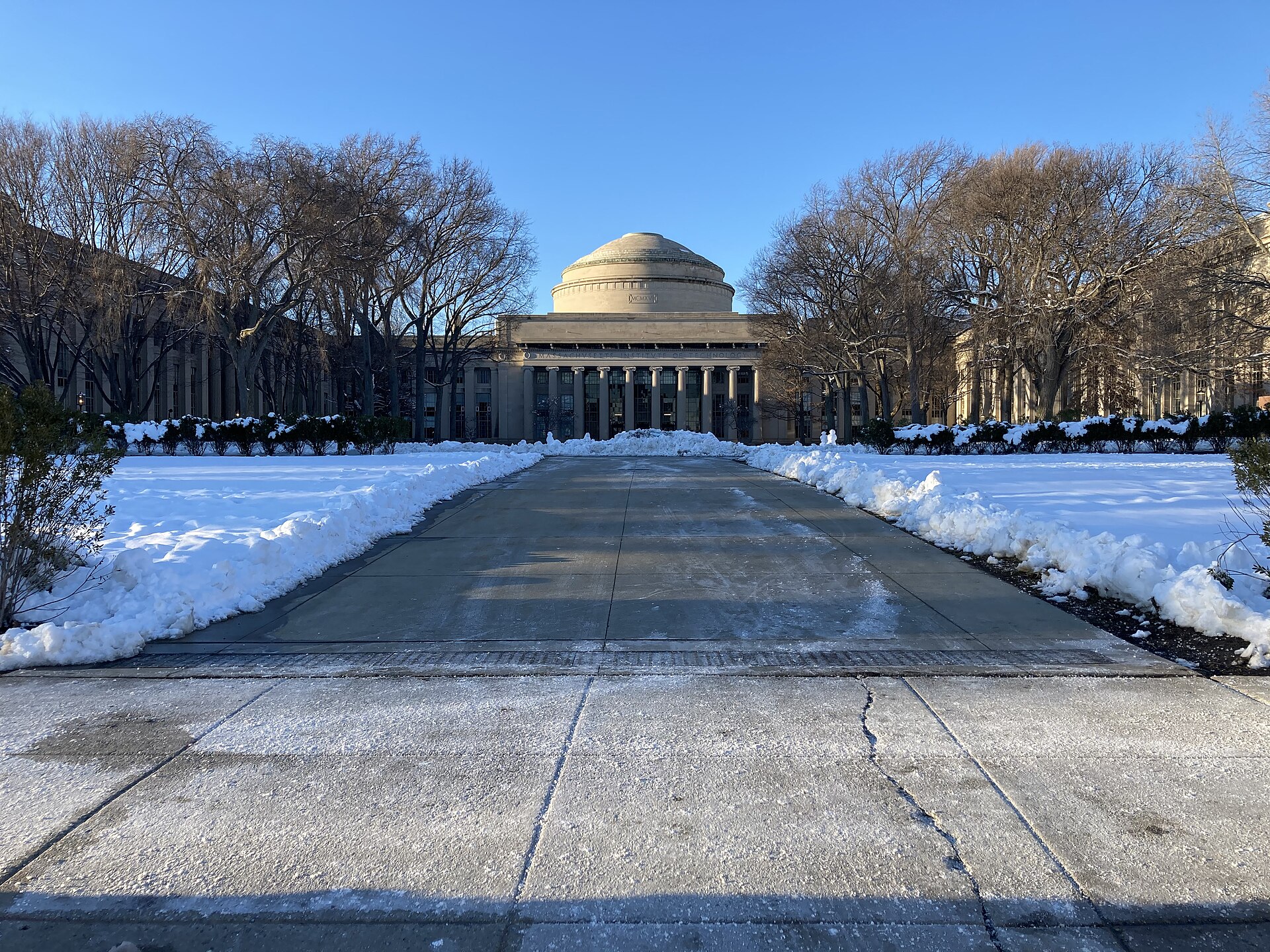
MIT facilities workers (32BJ SEIU): strike authorized Tuesday, Oct. 27, in a vote on Killian Court, the first strike authorization vote by MIT facilities workers since 2008, The Tech reported. About 600 custodians, desk attendants, groundskeepers, mechanics, electricians and plumbers work in more than 200 MIT buildings. A union representative told Cambridge Day that an overwhelming majority voted yes but gave no count. MIT has offered a one-year contract with a 2.2 percent raise, which New England director Kevin Brown called ridiculous. "Working class people are tired of taking it on the chin," he said. "While we understand that MIT is going through some serious issues with the federal government, you can't take it out on the blue-collar workers."
The two MIT unions held a joint "Last Chance" practice picket Thursday at 48 Massachusetts Ave.; the GSU described it as the last public action before a formal strike. Both had bargaining sessions with MIT the same week, the GSU's 16th, according to Cambridge Day and The Tech. GSU campus chief steward Daniel Shen pointed to MIT's $29.2 billion endowment and to President Sally Kornbluth's 12 percent raise from 2024 to 2025. "These payouts to top executives show that MIT has the resources to fund its workforce, it's just a question of priorities," he said.
MIT's response, in a statement to Cambridge Day: "the Institute has had to adopt a careful stance on budgeting and hiring given the uncertain outlook for federal funding and policy," and its bargaining team "strives to reach agreement on contracts that are fair and recognize everyone's contributions while reflecting the reality of the Institute's financial situation."
Set side by side, the numbers show the scale. The three groups with published counts, Harvard grad workers, MIT grad workers and Harvard's academic workers, represent roughly 9,600 people by the unions' own figures, before adding 580 Harvard dining workers and 600 MIT facilities workers. The turnout figures differ in kind, too: the MIT GSU's 1,708 ballots came from a membership of more than 3,000, while HGSU's 1,710 voters came from more than 4,000 members.
Undergraduates are also organizing. A coalition called Students on Strike is circulating a petition asking students to skip classes "to the greatest extent possible" if the MIT GSU or 32BJ walks out, and more than 600 undergraduates had signed as of The Tech's report.
Still unknown: whether MIT's unions will set a strike date, and whether Harvard and HGSU will return to the table.
Sources
- Cambridge Day: Harvard graduate workers union launches strike, others may follow (Oct. 28) (opens in a new tab)
- The Tech: MIT Facilities workers authorize strike (Oct. 29) (opens in a new tab)
- The Tech: MIT GSU passes first ever strike authorization vote (Oct. 23) (opens in a new tab)
- MIT Graduate Student Union: Preparing to Strike (results and FAQ) (opens in a new tab)