Boston Formally Opened the Nation's First Cape Verdean Kriolu Dual-Language Program. It Starts With 16 Pre-K Students.
The Lilla G. Frederick Elementary School in Grove Hall welcomed 469 students this fall in a renovated building that merges the old Clap and Winthrop schools. The Kriolu pathway will add a grade each year through 2033.
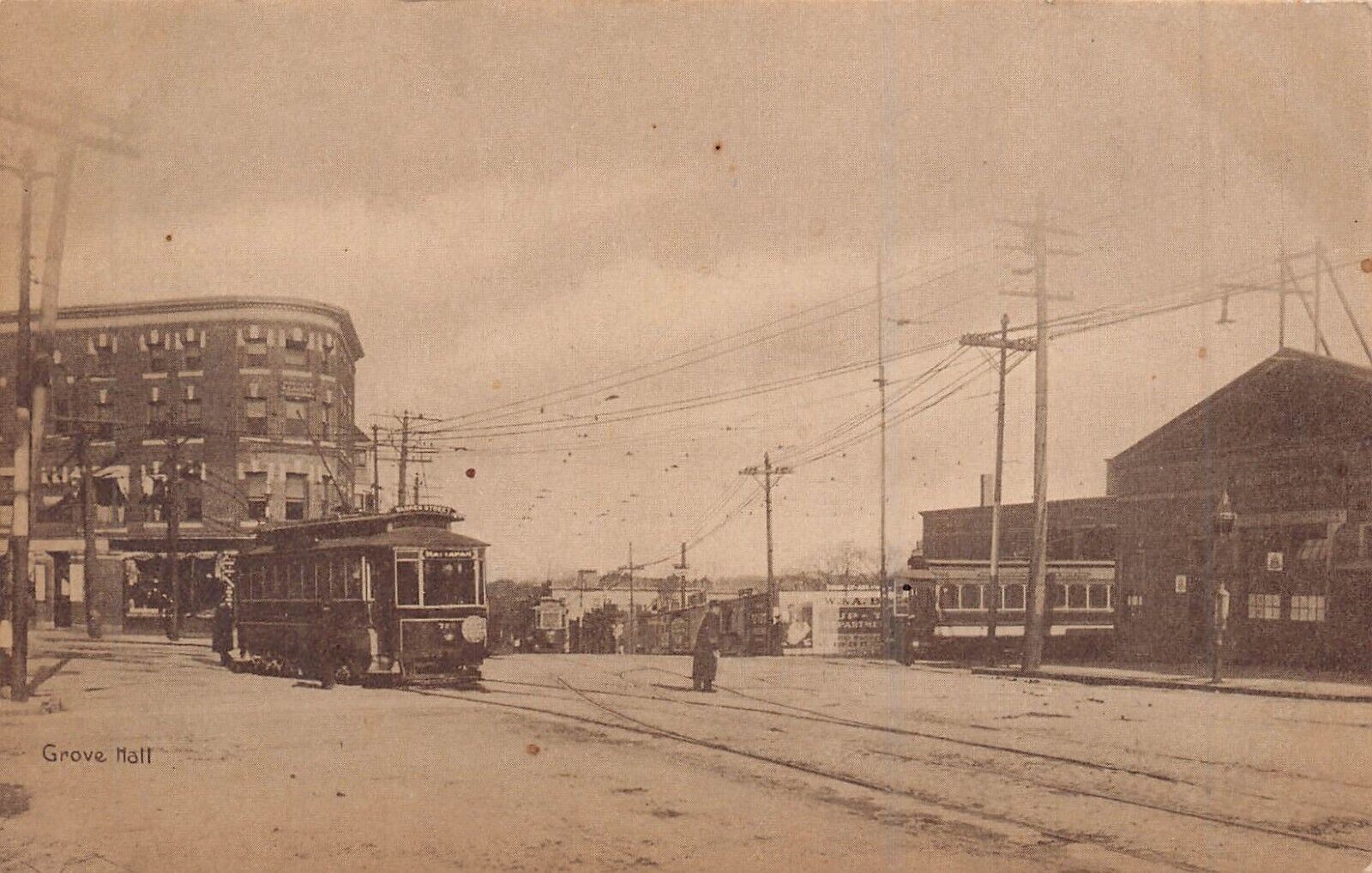
Boston leaders on Monday formally marked the opening of the Lilla G. Frederick Elementary School in Grove Hall, and with it the launch of what the city and the school district say is the first dual-language program in the United States to teach students in Cape Verdean Kriolu and English.
A city announcement updated Nov. 16 says Mayor Michelle Wu joined Superintendent Mary Skipper, the Public Facilities Department, partners and community members at the ribbon cutting. The former Frederick Middle School building has been converted for pre-kindergarten through grade 6. The school opened for the 2026-27 year with 469 students, bringing together the former Clap and Winthrop elementary communities.
The Kriolu program itself is small at the start and built to grow slowly. The city says it welcomed an inaugural cohort of 16 students in pre-kindergarten, or K1. Students receive core instruction in literacy, writing and math in English and, or, Cabo Verdean Kriolu, with the stated aim of bilingualism, biliteracy and biculturalism. The program is scheduled to expand by one grade each year, reaching a full K1-through-grade 6 pathway in the 2033-34 school year. The school's own special-features page gives the same timeline: K1 in fall 2026, grade 6 in fall 2033.
Joelle Gamere, the district's chief of multicultural and multilingual education, tied the program to a student's home language. 'A student's home language is an important part of who they are, connecting them to their families, culture, and community,' she said in the city's announcement. 'When we recognize and build on the languages students bring to school, we create a stronger foundation for learning and affirm that those experiences and identities have a valued place in our classrooms.' She said the program 'reflects the leadership and advocacy of our Cabo Verdean community members and families who have worked alongside the district to make this vision a reality.'
The Boston Globe, writing Tuesday, placed the program in a larger demographic fact. Cape Verdean Kriolu, the paper said, citing state data, is the third most common first language among students learning English in Boston schools, spoken by about 800 of the system's 45,000 students. Spanish and Haitian Creole, the two more common languages, already have dual-language programs. The Frederick pathway is an attempt to give Kriolu the same formal status in a city school.
The building carries a name the community asked to keep. Lilla G. Frederick was a Grove Hall education advocate; the city says she died in 2005. Wu said, 'Because of visionary leaders like Lilla Frederick, Boston knows that successful schools are connected to and engaged with the needs, goals and diverse backgrounds of their students.' Skipper said Frederick 'envisioned a diverse school that nurtures the whole child in an inspiring, community-centered learning environment, and that vision is now reflected in the new Frederick Elementary School.' Acting Principal Meghan McGoldrick said, 'This school belongs to the community.'
The conversion is part of the district's long-term facilities plan, the city said, and the Frederick is one of the district's Community Hub Schools, with a coordinator to connect families to outside resources. The Globe noted that the prior Frederick Middle School had been the city's last standalone traditional public middle school, closed as part of a shift toward larger schools. The new elementary, the paper said, has 142 more students than the middle school did in 2024, when it last had a full complement of grades.
The physical work is described in the city release in some detail. The renovated building includes a gymnasium, library, visual arts classrooms, dance and theatre space, cafeteria, science labs and an auditorium. WCI Corps and Machado Silvetti updated the building, including classrooms and bathrooms designed for the youngest students. The interior improvements, led by BPS Facilities, are described as an investment of about $3 million. A new playground, designed by Ray Dunetz and built by Omasta Landscaping, is described as an additional $1.8 million from city capital funds. Carleton Jones, executive director of the Public Facilities Department, said the outdoor space had to work 'whether in Pre-K or sixth grade.'
The school's page also lists an Applied Behavior Analysis program beginning with the early grades in fall 2026 and growing through grade 6 in fall 2029, and a list of partners that includes Project R.I.G.H.T., Boston Scores, the Boston Music Project and others. The city thanked Project R.I.G.H.T., community coordinator Mike Kozu, and a Cabo Verdean working group 'for helping shape the school's dual-language program.'
A first-in-the-nation label is a claim about the present, not a guarantee about the future. The program has 16 children in one pre-kindergarten cohort. It will be judged later by whether it actually adds a grade each year, whether families enroll, and whether the district staffs Kriolu instruction as the cohort moves up. What is already on the record is more modest and more concrete: a reopened Grove Hall school, a merged enrollment of 469, a language spoken by hundreds of Boston schoolchildren, and a formal pathway that did not exist in the school system until this fall.
Sources
- City of Boston: Ribbon Cutting Celebration for Lilla G. Frederick Elementary School, updated Nov. 16, 2026 (opens in a new tab)
- Lilla G. Frederick Elementary School, Special Features (opens in a new tab)
- Boston Globe: City opens nation's first Cape Verdean bilingual program, Nov. 17, 2026 (opens in a new tab)
- Dorchester Reporter: Cabo Verde PM on hand as Frederick School celebrates launch of its dual language initiative, Sept. 30, 2026 (opens in a new tab)