Congo's Ebola Outbreak Has Infected More Than 11,000 People and Is Still Not Under Control, Africa's Health Agency Says
The Bundibugyo strain outbreak, declared May 15, is now the second-largest on record. Only $1.3 billion of $2.9 billion pledged has been released, and there is no approved vaccine for this strain.
The Ebola outbreak in the Democratic Republic of the Congo remains out of control six months after it was declared, with more than 11,200 cases and 5,500 deaths recorded since May 15, according to government data cited by the Africa Centres for Disease Control and Prevention.
"If we don't stop this outbreak now, it would be the worst Ebola outbreak that the world will have," Jean Kaseya, director-general of Africa CDC, told Reuters, according to Al Jazeera. "We are all in agreement today to say that this outbreak is still serious, and is still not under control."
Kaseya said more than 80 percent of new cases are emerging outside known contact lists, meaning health workers did not know the patients had been exposed, and more than 65 percent of deaths have occurred in communities rather than in health centers. Both figures indicate that the virus is spreading faster than tracing teams can follow it.
The outbreak is caused by the Bundibugyo strain of Ebola, which kills about half of the people it infects. No vaccine or treatment has been developed specifically for it, which has made containment especially difficult. Earlier this month, the World Health Organization approved clinical trials of two new vaccine candidates and said it expects results in early 2027.
It is the second-largest and second-deadliest Ebola outbreak on record, behind only the 2014-2016 epidemic in West Africa, which infected more than 28,600 people and killed more than 11,000. Eight of Congo's 26 provinces are affected, and cases have been reported in East, Central and West Africa, giving it the widest geographic spread of any Ebola outbreak on the continent.
Delayed detection, armed conflict and strained health services have helped the virus spread more rapidly than in previous outbreaks. Kaseya called coordination between Congo and donors "a collective failure." Only $1.3 billion of the $2.9 billion pledged by donors has been released, he said.
"We are not pointing fingers," Kaseya said, adding that Africa CDC was working with the government in Kinshasa to avoid wasted money through duplication and that Congo was digitizing its payroll for health workers who "hadn't been paid for months." Unpaid health workers have been a recurring obstacle in past outbreaks, when strikes and absences slowed case finding.
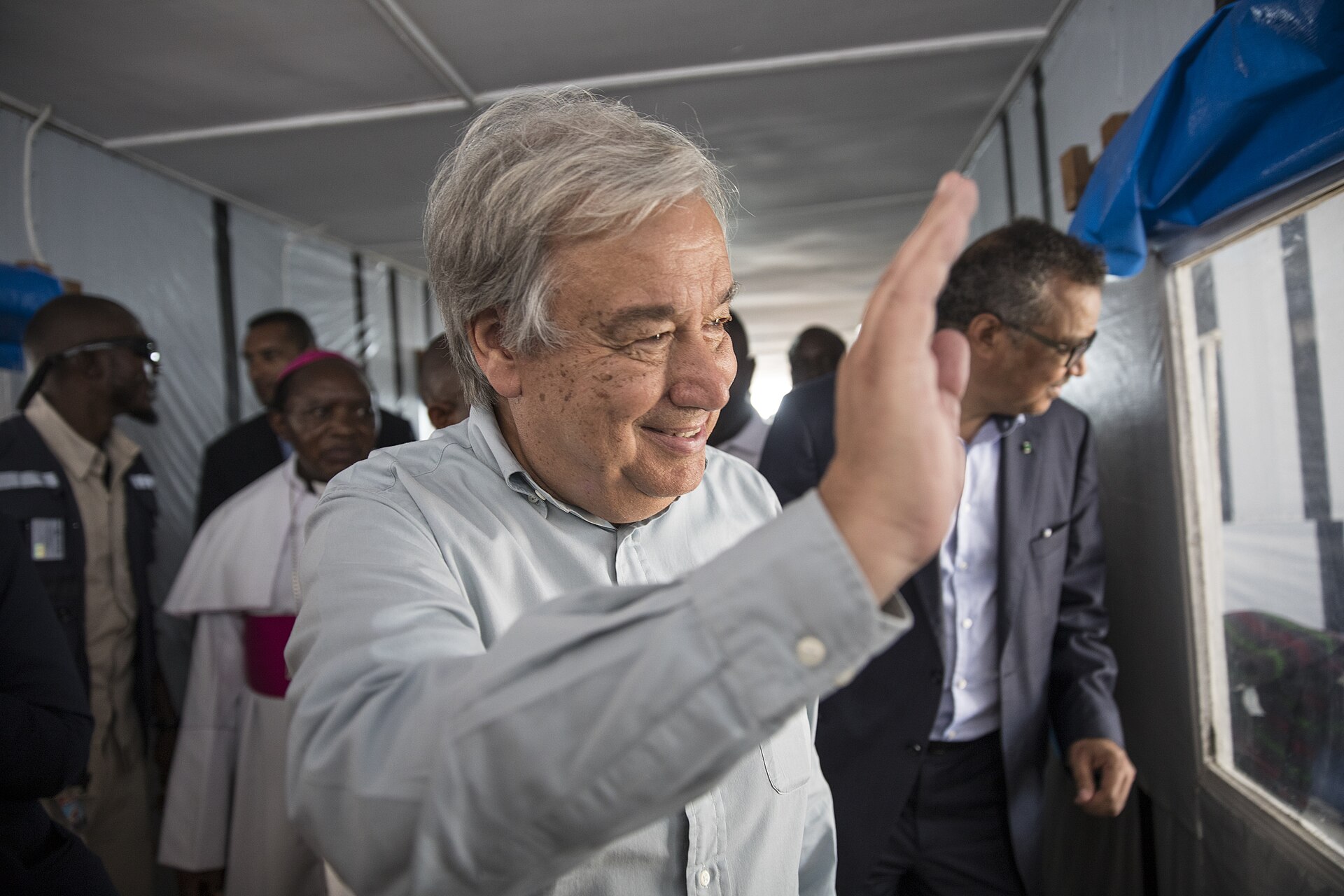
There are signs of progress in some places. "Transmission is slowing in several early epicentres, and clinical trials, including the Tumaini trial and new vaccine candidates, are advancing rapidly," WHO Director-General Tedros Adhanom Ghebreyesus wrote on X. The WHO said at least 3,000 people have recovered and returned home.
The European Centre for Disease Prevention and Control's latest update puts the count slightly higher. As of Nov. 15, Congo had reported 11,376 confirmed cases, including 5,568 deaths, using data through Nov. 14. A total of 1,681 patients had been hospitalized in isolation and 3,083 people who tested positive had recovered. ECDC said 83.1 percent of identified contacts were under follow-up in the affected provinces. Since its previous update on Nov. 13, another 179 confirmed cases and 97 deaths had been reported, most of them in Ituri and Nord-Kivu.
Ituri province remains the center of the outbreak, with 7,858 cases, including 3,715 deaths, reported from 28 of its 36 health zones, according to ECDC. Nord-Kivu has reported 2,860 cases and 1,590 deaths, and Haut-Uélé 523 cases and 223 deaths. In all, 68 of 178 health zones across eight provinces (Ituri, Nord-Kivu, Sud-Kivu, Tshopo, Haut-Uélé, Bas-Uélé, Sud Ubangi and Nord Ubangi) have been affected since the outbreak began.
Children have been hit hard. UNICEF reported on Nov. 13 that, using data as of Nov. 4, 2,959 children were among the confirmed cases, 28 percent of the total, including 1,737 deaths. Among children under 5 with confirmed infection, 72 percent have died, according to the UNICEF figures cited by ECDC.
The virus has crossed borders. Kenya reported a cluster of nine confirmed cases, including two deaths, linked to a Kenyan citizen who had been living in Congo and traveled to Kenya through Uganda on Oct. 3; four of the later cases were relatives and four were health care workers. The last patient there was discharged Nov. 11. In Nigeria, one case was reported Oct. 20 in a traveler from Uganda; she was evacuated to Switzerland, discharged on Nov. 11, and all 62 of her contacts in Nigeria completed monitoring. ECDC rates the likelihood of infection for people living in Europe as very low.
Open questions include when the vaccine trials will produce usable doses, whether the remaining pledged money will be released, and whether case growth slows as the year ends.
Sources
- Al Jazeera: Africa CDC says Ebola outbreak in DR Congo 'still not under control' (opens in a new tab)
- CNBC Africa: Congo's Ebola cases surpass 11,000, government data show (opens in a new tab)
- European Centre for Disease Prevention and Control: Ebola disease outbreak caused by Bundibugyo virus, 2026 (opens in a new tab)
- Arab News (AP): Congo's Ebola outbreak is spreading and killing at a record pace (opens in a new tab)