Campbell Co-Leads a 23-State Suit Against a HUD Rule That the Agency Says Would Cut Off 900 Massachusetts Households
The lawsuit, filed Monday in federal court in Boston, argues the rule illegally ends 30 years of prorated aid for mixed-status families and should be struck down before it is enforced.

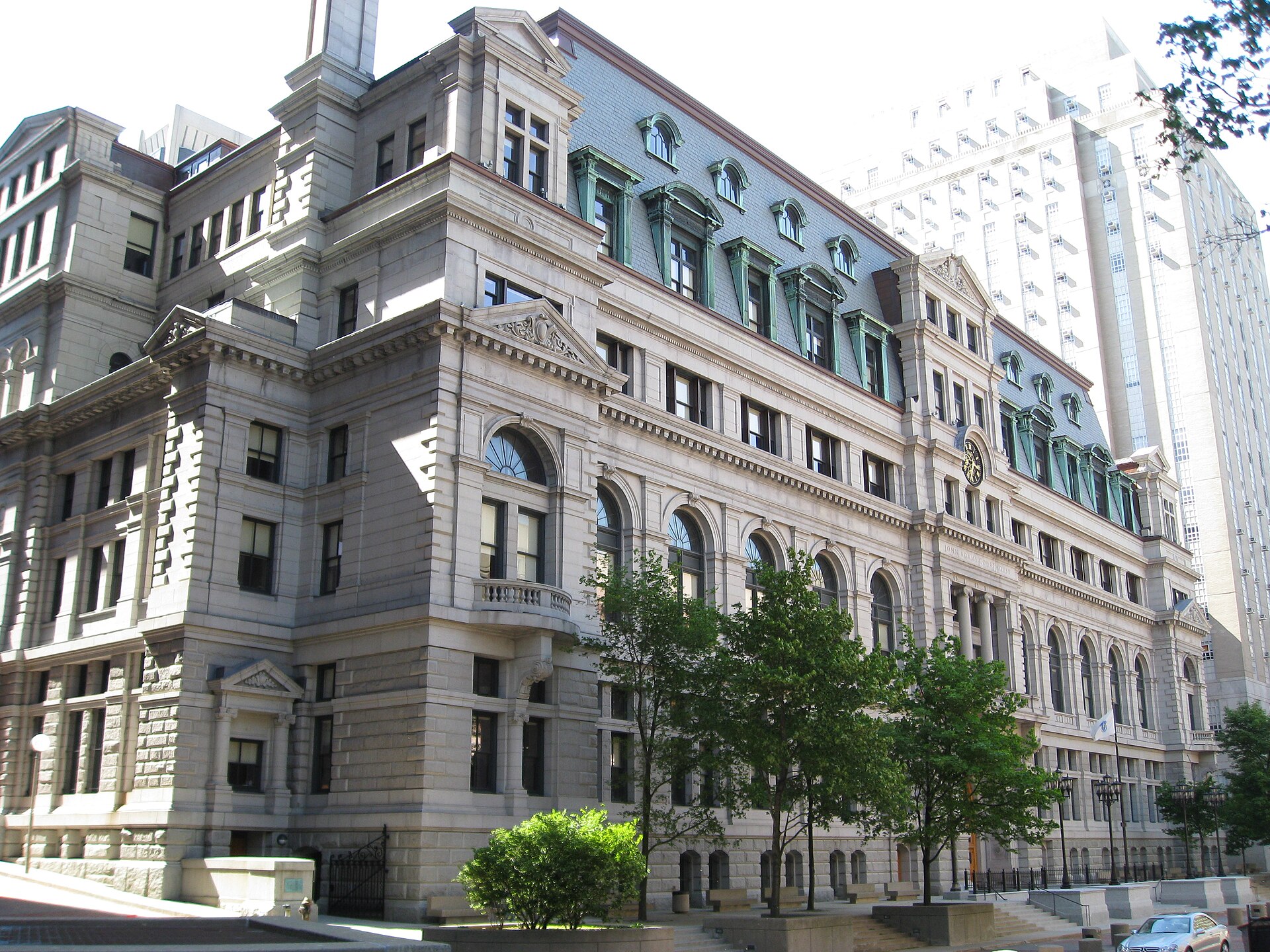
Massachusetts Attorney General Andrea Joy Campbell on Monday co-led a coalition of 22 other states in a lawsuit challenging a new U.S. Department of Housing and Urban Development rule that would end housing assistance for mixed-status families. The complaint was filed in the U.S. District Court for the District of Massachusetts. Campbell co-led the case with the attorneys general of California and New York.
Under the rule, any household with at least one member who is not a U.S. citizen or an eligible immigrant would be cut off from HUD assistance entirely, even though subsidies have long been prorated so that they cover only eligible people. The rule would also require all U.S. citizens in federal housing programs to prove their citizenship or risk eviction. "Every family deserves the stability and security of a safe, affordable home," Campbell said in her office's announcement. "For 30 years, HUD has ensured that mixed-status families can access housing assistance for eligible household members, but this new rule would strip entire families of that assistance. This rule will put more families at risk of homelessness, reduce rental income for housing providers, and further constrain our already limited housing supply. I'm suing to protect families and preserve access to affordable housing for those who need it most."
Campbell's office said that for nearly 30 years, federal housing programs have provided assistance to low-income families even when some household members are ineligible, and that Congress in 1997 codified that protection, stating that families receiving prorated assistance "shall not" lose their benefits just because an ineligible family member lives with them. The new rule eliminates that protection. As a result, the office said, U.S. citizens and eligible immigrants who live with an ineligible relative would be forced to choose between keeping their housing and keeping their family together.
HUD estimates that about 20,000 mixed-status families, totaling 78,100 people, would lose housing assistance, including 55,000 people who are fully eligible, many of them children and seniors, according to the attorney general's office. The agency, the office said, acknowledges that the rule will lead to evictions and displacement and that many of these families could become homeless. In Massachusetts, at least 900 households would be affected. By HUD's own estimates cited in the release, sheltering people displaced by the rule could cost governments between $20,000 and $50,000 per person each year. HUD also acknowledges, the office said, that lost rental assistance could leave subsidized units vacant, reduce income for housing providers and drive private landlords out of the Section 8 voucher program.
The rule would also require every U.S. citizen in these programs to provide a Social Security number and consent to a check through the federal SAVE database. If SAVE cannot confirm citizenship automatically, the person would have to produce an original or certified birth certificate, a naturalization certificate or a passport. The attorney general's office said an estimated 3.8 million adult U.S. citizens nationwide lack a document proving citizenship and another 17.5 million face barriers to getting one.
The coalition argues that the rule exceeds HUD's authority, violates federal law that expressly allows prorated assistance and sets different documentation rules for U.S. citizens and for eligible immigrants 62 and older, and is arbitrary and capricious under the Administrative Procedure Act. The states ask the court to declare the rule unlawful, strike it down and block HUD from enforcing it against the plaintiff states, their local governments and their public housing authorities.
Joining Campbell, California and New York are the attorneys general of Arizona, Colorado, Connecticut, Delaware, the District of Columbia, Hawai'i, Illinois, Maine, Maryland, Michigan, Minnesota, New Jersey, New Mexico, Oregon, Rhode Island, Virginia, Vermont, Washington and Wisconsin, and the governor of Pennsylvania. The City of Boston and the Boston Housing Authority joined a separate cities' lawsuit the same day, and tenant groups filed a class action last week. A court has not yet ruled on any of the cases, and the rule is still scheduled to take effect Dec. 14 unless a judge blocks it.
Sources
- Massachusetts Attorney General: AG Campbell Sues To Protect Housing Assistance For Mixed-Status Families (Nov. 23, 2026) (opens in a new tab)
- Complaint, California v. HUD, No. 1:26-cv-15218 (D. Mass. filed Nov. 23, 2026) (opens in a new tab)
- Boston.com: Boston sues Trump Administration over new public housing rule (Nov. 24, 2026) (opens in a new tab)