A Cambridge Plan to Close Gaps in the Separated Bike Lane Network Was Delayed a Week by a Charter Right
Councillor Patty Nolan's order would ask the Ordinance Committee to draft five connected routes by 2030 and three new miles a year. Councillor Cathie Zusy delayed the vote to Nov. 23 to question the transportation commissioner.
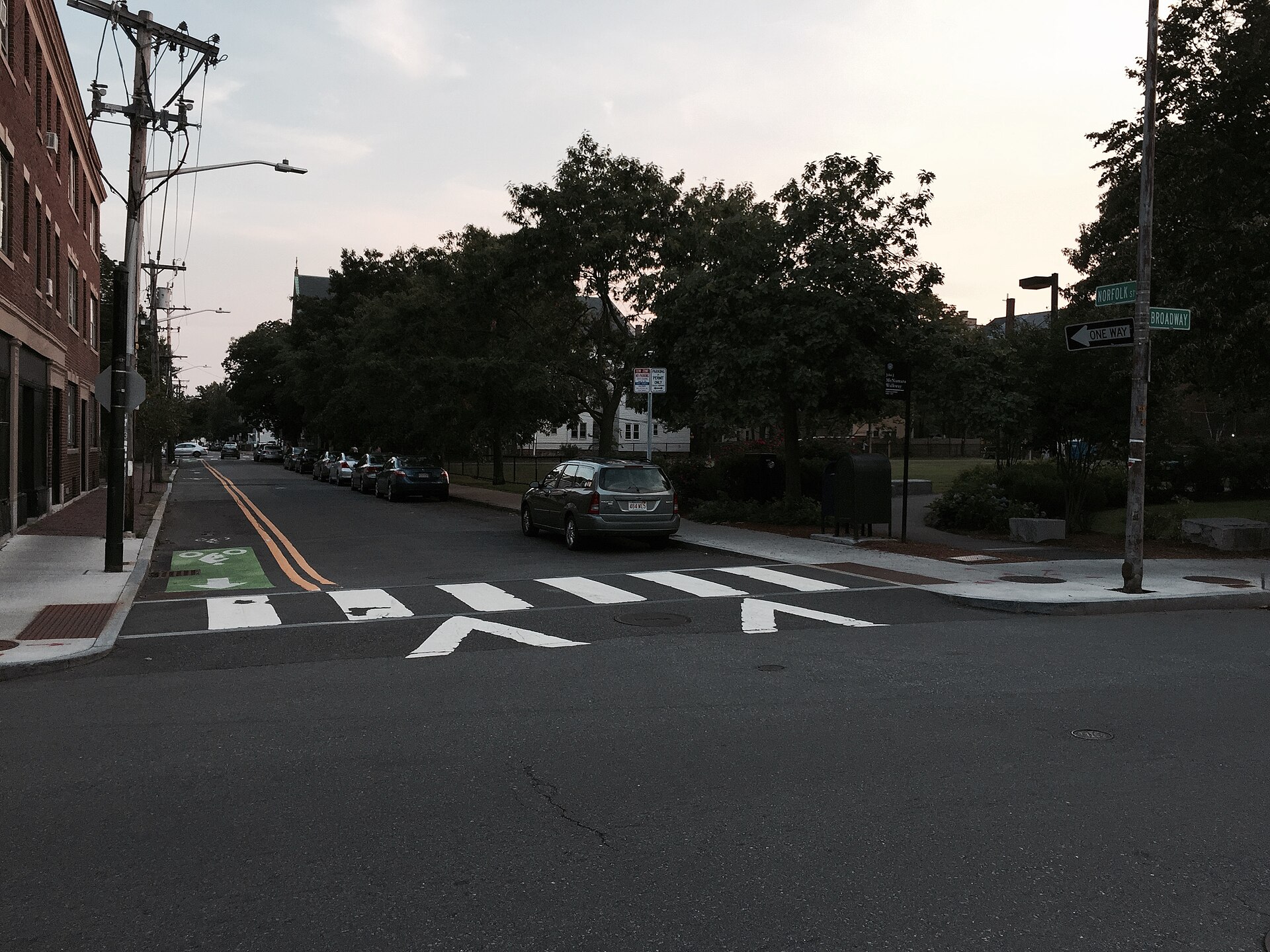
A proposal to expand Cambridge's Cycling Safety Ordinance appeared to have majority support at Monday's City Council meeting, but a vote was delayed until Nov. 23 after Councillor Cathie Zusy invoked her charter right, Cambridge Day reported.
The policy order, sponsored by Councillor Patty Nolan, would ask the council's Ordinance Committee to develop language connecting key segments of the city's separated bike lane network. The existing ordinance, passed in 2019 and amended in 2020, required about 25 miles of separated lanes along main roadways, most of which have been completed.
"We're not proposing that every street get a bike lane," Nolan said. "This is not about that. We are proposing to close a few key gaps in the network of safe, separated bike lanes."
The order proposes three uninterrupted separated routes by 2028: from the Boston University Bridge to Union Square in Somerville, from Kendall Square to Cambridge Crossing, and from Cambridge Rindge and Latin School to Danehy Park. Two more would follow by 2030, connecting the high school to the lanes on Brattle Street and Mount Auburn Hospital to Porter Square. Specific ordinance language and exact routes have not been defined.
It would also require at least three miles to be added to the bike network each year from 2027 through 2031, a total of at least 15 miles. Those miles could come from separated lanes, from non-separated lanes or from traffic-calming measures such as speed humps and raised intersections.
Supporters framed the routes around students. Several speakers said the existing lanes had made families more comfortable letting children ride to school and practices, and the proposed links from the high school to Danehy Park's sports fields and to Brattle Street follow routes used by Cambridge students. The 2020 expansion of the ordinance was controversial with some drivers, Cambridge Day noted, but few opponents spoke Monday.
Councillor Marc McGovern told Cambridge Day after the meeting that some routes could be built without removing parking. In some sections, he said, the work would involve adding physical barriers, such as flexible posts, to lanes now marked only with paint. Parking removal has been a frequent point of contention in past bike lane projects.
Dozens of residents spoke during public comment, most in favor. Resident Clyve Lawrence called on the city to "continue the momentum" and urged a "bold and transformative approach" to preventing crashes, some of which have been fatal. Leslie Bliss said the Cambridge school where she works had to triple its number of bike racks to keep up with demand.
Some councillors raised concerns about cost and workload. Zusy said she wanted a feasibility study and a cost breakdown before proceeding. "I agree the idea of completing the network is a great idea, if it doesn't get in the way of these other things that are also very important," she said, citing intersection safety.
Councillor Timothy Flaherty proposed sending the order to the Transportation Committee for further discussion before any ordinance language is drafted. Zusy and Councillor E. Denise Simmons, who have voted together on bike lane issues this term, supported that approach. Other councillors said it was unnecessary because the full council sits as the Ordinance Committee. The effort to refer the order failed.
Zusy then used her charter right, a procedural tool that lets any councillor delay a vote on a matter to the next meeting. She said she wanted to question Transportation Commissioner Brooke McKenna, who was not present for the discussion, and told Cambridge Day she would have allowed the vote had McKenna been there.
"I wanted to understand how it was going to impact [the Transportation Department's] priorities," Zusy said. "After five years of bike lanes … they were going to focus on broader transportation issues." She said she rides bikes and uses separated lanes but described the department's focus on cycling as "myopic."
The same meeting saw the council adopt, 9-0, a policy order supporting Teamsters Local 25 in its bargaining, according to a TownBrief summary of the session. The cycling order returns to the agenda Monday, Nov. 23. Unresolved are its projected cost, which routes would require parking changes, and how the Transportation Department would fit the work into its existing schedule.