Cambridge's First Civic Assembly Convenes Saturday to Weigh ShotSpotter and Overnight Park Cameras
Forty residents chosen by lottery from 15,000 invited households will meet four Saturdays and send advisory recommendations to the City Council in December. ShotSpotter has been back on since an August council vote.
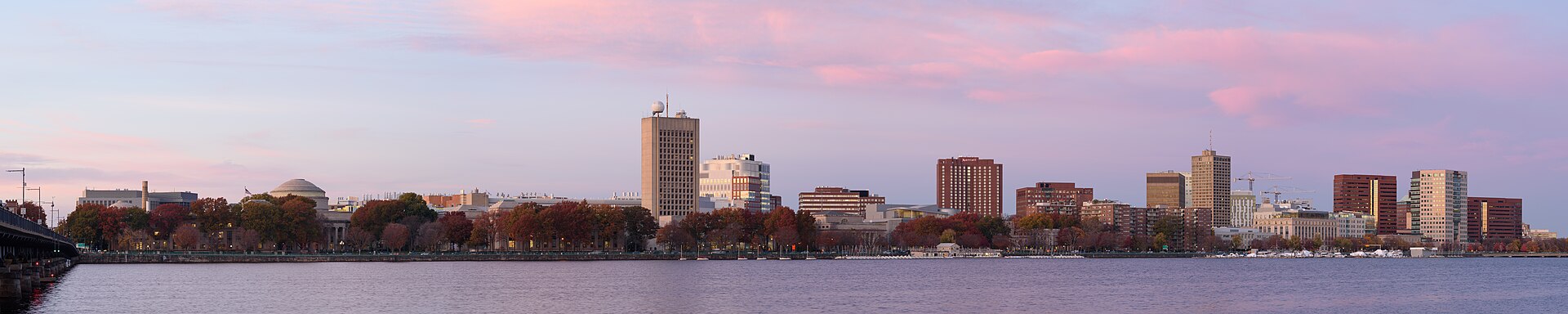
Forty Cambridge residents selected by lottery will meet Saturday, Oct. 24, for the first session of the city's first Civic Assembly, a process that will produce recommendations to the City Council on whether, how and under what conditions the city should use gunshot detection technology and overnight video surveillance of public parks, according to the City of Cambridge.
The session runs from 9 a.m. to 4 p.m. at the Cambridge Street Upper School and Community Complex, 830 Cambridge St., with entry through Door 4, the city said in a release posted Oct. 22. The first hour will include welcoming remarks and assembly members taking an oath of service. All four sessions are open to the public for observation on Zoom and 22-CityView. The remaining sessions are scheduled for Nov. 7, Nov. 21 and Dec. 5, and the assembly is to deliver its recommendations to the council in December.
The city lists Mayor Sumbul Siddiqui, city councillors, City Manager Yi-An Huang, the 40 assembly members, facilitators and staff from FIDE North America among the participants. Presenters are to include leadership of the Cambridge Police Department, the ACLU of Massachusetts and Northeastern University professor Ermus St. Louis. Saturday's topics include the assembly's mandate, public safety trends in Cambridge, surveillance technology use nationally, civil liberties and privacy, and Cambridge police operations, according to the release.
The assembly grew out of a divided council debate over ShotSpotter. Cambridge Day reported that on Aug. 3, councillors voted 6-3 to reactivate the acoustic gunshot detection system for 90 days, about two months after the council voted 5-2-2 to order the Police Department to decommission it. The August vote followed the killing of Xavier Bautista, a Department of Public Works employee who was shot near Sennott Park early on July 4; Cambridge Day reported that his body was not found for about an hour.
Councillor Marc McGovern, lead sponsor of the August order, and Siddiqui, its co-sponsor, had both voted earlier to remove the system. Voting with them to reinstate it were Vice Mayor Burhan Azeem and Councillors Flaherty, E. Denise Simmons and Zusy, according to Cambridge Day; Councillors Ayah Al-Zubi, Patty Nolan and Jivan Sobrinho-Wheeler voted no. An amendment from Nolan to keep ShotSpotter off during the assembly process failed 3-6. The council also unanimously referred a separate policy order on overnight cameras in city parks to the assembly.
According to the city's Civic Assembly website, the panel was chosen in two stages. The city combined address records into a list of 52,424 unique addresses, and a computer-based random selection, which the city said did not use artificial intelligence, picked 15,000 of them to receive invitations. One person 16 or older per household could enter the lottery; U.S. citizenship was not required. The city then generated 1,000 possible 40-person panels that each met demographic representation requirements and drew the final panel by lottery from among them. The city said it partnered with Bailey Flanigan, an assistant professor in MIT's political science and computer science departments, on the selection method.
The city said the selected panel reflects a balanced mix of gender, age, neighborhood, race and ethnicity, housing status, education levels and experience with gun violence. Current elected officials and their staff were ineligible, as were people connected to organizations or contractors advising the city on the technologies under review.
Members will receive a $1,000 stipend on completing the assembly, along with meals, and the city said it will provide child care, elder care, transportation assistance, interpretation and translation as needed. The city said it prioritized English, Spanish, Haitian Creole and Portuguese in outreach because they are the most commonly spoken languages in the neighborhoods most affected by gun violence.
The assembly's mandate is to consider "whether, how, and under what conditions" the city should use gunshot-detection technology and overnight video surveillance of public parks, "including what rules, safeguards, and oversight should govern their use," according to the city. The city says members may discuss other surveillance technologies and that the recommendations could apply more broadly. The assembly is advisory, and final decisions remain with the City Council.
When the process was first proposed, Huang noted the compressed schedule. "I think most of the models for resident assemblies have a much longer timeline," he said at the August meeting, according to Cambridge Day. Azeem said then that he would vote for the order but expected the council would "end up in the same place in 90 days." The city's September announcement described the effort as the first municipal civic assembly to be held in Massachusetts.
Residents who were not selected can register to watch Saturday's session on Zoom through a link on the city's website, attend public briefings and submit comments, which the city says will become part of the information assembly members consider.
Sources
- City of Cambridge: Cambridge Hosting First Civic Assembly Session on Public Safety Technologies Saturday (Oct. 22, 2026) (opens in a new tab)
- City of Cambridge: Civic Assembly on Public Safety Technologies (opens in a new tab)
- City of Cambridge: Launching its first Civic Assembly on surveillance technology (Sept. 2, 2026) (opens in a new tab)
- Cambridge Day: ShotSpotter returns, at least temporarily (Aug. 4, 2026) (opens in a new tab)