Boston's Bus Shelters and Seven Public Toilets Run on an Ad Contract. The Council May Authorize a Deal Lasting Up to 20 Years.
A mayoral order heard in committee Tuesday would let Property Management sign a street furniture contract running from May 2027 to as late as 2047. The order sets no number of shelters or restrooms.
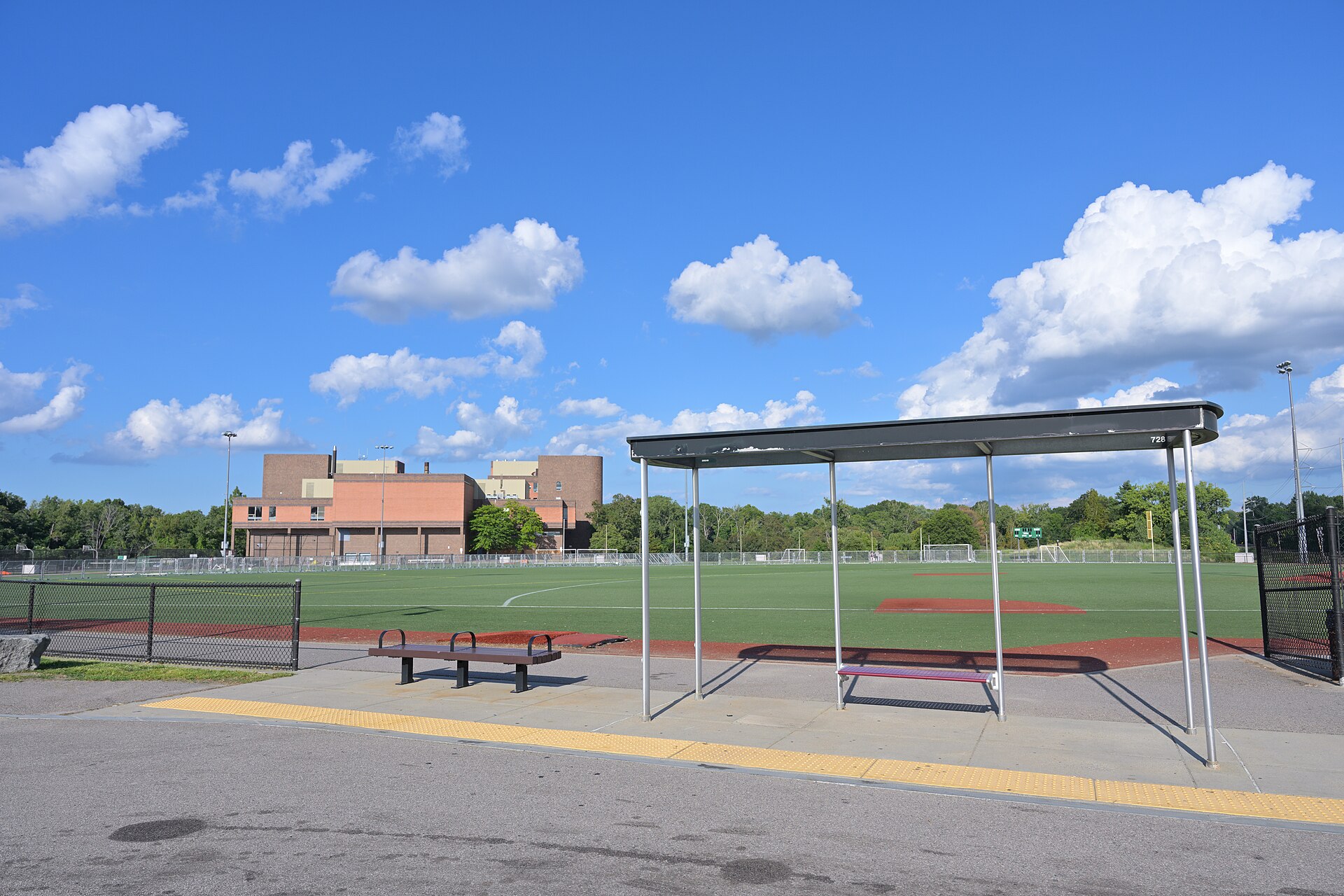
Most of Boston's bus shelters, sidewalk map panels and its handful of self-cleaning public toilets are not paid for with tax money. They are built and maintained under a contract that lets a private company sell advertising on them. That arrangement is ending, and a proposal to replace it is on the City Council's Wednesday agenda.
Docket 2026-1886 is a mayoral order that would authorize the city's Property Management Department to enter into a contract "for a period of up to twenty (20) years" to manage, maintain, expand and modernize the city's advertising-supported Coordinated Street Furniture Program. According to the order's text on the council agenda, the program covers bus shelters, public toilets, information panels, digital displays, benches and related public-realm amenities.
The initial term would begin in May 2027 and end April 30, 2037, with two five-year extensions available at the city's sole option. Fully extended, the agreement would run until 2047. The order says the program is intended to make public transit more attractive as a way to commute and to improve comfort, accessibility, equity, real-time information and maintenance, while increasing advertising revenue and strengthening city oversight.
The order was filed Oct. 7 and referred to the Committee on Planning, Development and Transportation, chaired by Councilor Sharon Durkan, according to Boston Politics, which tracks council dockets. The city posted notice of a committee hearing on dockets 1886 and 2083 for Tuesday, Nov. 17. On Wednesday's agenda, the order appears under "Matters Recently Heard - For Possible Action," meaning the full council could act on it.
The scale of the existing program is modest. The city's program page lists 281 bus shelters, 106 city information panels, 47 digital billboards and seven self-cleaning, accessible public toilets, and puts the program's revenue to the city at $36,637,430, according to Boston Politics.
The current operator, JCDecaux, is in the final year of a 25-year contract, the trade publication Billboard Insider reported in September, according to Boston Politics. Citing the company's 2025 report to the city, it said JCDecaux pays Boston a fixed $1.5 million a year plus 10 to 15 percent of gross revenue depending on the type of structure, and paid $1.2 million in revenue share in March 2026.
The Property Management Department released a request for proposals on Sept. 7, and responses were due Nov. 4, according to Boston Politics. The bid documents, not the council order, will set the city's share of advertising revenue and the maintenance standards the winning vendor must meet. The order itself does not specify how many shelters, screens or toilets the new program must provide.
That gap matters for riders. Boston has seven public toilets under the current program. The new contract will determine whether that number grows, how many shelters there are and where they go, and whether they carry real-time arrival screens. The council's authorization would apply to whichever proposal the city selects, and the order does not name a vendor.
The length matters because a contract of that duration would bind several future mayors and councils to terms negotiated now, including the city's share of advertising revenue, maintenance standards and any limits on the number or brightness of digital screens. The current agreement, ran for 25 years, long enough that the program's shelters, panels and toilets were designed before smartphones and real-time bus tracking became common.
The committee also heard docket 2083, an order to accept and expend $798,000 from the MassDOT Microtransit and Last Mile Transit Grant Program, awarded through the Metropolitan Area Planning Council and administered by the Transportation Department. According to the agenda, the money would support e-bike subsidies for the system. It also appears among matters that could be acted on Wednesday.
There is a timing question as well. The city's program page lists the current contract as ending in 2026, while the order says the new term would begin in May 2027, according to Boston Politics. The city has not publicly explained how shelters and toilets will be maintained in any gap between the two agreements.
For residents, the program is most visible at bus stops. The shelters provide seating, lighting and weather protection at stops the MBTA serves but does not own, and the information panels display neighborhood maps. The digital billboards, by contrast, are primarily revenue sources. How the next contract balances those functions will be set largely in negotiations between the Property Management Department and the selected vendor, after the council acts.
Still unanswered: which companies bid, what revenue share they offered, whether the city will require more public restrooms, and whether councilors will approve the full 20-year authority or seek a shorter term.
Sources
- Boston City Council agenda, Nov. 18, 2026 (Legistar) (opens in a new tab)
- Boston City Council docket 2026-1886 (Legistar) (opens in a new tab)
- City of Boston public notice: Committee hearing on dockets 1886 and 2083 (opens in a new tab)
- Boston Politics: The council has a 20-year street furniture deal in front of it (opens in a new tab)